





Description
Product Introduction
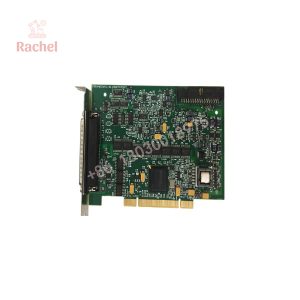
The National Instruments PXI-8423 is an industrial-grade, optically isolated RS-485/RS-422 serial interface card built for standard 3U PXI and CompactPCI systems. Available in 2-port (DB9 connectors) and 4-port (10-pin modular phone jacks) variations, it provides high-speed, noise-tolerant serial communication between host controllers and field instrumentation such as motor drives, PLCs, and power meters.
Unlike non-isolated commercial serial cards that burn out when exposed to ground potential differences, the PXI-8423 incorporates 2,000 V port-to-bus galvanic isolation. This eliminates ground loops and protects the PXI backplane in harsh electrical environments. Controlled via standard NI-Serial or NI-VISA drivers, the card integrates as standard COM ports in Windows, allowing legacy automated test and monitoring code to run without low-level protocol rewrites.
Key Technical Specifications
| Parameter | Specification |
| Bus Interface | Standard PXI 3U / CompactPCI |
| Serial Protocol | RS-485 / RS-422 (2-Wire and 4-Wire Modes) |
| Port Configurations | 2-Port (DB-9 Male) or 4-Port (10-position Modular Jack) |
| Galvanic Isolation | 2,000 V Port-to-Bus optical isolation |
| Max Baud Rate | 460.8 kbps (Custom baud rates supported) |
| FIFO Buffer | 64 Bytes Transmit / Receive |
| Max Network Devices | Up to 31 devices per multidrop RS-485 line |
| Power Requirements | +5 VDC at 1,000 mA (Typical) / 1,500 mA (Max) |
| Driver Support | NI-Serial, NI-VISA (Compatible with Windows 9x/NT/2000/XP/7) |
| Max Cable Distance | Up to 4,000 ft (1,200 m) at reduced baud rates |
Application Scenarios & The “Trench” Experience
It’s 1:30 AM during a plant continuous-run test. A high-voltage variable frequency drive flashes over, sending an 800-volt surge down the RS-485 serial bus. On standard test setups, that spike punches straight through the serial card, frying the PXI controller backplane and bricking a $30,000 test system. Because this rack used an isolated PXI-8423 card, the optical isolation barrier took the hit, protecting the PXI backplane completely. You don’t need to rebuild the host controller—you just need a drop-in replacement PXI-8423 to get the line communicating again.
- Power & Utilities – Substation Automation – Communicates with legacy IEDs (Intelligent Electronic Devices) and power monitors across long cable runs subject to massive ground potential differences.
- Factory Automation – Multi-Drop VFD Control – Drives network chains of up to 31 motor controllers per port over RS-485 2-wire differential pairs.
- Aerospace Test Benches – Environmental Chamber Control – Interface legacy temperature controllers and pressure transducers directly into LabVIEW-based automated test systems.
Field Case Study:
A solar panel manufacturing facility in Nevada suffered a serial communications failure on a critical lamination line. High EMI from nearby induction heaters was causing constant frame-error drops on an unisolated serial interface card, eventually corrupting the port permanently. We shipped a factory-sealed surplus PXI-8423 card via priority overnight air freight. The control engineer swapped the card into the chassis, configured the 4-wire RS-485 transceiver state in MAX (Measurement & Automation Explorer), and restored steady, noise-free communication with zero lost packets—saving an estimated $85,000 in scraped material.
Transparency SOP: Quality Assurance & Testing
We don’t just ship boxes; we test them on actual NI PXI chassis racks.
- Inbound Physical Inspection: Verification of PCB trace condition, check front panel DB9/RJ10 connectors for pin bend or corrosion, and confirm intact OEM board revisions.
- Live Backplane Initialization: Insertion into a powered PXI chassis to verify PCI bus enumeration and automatic driver recognition in NI Measurement & Automation Explorer (MAX).
- Loopback & Full-Duplex Serial Tests: Hardware TX-to-RX loopback testing across all channels at 460.8 kbps using NI-Serial diagnostic utilities to guarantee zero frame errors or FIFO drops.
- Isolation Voltage & Continuity Checks: Checking the 2,000 V isolation barrier to ensure no short circuits exist between signal ground and chassis ground.
- ESD Protection & Packaging: Complete ESD clearing, insertion into an anti-static shielding bag, and secure packaging using high-density foam casing before dispatch.
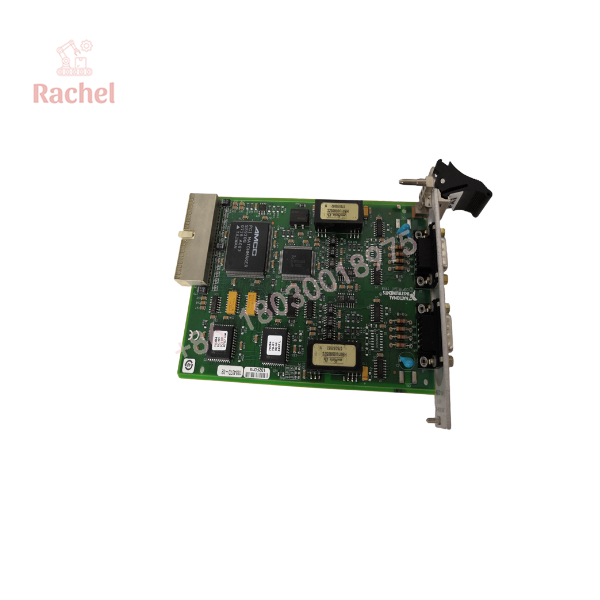
PXI-8423
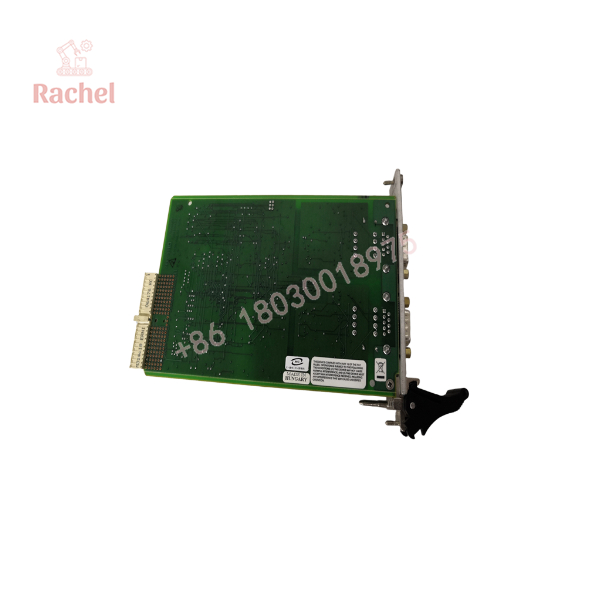
PXI-8423
The Veteran’s Tech Trap Guide
⚠️ Don’t Forget Bias Resistors on Idle RS-485 Lines:
If your RS-485 bus goes into a high-impedance state when no transmitter is active, electrical noise can trick the receiver into seeing random start bits. In NI MAX, ensure you enable the software-configurable 620 Ω biasing resistors (bias high/low) to hold the line in a known mark state.
❗ Mind the 4-Port Modular Jack Pinouts:
If you are using the 4-port version (PXI-8423/4), remember it uses 10-position modular phone jacks, not standard RJ45 ethernet pinouts or DB9s. Don’t force standard RJ45 cables into these ports—you will bend the internal spring pins. Use the proper NI breakout cables (10-pin to DB9/DB25).
⚠️ Set the Correct Transceiver Wire Mode in Software:
The PXI-8423 supports 2-Wire Auto, 2-Wire DTR, 4-Wire Full Duplex, and 4-Wire Master/Slave modes. If your device isn’t responding, check your NI-VISA property settings. Trying to run a 2-wire multidrop bus while the driver is set to 4-wire full-duplex will cause total communication lockup.
❗ Proper Line Termination at the Ends:
RS-485 differential lines need 120 Ω termination resistors at the extreme ends of the cable run to prevent signal reflections. Do not enable termination on every intermediate node in a multidrop loop, or you will overload the PXI-8423 transceiver drivers.
Frequently Asked Questions
Q: Is the PXI-8423 supported by NI-VISA and modern LabVIEW?
A: Yes. The PXI-8423 is fully recognized by NI-VISA and NI-Serial driver packages. It maps directly as standard serial VISA resources (e.g., ASRL1::INSTR), making it compatible with both legacy and modern LabVIEW versions.
Q: What is the main difference between the PXI-8423 and the PXI-8421 or PXI-8431?
A: The “3” in PXI-8423 indicates optical isolation (2,000 V rating) for RS-485/422 lines. The PXI-8421 is non-isolated RS-485, while the PXI-8431 belongs to a newer hardware generation with higher baud rates (up to 3 Mbaud) and enhanced DMA controller chips.
Q: Can I pull or insert the PXI-8423 while the PXI chassis is powered on?
A: No. Standard PXI cards do not support live insertion or removal (hot-swapping). Always power down your PXI chassis before removing or installing the module to avoid backplane pin arcing or damage to the controller.
Q: Does this card require external power for the isolated RS-485 side?
A: No. The 2,000 V optical isolation barrier on the PXI-8423 is powered internally via an isolated DC-DC converter on the card. You do not need to wire an external isolated DC supply to power the transceiver electronics.
Q: Why buy new surplus instead of upgrading to a modern PXIe serial module?
A: Upgrading to a PXI Express (PXIe) serial card requires a hybrid or PXIe-compatible chassis, a new controller, and software driver re-validation. Buying a surplus PXI-8423 allows you to replace failed hardware instantly without changing your chassis architecture or modifying validated test software.

 Start Chat


