





Description
Product Introduction
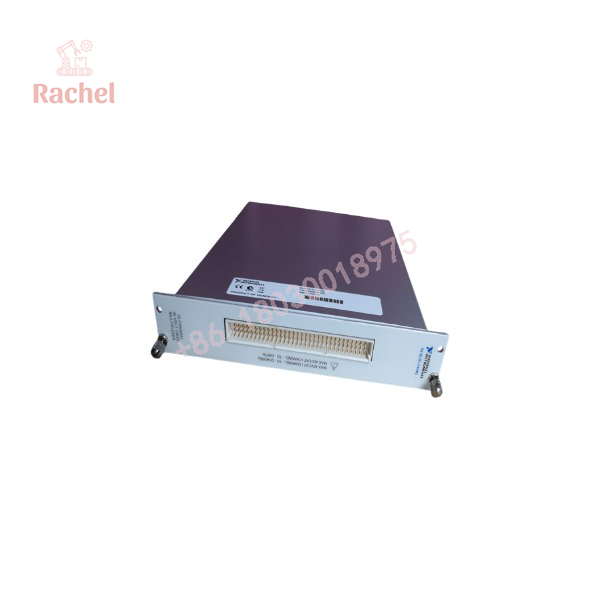
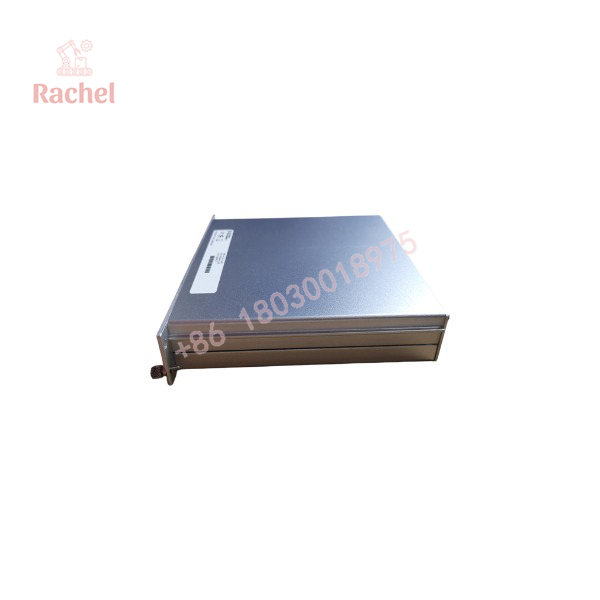
The National Instruments SCXI-1104C is a 32-channel analog input module designed for high-channel-density signal conditioning inside SCXI chassis systems. Engineered to expand the capabilities of PXI, PCI, or USB DAQ devices, it conditions medium-level voltage signals across 32 differential channels down to a single multiplexed analog output channel routed back to the host acquisition card.
Unlike standard unconditioned multiplexers vulnerable to high-frequency electrical noise, the “C” variant of the SCXI-1104 features dedicated 333 kHz low-pass RC filters on every input line. It handles input signals up to ±42 V with built-in attenuation and overvoltage protection, allowing plant engineers to capture clean transducer data directly from industrial test racks without frying low-voltage DAQ converters.
Key Technical Specifications
| Parameter | Specification |
| Compatible Platform | NI SCXI Chassis (SCXI-1000, SCXI-1001, SCXI-1000H, etc.) |
| Number of Channels | 32 Differential / Single-ended (depending on terminal block) |
| Input Voltage Range | ±42 V (attenuated down to host DAQ input limits) |
| Filter Cutoff Frequency | 333 kHz Low-Pass Filter (C-variant specification) |
| Amplifier Gains | Fixed 0.1x attenuation factor (maps ±42 V down to ±4.2 V) |
| Multiplexer Architecture | Single-ended or differential output multiplexing over SCXI bus |
| Overvoltage Protection | ±42 VDC powered on; ±42 VDC powered off |
| Cold-Junction Sensor | Supported via compatible terminal blocks (e.g., SCXI-1300 / SCXI-1303) |
| I/O Connector | 96-pin male DIN front connector (interfaces to SCXI terminal blocks) |
| Operating Temperature | 32°F to 122°F (0°C to 50°C) |
Application Scenarios & The “Trench” Experience
It’s 3:30 AM during a continuous environmental test sweep on an automotive battery rack. A high-voltage transient punch-through on channel 14 pops the front-end resistor network on your main signal conditioning card. The whole chassis drops off the DAQ scan list, corrupting your 72-hour validation run. Upgrading to a modern C Series chassis means swapping out $50,000 worth of signal harnesses and rewriting legacy LabVIEW driver trees. You need a drop-in SCXI-1104C module inserted, recognized in MAX, and running before the shift change.
- Automotive Battery Test Benches – Pack Cell Voltage Monitoring – Safely conditions medium-voltage stack taps up to ±42V for central DAQ card processing.
- Aerospace Structural Testing – Multi-Channel Strain & Voltage Arrays – Filters out high-frequency EMI while routing 32 continuous transducer channels over a single multiplexed bus.
- Industrial Plant Monitoring – Process Loop Logging – Accepts 0-10V and higher field instrument signals without requiring external resistor dividers.
Field Case Study:
A defense contractor in Texas experienced a channel loss on an SCXI-1104C card running in an automated missile component test rack. The legacy test application relied heavily on Traditional NI-DAQ drivers tied to a legacy PCI-6052E card. We shipped a verified surplus SCXI-1104C module via priority air. The technician slotted the card into Slot 2 of the SCXI-1000 chassis, snapped the original SCXI-1300 screw terminal block onto the front DIN connector, and completed full system re-verification without modifying a single line of validated code.
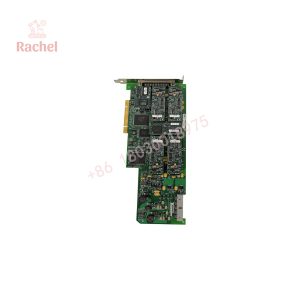
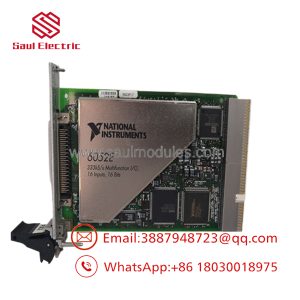
SCXI-1104C
SCXI-1104C
Transparency SOP: Quality Assurance & Testing
We don’t just ship boxes; we test them on actual NI SCXI chassis hardware.
- Inbound Physical Inspection: Inspection of 96-pin DIN connector pins for bending/corrosion, verification of PCB trace health, and check for signs of overvoltage stress on input resistor networks.
- Chassis Initialization & Bus Handshake: Card is mounted into an NI SCXI-1000 chassis linked to a PCI/PXI DAQ controller to verify SCXI bus communication and module ID recognition in NI MAX.
- 32-Channel Multiplexer & Gain Sweep: A precision voltage calibrator applies known inputs (-42V to +42V) across all 32 channels individually to verify 0.1x gain accuracy, offset tolerances, and zero crosstalk.
- Filter Frequency Audit: Checking low-pass filter frequency response to ensure noise suppression specs match original 333 kHz factory tolerances on the C-variant.
- Anti-Static & Secure Packaging: ESD clearing check, sealing in anti-static shielding bags, and custom high-density foam wrapping before shipment.
The Veteran’s Tech Trap Guide
⚠️ Mind the 0.1x Attenuation Ratio in Custom Code:
The SCXI-1104C uses an internal fixed 0.1x attenuation network to scale ±42 V inputs down to a ±4.2 V range suitable for host DAQ cards. If you write custom register-level C code or raw VI reads bypassing NI-DAQmx scaling, your readings will be off by a factor of 10 unless you apply the 10x correction multiplier in software.
❗ Don’t Force Terminal Block Screws:
When attaching SCXI terminal blocks (like the SCXI-1300 or SCXI-1303) to the 96-pin front DIN connector, tighten the side jack-screws evenly. Overtightening one side or forcing a misaligned connector will bend the gold-plated pins on the module’s front header.
⚠️ Difference Between 1104, 1104C, and 1102 Modules:
Do not confuse the SCXI-1104C with the SCXI-1102 series. The SCXI-1102 is designed for low-voltage/thermocouple inputs (±100 mV to ±10 V range) with high gain (up to 100x), whereas the SCXI-1104/1104C is specifically tailored for higher voltage signals (up to ±42 V). Interchanging them will either saturate your ADC or clip your readings.
❗ Cable Routing and Strain Relief:
A 32-channel terminal block attached to an SCXI-1104C carries a heavy bundle of signal wires. Always secure the cable bundle to the chassis rack frame. The mechanical leverage of a hanging wire harness can stress the backplane connection inside the SCXI chassis.
Frequently Asked Questions
Q: What is the primary difference between the standard SCXI-1104 and the SCXI-1104C?
A: The difference lies in the onboard low-pass filter cutoff frequency. The SCXI-1104 features a 2 Hz filter for heavy noise rejection in low-speed measurements, while the SCXI-1104C features a 333 kHz filter for higher bandwidth, faster-sampling applications.
Q: Can I hot-swap the SCXI-1104C while the SCXI chassis is powered on?
A: No. SCXI modules do not support live insertion or removal (hot-swapping). Always turn off the power to the SCXI chassis and host DAQ system before inserting or removing the module to prevent backplane bus errors or component damage.
Q: Which terminal blocks are compatible with the SCXI-1104C?
A: Common compatible terminal blocks include the SCXI-1300 (general-purpose screw terminal block), SCXI-1303 (isothermal terminal block for thermocouples/voltage), and SCXI-1308 (for current inputs).
Q: Is the SCXI-1104C supported under modern 64-bit Windows environments?
A: Yes, provided your host DAQ card (PXI or PCI) and chassis controller are supported in NI-DAQmx on that OS. However, check National Instruments’ driver compatibility matrix for legacy chassis interfaces if you plan to upgrade operating systems.
Q: Why buy new surplus SCXI modules instead of upgrading to CompactDAQ/C Series?
A: Upgrading from an SCXI platform to CompactDAQ or C Series requires replacing chassis, purchasing new module hardware, rewiring custom field harnesses, and rewriting validated test software. Buying a surplus SCXI-1104C allows you to fix downed test racks instantly with zero software or mechanical re-engineering overhead.

 Start Chat


