





Description
Product Introduction
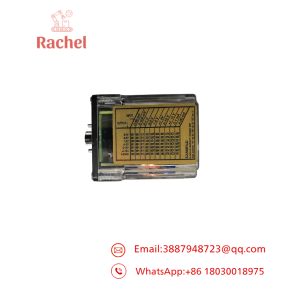
The Pilz 301131 (PSS SB BRIDGE) is a specialized network coupling module engineered for the Pilz PSS safety PLC architecture. Functioning within the fail-safe SafetyBUS p ecosystem, this unit bridges distinct bus segments, allowing safety signals to cross network boundaries without compromising the SIL 3 / Category 4 safety integrity of the overall control architecture.
Unlike standard unmanaged fieldbus repeaters, the PSS SB BRIDGE maintains deterministic timing and galvanic isolation across complex safety networks. It allows engineers to expand line topology distances, manage node counts on large press lines, and isolate electrical noise between separate machine sub-assemblies while keeping the central PSS controller fully synchronized.
Key Technical Specifications
| Parameter | Value / Technical Specification |
| Part Number | 301131 (PSS SB BRIDGE) |
| Supply Voltage | 24 VDC (\pm 20\%) |
| Current / Power Consumption | Approx. 90 mA / 2.2 W |
| Network Compatibility | SafetyBUS p Protocol |
| Function | Bus Segment Bridge / Signal Coupling & Regeneration |
| Isolation | Galvanic isolation between power and bus segments |
| Mounting Style | 35mm Standard DIN Rail (EN 50022) |
| Operating Temperature | 0°C to +60°C (32°F to 140°F) |
| Safety Integrity Level | Suitable for PSS safety configurations up to SIL 3 / Cat 4 / PL e |
Application Scenarios & The “Trench” Experience
Picture this: It’s 1:30 AM during a weekend shift. A major automotive stamping cell trips on a SafetyBUS p communication fault. The diagnostic buffer points to a bus drop out past station 4. Replacing field cables doesn’t help because electrical noise from a newly installed VFD is driving ground potential shifts through the bus line. Swapping in a fresh Pilz 301131 module isolates that segment electrically, restoring the safety handshake and getting the line back in production before the morning shift arrives.
- Automotive Stamping Lines – Interfacing safety interlocks across long multi-station press lines where segment lengths exceed standard cable limits.
- Material Handling & Warehousing – Linking automated guided vehicle (AGV) docking zones back to the main safety loop without noise cross-talk.
- Packaging & Bottling Facilities – Segmenting safety zones so opening a gate on the palletizer doesn’t drop safety communications on the upstream filler.
Field Case Study: A metal fabrication plant running legacy Pilz PSS 3000 controllers suffered periodic bus resets on its transfer line. Troubleshooting traced the issue to signal degradation across a 150-meter cable run. The engineering team installed a 301131 bridge module midpoint on the rail. The unit regenerated the SafetyBUS p differential signals, instantly fixing the intermittent drops and preventing an estimated $45,000 per shift in lost throughput.
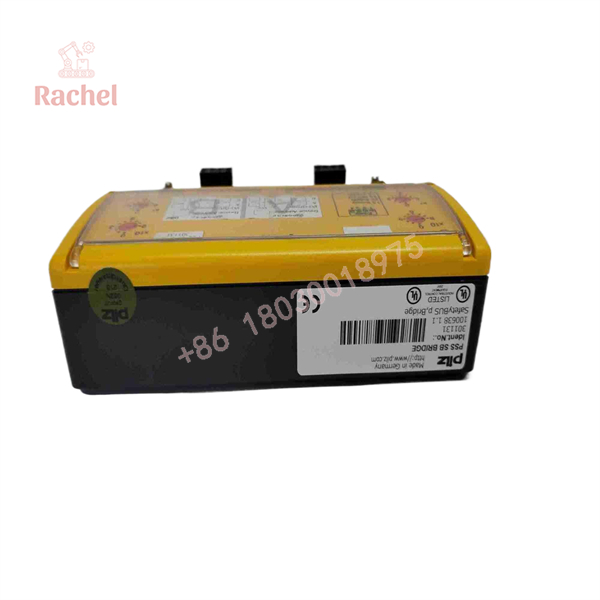
301131
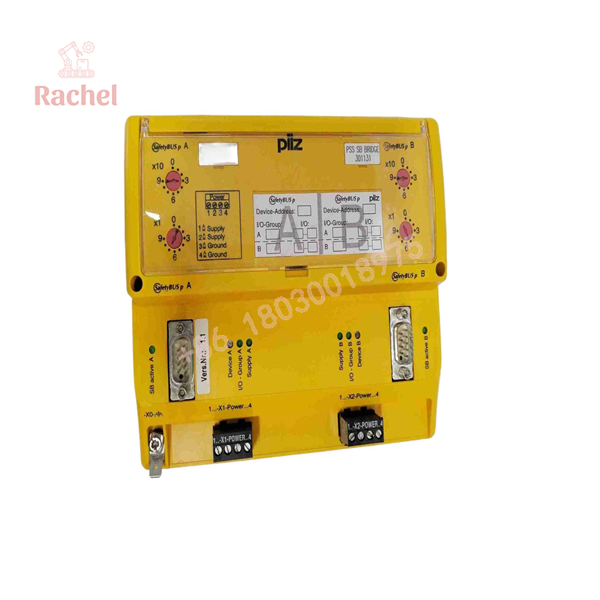
301131
Transparency SOP: Quality Assurance & Testing
We don’t just ship boxes; we test them on actual Pilz PSS test racks.
- Inbound Inspection: Verify physical housing integrity, inspect backplane connector pins for bends or corrosion, and check serial/lot numbers.
- Power-On Self-Test: Mount the module on a test DIN rail and apply 24 VDC power to confirm clean LED initialization and internal rail check.
- Live Bus Loop Test: Insert the module into a live SafetyBUS p test network consisting of a PSS safety controller and remote I/O nodes.
- Communication Handshake & Stress Test: Drive active safety I/O traffic through the bridge for a minimum of 2 hours, checking for cyclic redundancy check (CRC) errors or packet loss.
- Final QC & Anti-Static Packaging: Clear custom network node settings, seal the unit in an ESD-safe bag, and pack with custom high-density foam padding.
The Veteran’s Tech Trap Guide
To be honest, most issues with SafetyBUS p bridge modules come down to termination and addressing mistakes. Pay attention to these steps:
- ⚠️ Bus Termination Resistors: Remember that bridging a bus splits the physical layout into separate segments. You MUST place 120-ohm bus termination resistors at both ends of the NEW bridge segment. Leaving a segment unterminated causes signal reflections that ruin communication stability.
- ❗ Baud Rate Matching: The 301131 module must match the exact network baud rate configured in your PSS WIN-PRO or System Software project. Mixing baud rates across the bridge will trigger an instant bus fault LED on the CPU.
- ⚠️ DIP Switch / Address Settings: Take a high-resolution photo of the DIP switch configuration on the side of the old module before pulling it off the DIN rail. Trust me—rebuilding network addresses from scratch at 2 AM without the original software project is a nightmare.
- ❗ 24 VDC Grounding Practices: Ensure the 24 VDC power feed to the module shares a common, clean instrument ground. Floating power supplies introduce common-mode voltage spikes that mess up the differential bus transceivers inside the module.
Frequently Asked Questions (FAQ for Conversion)
Q: Is the Pilz 301131 hot-swappable?
A: No. Never pull or insert this module while the PSS system is powered. Doing so will disrupt the SafetyBUS p loop, cause a safety trip on the CPU, and potentially damage the backplane interface pins.
Q: What is the difference between a standard CAN repeater and the PSS SB BRIDGE 301131?
A: While SafetyBUS p is based on CAN hardware principles, the 301131 is specifically certified by Pilz for fail-safe safety protocol handling, precise bus timing, and safety-rated isolation, which standard commercial CAN repeaters lack.
Q: Can I use this unit to change network baud rates between segments?
A: No, the bridge functions to couple and regenerate segments within the same SafetyBUS p protocol structure and timing setup. Consult your PSS system manual for segment length vs. baud rate constraints.
Q: What does a solid RED error LED on the front panel mean?
A: A solid red error indicator usually points to either a power supply drop below 19.2 VDC, a missing termination resistor on one of the connected bus segments, or an addressing conflict in the PSS project software.
Q: Why buy a New Surplus or Refurbished 301131 module now that it’s obsolete from the OEM?
A: Since Pilz phased out legacy PSS and SafetyBUS p lines in favor of PNOZmulti and Automation System PSS4000, factory lead times for legacy replacements are nonexistent. Buying surplus allows you to keep an active production line running without undertaking a multi-thousand-dollar system rip-and-replace project.

 Start Chat


