





Description
Product Introduction & Engineering Value
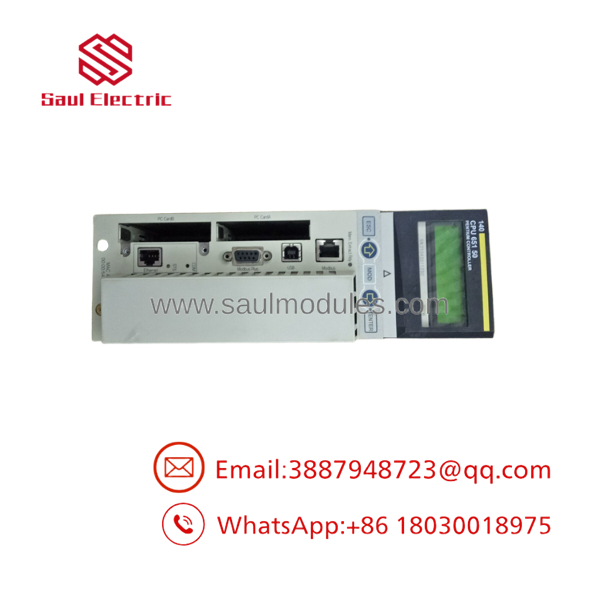
The 140CPU65150 was built for Quantum installations that needed considerably more processing and communication capability than earlier 984-era processors. Its 166 MHz processor, integrated Ethernet port, Modbus Plus interface, USB programming connection, and PCMCIA expansion slots make it a distinctly more capable member of the Quantum CPU family.
For maintenance teams, the important distinction is Unity compatibility. This is not simply another Quantum CPU. Application files, firmware, PCMCIA memory, Ethernet addressing, Modbus Plus topology, and remote-I/O architecture all need to be considered before replacing the processor.
Technical Specifications
| Parameter | Specification |
|---|---|
| Catalog Number | 140CPU65150 |
| Platform | Modicon Quantum |
| Processor Type | Unity Processor |
| Clock Frequency | 166 MHz |
| Internal RAM | 768 kB |
| Program/Data Capacity | 7,168 kB / 512 kB with PCMCIA card |
| Local Racks | 2 |
| Modbus Plus Networks | Up to 3 |
| Distributed I/O Stations | Up to 63 |
| Remote I/O Stations | Up to 31 S908 / Quantum Ethernet; up to 16 X80 Ethernet |
| Ethernet | Integrated 10BASE-T/100BASE-TX |
| Modbus | Integrated |
| USB | Integrated USB programming connection |
| PCMCIA | 2 expansion-card slots |
| Local Discrete I/O | Up to 8,000 inputs / 8,000 outputs |
| Distributed Discrete I/O | Up to 8,000 inputs / 8,000 outputs per Modbus Plus network |
| Remote Discrete I/O | Up to 31,744 inputs / 31,744 outputs |
| Bus Current Requirement | Approximately 2,160 mA |
| Module Format | Standard |
Published Schneider documentation identifies the 140CPU65150 as a 166 MHz Quantum Unity processor with 768 kB internal RAM. Its architecture supports two local racks, up to 63 distributed I/O stations across three Modbus Plus networks, and multiple remote-I/O architectures.
Field Application & the “Trench” Experience
A common legacy-system problem looks deceptively simple: a Quantum controller stops communicating with an Ethernet-based HMI while the I/O remains active. The maintenance team initially suspects the network switch. After checking the physical network, they find that the CPU’s Ethernet interface is involved in the fault.
With a 140CPU65150, the technician has several communication paths to account for. The CPU contains Ethernet, Modbus, Modbus Plus, and USB interfaces, while the control system may also rely on PCMCIA memory or remote-I/O networks.
Before swapping the processor, the team documents the Ethernet configuration, Modbus Plus network, installed PCMCIA cards, application backup, and firmware. Only then does the replacement proceed.
That documentation step prevents a processor replacement from becoming a network-recovery exercise.
Specific applications include:
- Water-treatment PLC systems using Quantum Ethernet remote I/O with Modbus Plus-connected legacy equipment.
- Continuous-process control cabinets where a Unity-based Quantum application coordinates large distributed I/O networks.
- Material-handling systems using Ethernet HMI/SCADA communication alongside existing Modbus Plus devices.
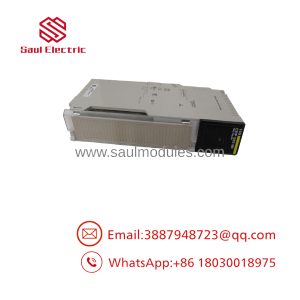
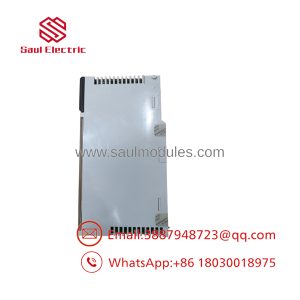
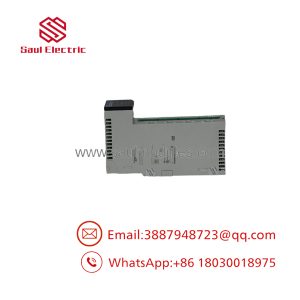
140CPU65150
140CPU65150
140CPU65150
Transparency SOP: QA & Testing
For New Surplus or refurbished 140CPU65150 inventory, testing should go beyond checking whether the LCD display illuminates.
- Part-number verification — confirm
140CPU65150on the actual CPU label. - Physical inspection — examine the LCD/keypad assembly, RJ45 Ethernet connector, USB connector, Modbus connector, Modbus Plus connector, PCMCIA slots, and backplane interface.
- Memory inspection — document any included PCMCIA cards separately from the processor itself.
- Controlled power-up — install the CPU in a compatible Quantum test rack and verify normal startup diagnostics.
- Ethernet test — verify Ethernet communication and basic network connectivity.
- Modbus Plus test — where suitable test equipment is available, confirm the dedicated Modbus Plus interface.
- Application test — execute a controlled Unity application and verify processor operation.
- Condition documentation — clearly state whether the unit is New Surplus, Used, or Refurbished.
Important: A PCMCIA card should not automatically be represented as part of the CPU’s standard memory configuration. The published documentation distinguishes the processor’s 768 kB internal RAM from additional PCMCIA capacity.
The Veteran’s Tech Trap Guide
⚠️ Trap #1 — Don’t confuse internal RAM with PCMCIA memory.
The 140CPU65150 has 768 kB of internal RAM, while the published architecture provides additional program/data capacity through PCMCIA memory cards. If the existing application depends on a card, document and preserve it before replacing the processor.
⚠️ Trap #2 — Ethernet configuration is part of the replacement.
The CPU has an integrated 10BASE-T/100BASE-TX Ethernet interface. IP configuration, PLC addressing, SCADA connections, HMI communications, and Modbus TCP traffic may all depend on the existing configuration.
PRO TIP: Record the Ethernet configuration and Modbus Plus node information before removing the original processor. Do not assume the replacement will automatically reproduce every network parameter.
⚠️ Trap #3 — BMEP582040 is a migration path, not a casual drop-in.
Schneider Electric identifies BMEP582040 as the recommended replacement for 140CPU65150. However, BMEP582040 belongs to the Modicon M580 platform. Moving from Quantum Unity to M580 can involve application conversion, I/O migration, communication changes, and hardware changes.
Dynamic FAQ
Q: What is the Schneider 140CPU65150?
A: It is a Modicon Quantum Unity processor operating at 166 MHz with 768 kB of internal RAM and integrated Ethernet, Modbus, Modbus Plus, and USB interfaces.
Q: Does the 140CPU65150 have Ethernet built in?
A: Yes. Schneider documentation identifies an integrated 10BASE-T/100BASE-TX Ethernet port for Modbus TCP networking.
Q: How much memory does the 140CPU65150 provide?
A: It has 768 kB of internal RAM. Additional program/data capacity can be provided through PCMCIA memory expansion.
Q: Is the 140CPU65150 discontinued?
A: Yes. Schneider Electric lists the 140CPU65150 as discontinued. Regional Schneider sites show different discontinuation dates; Schneider’s U.S. product page lists December 31, 2018, while current regional lifecycle information also indicates that standard service has ended.
Q: What is the recommended replacement for 140CPU65150?
A: Schneider Electric identifies BMEP582040, a Modicon M580 processor, as the recommended replacement. This should be treated as a migration project rather than an assumed one-for-one hardware exchange.
Q: What should I check when buying a New Surplus 140CPU65150?
A: Verify the actual CPU label, inspect the Ethernet/Modbus/Modbus Plus connectors, confirm the physical condition of the LCD and keypad, document any PCMCIA cards separately, and ask whether the processor was powered and function-tested. The supplier should also state the warranty and return conditions in writing.

 Start Chat


