





Description
Product Introduction
The Schneider Electric Modicon 140DAO84000 is a heavy-duty 16-point discrete AC output card designed for the Modicon Quantum PLC platform. Utilizing solid-state Triac switching, it drives 24V AC to 230V AC inductive and resistive field loads without the mechanical wear associated with traditional relay contacts.
Arranged into four isolated channels across four distinct groups, the 140DAO84000 provides excellent electrical isolation between field control circuits and the sensitive Quantum system backplane. Built-in LED indicators on the front panel provide real-time visual feedback for individual output channel activation and diagnostic monitoring.
Key Technical Specifications
| Parameter | Specification Details |
| Module Type | Discrete AC Output Module (Triac Switching) |
| Part Number | 140DAO84000 |
| Manufacturer | Schneider Electric / Modicon |
| Platform Compatibility | Modicon Quantum Backplane Racks |
| Number of Channels | 16 Channels (4 Groups of 4 Channels) |
| Operating Voltage Range | 24 to 230 VAC (47–63 Hz) |
| Maximum Current per Point | 2 A continuous per channel |
| Maximum Current per Group | 8 A max per group of 4 points |
| Surge / Inrush Current | 20 A for 10 ms (Inrush capability for solenoid/contactor coils) |
| Leakage Current (OFF State) | ≤ 3 mA at 230 VAC |
| Response Time | OFF-to-ON: ≤ 1 ms / ON-to-OFF: ½ AC cycle max |
| Isolation Rating | 1780 VAC for 1 minute (Field-to-Bus & Group-to-Group) |
| Bus Current Requirement | ~350 mA max at 5.1V DC (from backplane) |
| Terminal Block | 140XTS00200 (40-pin screw) or 140XTS00201 (40-pin spring) |
Application Scenarios & Field Experience
The 140DAO84000 is widely used in continuous process and manufacturing environments where the PLC must directly actuate high-power AC devices.
- Motor Control Centers (MCC): Switching 115V/230V AC contactor coils for pumps, fans, and heavy mixers.
- Industrial Valve Actuation: Driving motorized 230V AC positioning valves and pneumatic solenoid manifolds in chemical or water management plants.
- Process Heating Control: Cycling 230V AC heating elements and industrial ovens using high-duty-cycle solid-state switching.
- Annunciator & Lighting Panels: Controlling 120V/230V AC stack lights, audible alarms, and panel indicator circuits.
Field Case Study: A municipal pump house experienced frequent contact welding on relay output cards that were switching 230V AC hydraulic solenoid valves. Replacing the mechanical output cards with a solid-state 140DAO84000 eliminated mechanical arcing, easily absorbing the 15A initial inductive coil inrush and restoring zero-maintenance reliability to the main header line.
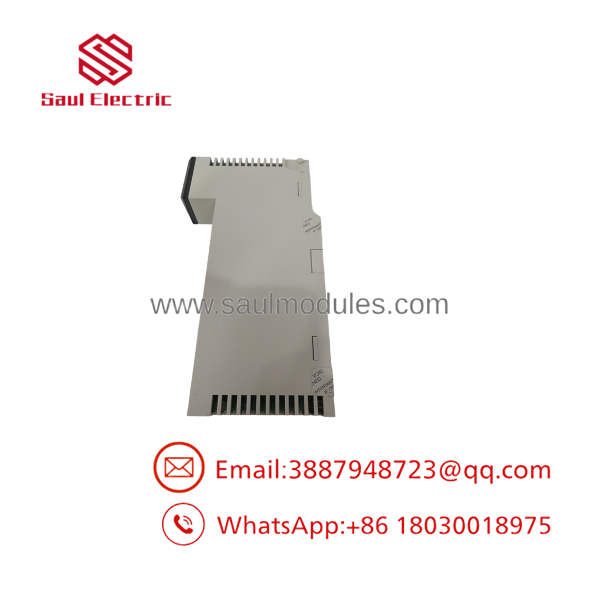
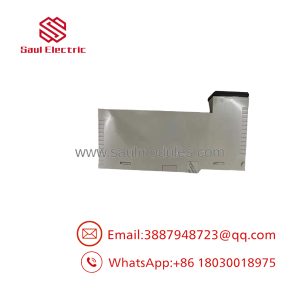
140DAO84000
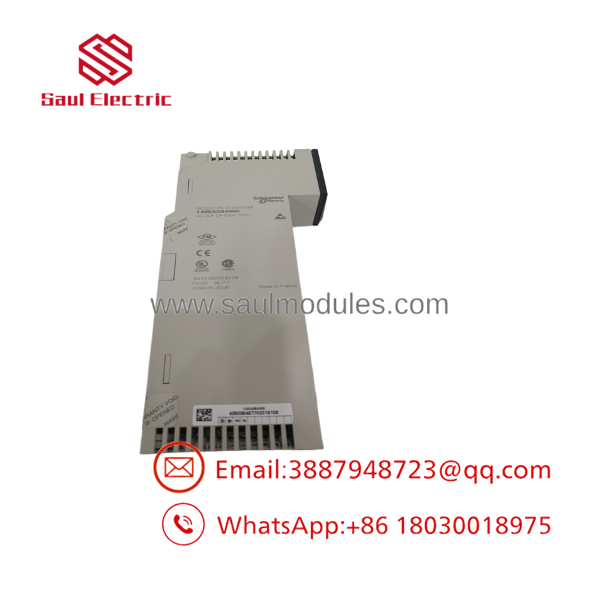
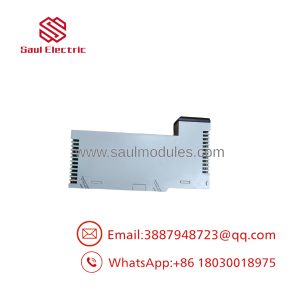
140DAO84000
Quality Assurance & Testing Procedure
Every surplus 140DAO84000 module undergoes a rigorous 16-channel load test before dispatch:
- Visual & Structural Audit: Inspecting backplane gold contacts, side locking clips, and terminal connector housing guides for signs of wear or thermal fatigue.
- Backplane Handshake & Power-On Test: Seated in a Quantum test chassis to verify proper 5.1V bus current draw (~350 mA) and card handshake.
- 16-Channel Inrush & Load Switching Test: Connecting each output channel to a simulated 230V AC inductive load to confirm clean Triac turn-on, off-state leakage boundaries, and LED activation.
- Group Isolation Test: Testing optical isolation between all 4 independent output groups at 1780V AC potential.
- ESD-Safe Packaging: Cleaned, static-shielded, and packaged in custom protective foam cradles.
Technical Field Tips & Traps
- ⚠️ Off-State Triac Leakage Current: Solid-state Triacs inherently exhibit small off-state leakage currents (up to 3 mA). When driving high-impedance low-wattage loads (like small LED indicators or sensitive digital inputs), this leakage can cause the load to flicker or fail to turn off. Installing a load resistor in parallel across the field device resolves this issue.
- ❗ Group Fusing Recommendation: While the card features internal thermal protection, external inline fuses (typically 2A to 4A fast-acting) should be installed on each group power line to safeguard field wiring against sustained short circuits.
- ⚠️ Minimum Load Current Requirement: Triacs require a small minimum continuous current (~10 mA) to stay latching “ON.” Extremely light loads may turn off unexpectedly mid-cycle if current drops below this threshold.
- ❗ Proper Group Power Distribution: Output points are isolated in four groups (Points 1–4, 5–8, 9–12, and 13–16). Each group has its own isolated L1/L2 AC supply feeds, allowing you to run different AC voltages (e.g., 115V AC on Group 1, 230V AC on Group 2) on the same card.
Frequently Asked Questions
Q: What is the main difference between 140DAO84000 and 140DAO85300?
A: The 140DAO84000 is a 16-channel 230VAC module arranged in 4 groups of 4 points (up to 2A per channel). The 140DAO85300 is a higher-density 32-channel 230VAC module with lower current capability per channel (~0.5A).
Q: Can the 140DAO84000 switch DC loads?
A: No. Triac outputs require the natural zero-crossing of an AC sine wave to switch off. Using DC power will cause the Triac to latch ON permanently until DC power is manually removed. For DC load switching, use a DC output module such as the 140DDO35300 or a relay output module like the 140DRA84000.
Q: Can I replace a 140DAO84000 under power (Hot Swap)?
A: Yes, Quantum racks support Removal and Insertion Under Power (RIUP). However, always ensure field power to the removable terminal block (140XTS00200) is isolated before unplugging the wiring arm from the module faceplate.
Q: What programming software is used to configure this card?
A: The 140DAO84000 is supported across all Quantum configuration packages, including Concept, ProWORX 32, and Unity Pro / EcoStruxure Control Expert. Simply select 140DAO84000 from the discrete output library and map the %Q address bits.

 Start Chat


