





Description
Product Introduction & Engineering Value
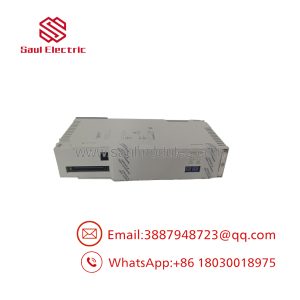
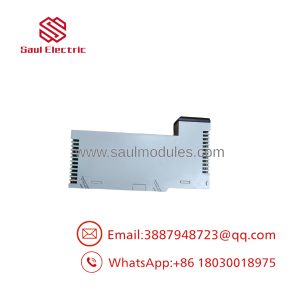
The AS-B809-016 is encountered primarily in legacy SY/MAX installations where the controller, I/O architecture, and field instrumentation have remained in service for many years. In these systems, the practical value of an exact replacement is often greater than simply finding a modern module with a similar number of analog channels.
The critical engineering task is identification. Confirm the complete AS-B809-016 designation, terminal arrangement, I/O signal type, installed rack/base, and application scaling before substitution. Legacy SY/MAX documentation is less standardized in secondary catalogs than current Schneider product data, so assumptions based on a similar-looking AS-B809 module can create wiring or signal-range errors.
Technical Specifications
| Parameter | Engineering Detail |
|---|---|
| Catalog Number | AS-B809-016 |
| Manufacturer | Square D / Schneider Electric |
| Automation Family | SY/MAX |
| Product Class | Analog I/O |
| Series | SY/MAX 800 |
| Application | Analog process/control signals |
| Installation | SY/MAX-compatible rack/system |
| I/O Interface | Field wiring through module terminal interface |
| System Age | Legacy automation platform |
| Replacement Approach | Exact-part verification recommended |
| Configuration | Dependent on installed SY/MAX controller/application |
| Documentation Requirement | Verify original Schneider/Square D hardware documentation |
Procurement note: Detailed electrical values such as individual input/output ranges, resolution, isolation, and channel count should be confirmed against the exact AS-B809-016 documentation or physical module marking. Public legacy references are inconsistent enough that publishing an assumed specification would be poor engineering practice.
Field Application & the “Trench” Experience
A plant has a SY/MAX-controlled utility system that has been operating for years. A process value suddenly becomes unstable on the operator display.
The maintenance team initially suspects the transmitter. The transmitter checks out.
Next, they check the field loop and find a stable signal. The problem is now narrowed to the I/O path or controller scaling.
This is where legacy systems can become difficult. The original documentation may identify the signal by an old channel number rather than a modern I/O tag. The technician has to trace the physical terminal, compare the module designation, inspect the rack position, and then verify the controller’s raw value against the expected engineering range.
The fastest diagnosis is usually signal tracing from field device → terminal → module → controller register → displayed engineering value.
Specific application scenarios:
- Legacy utility control panels: analog pressure, temperature, and flow measurements.
- Motor/process control: analog feedback used for speed or process regulation.
- Water and wastewater equipment: level and flow instrumentation.
- Older production machinery: analog setpoints and feedback retained during phased modernization.
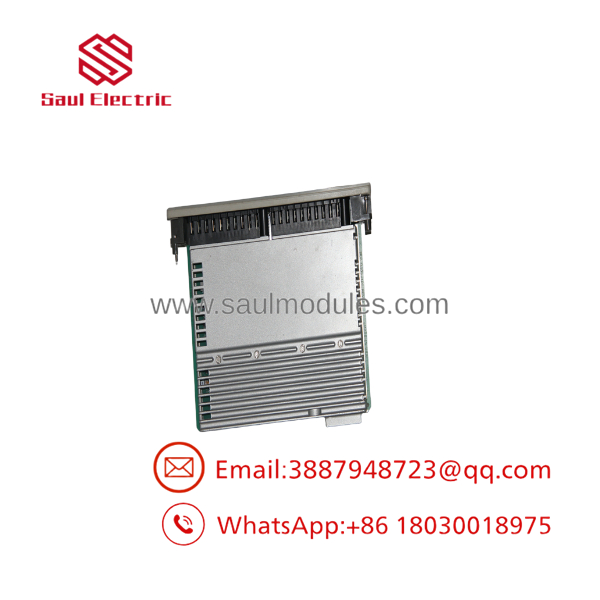
AS-B809-016
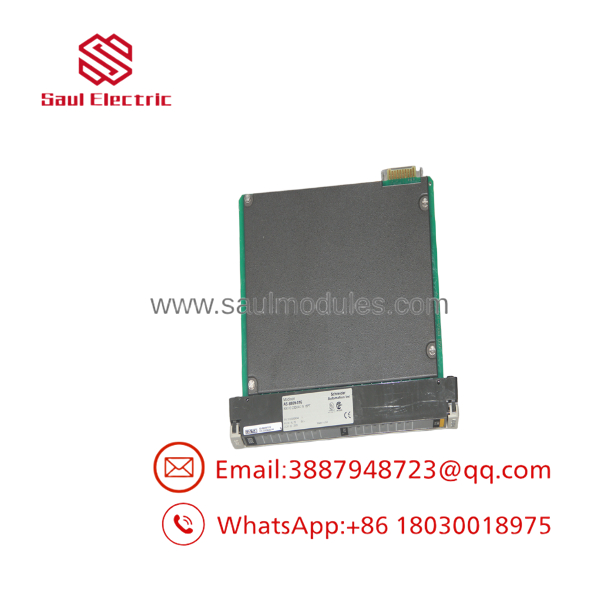
AS-B809-016
Transparency SOP: QA & Testing
For New Surplus or refurbished AS-B809-016 inventory, identification should precede functional testing.
- Verify the exact part number — Confirm
AS-B809-016on the physical module. - Inspect the housing — Look for cracked plastic, damaged terminals, corrosion, or evidence of unauthorized repair.
- Inspect the connector/interface — Confirm terminal condition and pin integrity.
- Verify system compatibility — Use an appropriate SY/MAX test rack or documented compatible system.
- Power-up test — Confirm normal module behavior without diagnostic faults.
- Analog simulation — Apply known signals only after the exact input/output range has been confirmed from authoritative documentation.
- Channel verification — Test each applicable channel with calibrated instrumentation.
- Controller verification — Confirm the SY/MAX controller receives the expected raw values.
- Scaling check — Compare raw values with the application’s configured engineering-unit scaling.
- Document the test — Record the exact module identification, test equipment, channels exercised, and final stock condition.
Do not test an unidentified legacy analog module by randomly applying voltage or current. First establish the correct signal range and terminal assignment.
The Veteran’s Tech Trap Guide
⚠️ Trap #1 — Don’t infer specifications from the AS- family name.
Legacy Square D/SY/MAX modules can have closely related catalog numbers with different functions or signal configurations. The suffix -016 matters. Verify the complete number before wiring anything.
⚠️ Trap #2 — Never assume a modern 4–20 mA module is a direct substitute.
A modern analog module may offer similar process signals but use a completely different rack interface, addressing scheme, terminal arrangement, scaling format, and communication architecture.
PRO TIP: If the plant needs immediate production recovery, an exact verified spare is usually the lowest-risk option. Treat modernization as a separate engineering project.
⚠️ Trap #3 — Preserve the original scaling.
Even if the replacement hardware produces a correct raw analog value, the displayed process value can still be wrong if the SY/MAX application uses a specific raw-count-to-engineering-unit conversion.
⚠️ Trap #4 — Check the physical module, not only the purchasing description.
For legacy inventory, labels, revision markings, terminal configuration, and physical condition can provide information that a distributor database does not.
Dynamic FAQ
Q: What is the Schne AS-?
A: AS- is a legacy Square D / Schneider Electric SY/MAX 800 Series analog I/O module used in SY/MAX automation systems.
Q AS- a current Schneider product?
A: It belongs to the legacy SY/MAX product family. Current availability is therefore primarily through existing inventory, surplus stock, used equipment, or specialist automation-parts suppliers.
Q: Can I substitute another AS- module?
A: Do not assume compatibility. Verify the complete catalog number, electrical signal type, terminal configuration, rack compatibility, controller addressing, and application scaling.
Q: What should I check whe AS- channel gives an incorrect process value?
A: Start at the field instrument and trace the complete signal path. Check the transmitter, field wiring, terminal connections, module channel, controller raw value, and engineering-unit scaling in that order.
Q: How should New Sur AS- inventory be tested?
A: First verify the exact module identity and authoritative electrical specifications. Then inspect the hardware, install it in a compatible SY/MAX test environment, apply controlled analog signals appropriate to the documented range, and verify the resulting controller values. The supplier should clearly state whether the unit is New Surplus, Used, or Refurbished, together with warranty and return terms.
Q: What information should I provide when orderin AS- replacement?
A: Provide the complete catalog number, photographs of the nameplate and terminals when possible, the SY/MAX controller/rack model, the existing I/O configuration, and the field signal type. This substantially reduces the risk of receiving a visually similar but electrically incorrect legacy module.

 Start Chat


