





Description
Product Introduction & Engineering Value
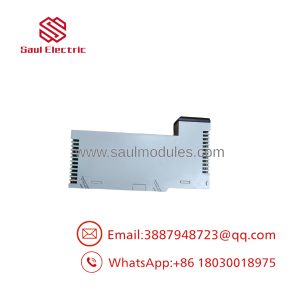
The CP260 / 3CP260 should be treated as a model-specific industrial power-supply spare rather than selected solely by the CP260 designation. For cabinet replacement work, the critical parameters are the actual AC input arrangement, DC output voltage/current, protection characteristics, and mechanical mounting configuration.
That distinction matters when maintaining older control panels. A power supply can appear physically compatible while having a different output rating or input configuration. Verify the nameplate before connecting a replacement to PLC, I/O, relay, or instrumentation circuits.
Technical Specifications
Because the available public information does not reliably establish the complete specification for 3CP260, the following parameters should be verified against the actual unit:
- Manufacturer: Schneider Electric
- Model: CP260 / 3CP260
- Product Type: Industrial power supply
- Input Voltage: Verify from nameplate
- Input Phase: Verify; model designation alone is insufficient
- Output Voltage: Verify from nameplate
- Output Current: Verify from nameplate
- Output Power: Calculate/verify from rated output
- Input Frequency: Verify from product documentation
- Protection Functions: Verify applicable overcurrent/overvoltage/short-circuit protection
- Mounting Method: Verify cabinet/panel configuration
- Terminal Arrangement: Verify against the installed unit
- Certifications: Verify from the exact hardware revision
Procurement Warning
Do not substitute a generic CP-series power supply based on physical appearance. The output voltage and current rating must match the downstream automation equipment.
Field Application & the “Trench” Experience
A legacy control cabinet begins showing intermittent PLC resets. The 24 VDC distribution appears normal when measured with no load, so the initial diagnosis points toward the controller.
The maintenance technician measures the supply again while contactors and I/O loads are operating. The voltage drops substantially during the load transition. The old CP260 power supply has degraded under dynamic loading.
The replacement is selected by comparing the complete nameplate, not just “CP260.” After installation, the technician verifies output voltage under both idle and loaded conditions and checks the PLC’s 24 VDC terminals directly.
That is the practical lesson: a power supply that measures correctly at no load can still be the source of an intermittent automation fault.
Potential applications include:
- PLC control-panel power distribution
- Industrial relay and contactor control circuits
- Legacy machine-control cabinets
- Distributed I/O power supplies
- Instrumentation and process-control panels
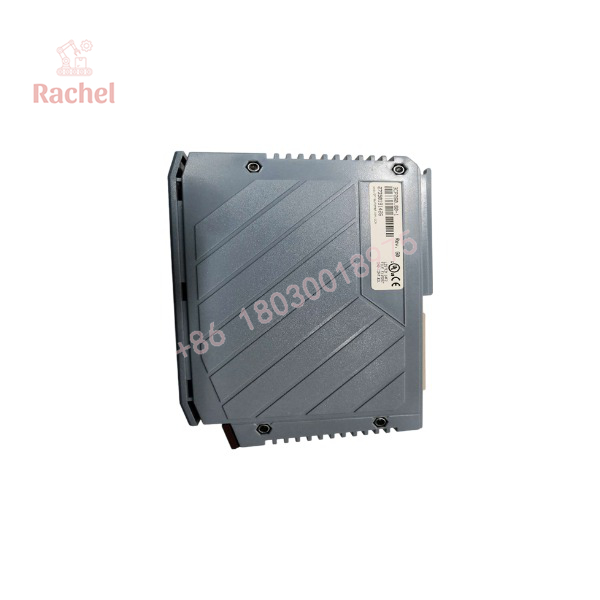
3CP260 CP260
Transparency SOP: QA & Testing
For New Surplus or Refurbished CP260 / 3CP260 inventory, a proper QA procedure should include:
- Nameplate verification — Record the complete model, electrical ratings, revision, and serial number.
- Physical inspection — Check terminals, enclosure, mounting hardware, ventilation openings, and signs of overheating.
- Insulation inspection — Check for contamination, corrosion, or damage that could affect isolation.
- Controlled startup — Apply the specified input voltage through appropriate protective test equipment.
- Output measurement — Measure the DC output at no load and under a controlled representative load.
- Load regulation test — Observe output stability as the load changes.
- Protection test — Where the manufacturer’s test procedure permits, verify appropriate current-limit or fault behavior.
- Thermal observation — Monitor abnormal heating during sustained operation.
- Documentation — Record actual measured values rather than simply marking the unit “tested.”
For a refurbished power supply, load testing is particularly important. A simple power-on test does not establish its ability to support a control cabinet.
The Veteran’s Tech Trap Guide
⚠️ Do not connect the replacement until the input and output ratings are confirmed.
“CP260” is not enough information to safely determine the correct wiring. Verify the complete electrical nameplate.
PRO TIP: Photograph the old power supply before removal. Capture the model label and every terminal marking. Include those photographs with the purchase order.
⚠️ Check output voltage at the load.
A supply can produce the correct voltage at its terminals but suffer excessive voltage drop through degraded wiring, terminals, or connectors. Measure at the PLC/I/O load during normal operation.
⚠️ Watch for capacitor aging.
Older industrial power supplies can develop increased ripple and reduced load-handling capability before they fail completely. If a CP260 is being replaced because of intermittent controller resets, check the DC bus with an appropriate oscilloscope measurement rather than relying exclusively on a handheld multimeter.
⚠️ Do not mix “same model” with “same electrical revision.”
For legacy inventory, confirm the complete part number and revision. If the existing unit has an additional suffix or rating label, that information should be included in the replacement RFQ.
Dynamic FAQ
Q1. What is the Schneider Electric CP260 / 3CP260?
CP260 / 3CP260 is identified in industrial spare-parts references as Schneider Electric power-supply hardware. The publicly available information I could verify does not establish enough exact electrical data to safely publish a complete datasheet for this designation.
Q2. What is the output voltage?
The exact output voltage should be read from the unit’s nameplate or confirmed from the applicable Schneider documentation. I would not infer it from the CP260 designation.
Q3. Can a different CP-series power supply replace 3CP260?
Not automatically. Input configuration, output voltage, output current, terminal arrangement, mechanical dimensions, and protection characteristics all need to match.
Q4. How should I specify this part when requesting a quotation?
Use the complete designation Schneider Electric CP260 / 3CP260, and provide a photograph of the nameplate. If available, also provide the hardware revision, serial number, input/output ratings, and the equipment in which it is installed.
Q5. How do I authenticate New Surplus CP260 inventory?
Request photographs of the actual unit, including the Schneider label, complete model designation, electrical ratings, serial number, and packaging. Confirm that “New Surplus” means unused original inventory rather than refurbished or repaired stock.
Q6. What should a refurbished-unit warranty cover?
At minimum, request written coverage for power-up, rated output voltage, load performance, and normal protection behavior. For a production-critical spare, ask for documented load-test results rather than accepting a simple “tested OK” statement.
Important: If you can provide a photo of the CP260 / 3CP260 nameplate, I can identify the exact electrical ratings and produce a much more precise technical specification table without guessing.

 Start Chat


