





Description
Product Introduction & Engineering Value
The TSXP572623M belongs to a generation of Premium processors widely encountered in long-running industrial control installations. Its job is straightforward but critical: execute the application logic and maintain deterministic interaction with the installed Premium I/O and communication architecture.
Replacing a Premium CPU is not equivalent to replacing a discrete I/O card. The application program, CPU configuration, memory contents, firmware revision, rack configuration, communication parameters, and retained process data all need to be considered. A powered-up replacement CPU can still leave a plant unable to run if the application or configuration has not been transferred correctly.
Technical Specifications
| Parameter | Specification |
|---|---|
| Catalog Number | TSXP572623M |
| Platform | Modicon Premium |
| CPU Family | TSX P57 |
| Processor | P57 2623M |
| Product Type | PLC processor / CPU |
| System Architecture | Premium modular PLC |
| Programming Software | PL7 |
| Memory | Application-dependent; verify installed CPU documentation |
| Rack Communication | Premium backplane |
| I/O Management | Local and configured distributed/remote I/O architectures |
| Communication | Dependent on configured communication modules and system architecture |
| Programming Port / Interfaces | Verify exact CPU hardware revision |
| Application | Industrial machine and process automation |
Procurement note: The suffix M and the complete TSXP572623M designation should be retained when sourcing a replacement. Do not treat TSXP572623 and TSXP572623M as interchangeable without checking the manufacturer’s documentation and the installed application.
Field Application & the “Trench” Experience
A production line built around a Premium PLC experiences a CPU failure during a planned maintenance shutdown. The maintenance team has an apparently matching spare.
The hardware fits.
The rack powers up.
The machine still does not start.
The problem turns out to be the application image. The spare CPU does not contain the same application configuration, and the engineering laptop has an older project backup. Before commissioning, the team has to reconcile the project version, PLC configuration, I/O configuration, communication settings, and retained data requirements.
This is the reality of legacy CPU replacement. Mechanical compatibility is only the first check.
For a critical spare, maintaining a verified CPU plus a known-good application backup is substantially more useful than keeping an untested processor on a shelf.
Specific application scenarios:
- Packaging lines: coordinated machine sequencing and distributed I/O.
- Material-handling systems: conveyor sequencing, interlocks, and drive control.
- Process utility skids: pump, valve, alarm, and permissive logic.
- Legacy production cells: Premium-based machine control retained during phased modernization.
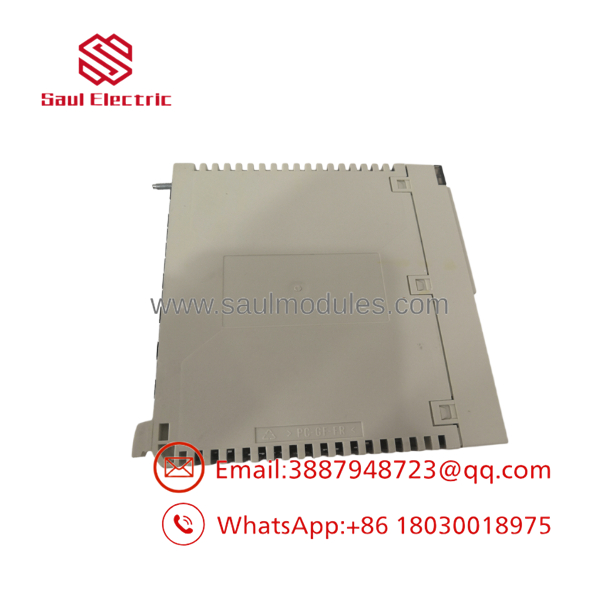
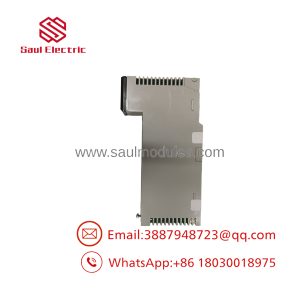
TSXP572623M
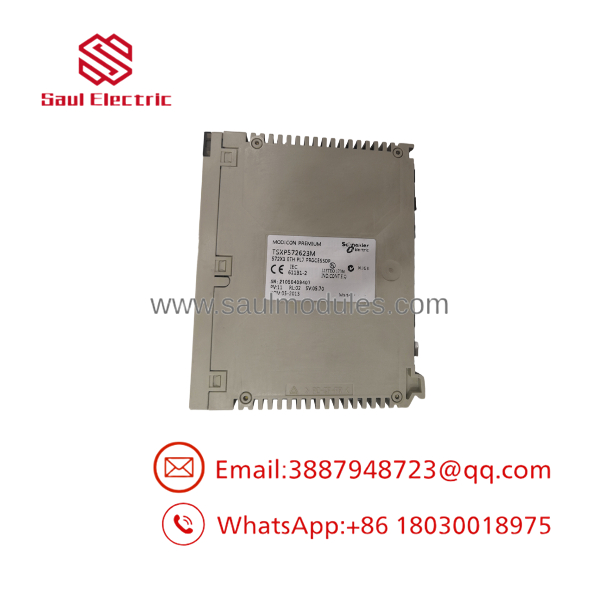
TSXP572623M
Transparency SOP: QA & Testing
CPU testing requires more than checking whether the processor powers up.
- Catalog verification — Confirm
TSXP572623Mon the physical label. - Visual inspection — Check the housing, backplane connector, front interface, LEDs, and labeling.
- Hardware inspection — Check for corrosion, damaged contacts, cracked housing, or evidence of unauthorized repair.
- Controlled rack test — Install the CPU in a compatible Premium test rack.
- Startup verification — Confirm expected CPU initialization and status behavior.
- Programming connection — Establish communication with the appropriate Premium programming environment.
- Application download test — Where authorized, load a controlled test application or known-good project.
- I/O verification — Confirm the CPU can communicate with the configured test I/O.
- Communication verification — Test applicable configured communication interfaces.
- Final documentation — Record hardware identification, revision information, test configuration, and stock condition.
For a New Surplus unit, the absence of operating hours or field use does not eliminate the need for electrical and functional verification.
The Veteran’s Tech Trap Guide
⚠️ Trap #1 — Don’t assume a matching label means matching firmware.
Legacy Premium CPUs can exist with different firmware revisions. Before installing a spare into a production system, compare the CPU revision against the application’s requirements and existing project documentation.
⚠️ Trap #2 — Protect the original application.
Before removing a functioning CPU, capture the application and configuration whenever the system permits it. If the CPU fails unexpectedly, the project backup may become the most valuable part of the spare-parts strategy.
PRO TIP: Keep at least one verified offline copy of the Premium application with the CPU’s hardware identification and communication configuration.
⚠️ Trap #3 — Retained data can matter.
A CPU replacement can restore program execution while still changing retained registers, counters, recipes, setpoints, or machine-state information. Determine what data must survive the replacement before commissioning.
⚠️ Trap #4 — Don’t mix programming environments casually.
The Premium generation uses its own engineering ecosystem. Confirm that the available programming software, project version, communication interface, and required software licenses are compatible with the installed CPU.
Dynamic FAQ
Q: What is the Schneider TSXP572623M?
A: It is a Modicon Premium TSX P57-series PLC CPU, specifically the P57 2623M processor, used as the central processor of a Premium control system.
A: The CPU executes the PLC application and coordinates the configured Premium I/O, system services, and communication functions.
Q: What programming software is used with the ?
A: The Premium platform is associated with Schneider’s PL7 programming environment. Verify the exact software and version requirements against the installed CPU firmware and project.
Q: Can I simply install a replacement and start the machine?
A: No. The replacement must be checked for hardware and firmware compatibility, then loaded with the correct application/configuration. Retained data and communication parameters may also need to be restored.
Q: What information should I provide when purchasing a replacement CPU?
A: Provide the complete part number, photographs of the CPU label and front panel, hardware/firmware revision information, the Premium rack configuration, and details of the existing application backup.
Q: How should New Surplus stock be verified?
A: Verify the exact catalog number, inspect the CPU and backplane connector, power it in a compatible Premium test rack, establish programming communication, and perform an appropriate application/diagnostic test. The supplier should explicitly identify the unit as New Surplus, Used, or Refurbished and state the warranty and return conditions.

 Start Chat


