





Description
Product Introduction & Engineering Value
Identifying the correct ATCS-15 configuration is the first step toward a dependable replacement. Supplier catalogs associate this model with SCHUMACHER industrial control equipment, but the exact hardware function and electrical interface should be confirmed before procurement.
For maintenance teams, the priority is a like-for-like match—not simply a similar model label. Confirm the complete part number, terminal arrangement, supply requirements, and application before removing the existing unit from service.
Technical Specifications
The following specifications are reported by a supplier for the ATCS-15 1464-0320 configuration. They are not independently verified against an OEM datasheet, so confirm them before using them for engineering approval.
| Parameter | Reported specification | Verification status |
|---|---|---|
| Model | ATCS-15 1464-0320 | Supplier-listed |
| Manufacturer | SCHUMACHER | Supplier-listed |
| Equipment type | Temperature controller | Supplier-listed |
| Supply voltage | 100–240 VAC | Confirm nameplate |
| Supply frequency | 50/60 Hz | Confirm nameplate |
| Temperature range | +10°C to +60°C | Confirm exact variant |
| Control accuracy | ±0.1°C | Confirm test conditions |
| Temperature sensor | PT100 RTD | Confirm sensor configuration |
| Communications | RS-232 / RS-485 | Confirm physical interfaces |
| Display | Local display and keypad | Confirm front-panel revision |
| Mounting | 19-inch rack mount | Confirm chassis dimensions |
| Protection rating | IP20 | Confirm manufacturer documentation |
Important: The ATCS-15 family includes variants with different temperature ranges and application-specific configurations. Do not assume that every ATCS-15 unit has identical operating limits. The equipment manufacturer’s documentation identifies separate versions for standard temperature control and specialized semiconductor applications.
Field Application and Maintenance Scenario
A replacement during a semiconductor equipment service window
Consider a maintenance team troubleshooting a wafer-processing tool whose temperature-control unit no longer maintains its established process setpoint. The team identifies an ATCS-15 controller as the suspected replacement candidate.
Before authorizing the swap, the engineer checks the complete part number, the existing temperature range, sensor type, alarm wiring, and controller configuration. The replacement is then validated against the tool’s service procedure before production resumes. This is an illustrative scenario, not a documented customer installation.
Potential application scenarios include:
- Semiconductor thermal management: Temperature regulation for process equipment using compatible thermal-control assemblies.
- Wafer carrier or cold-plate temperature control: Maintaining process temperatures when the installed equipment configuration supports the controller.
- Legacy equipment maintenance: Replacing a failed controller while retaining the existing equipment architecture, subject to verified electrical and mechanical compatibility.
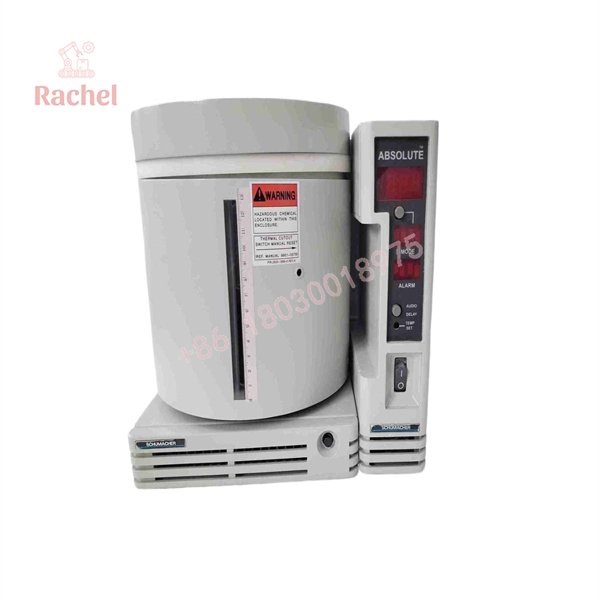
ATCS-15
Quality Assurance and Testing
A supplier’s condition label alone does not establish that a used or surplus controller is fit for service. Request a documented inspection and test report.
- Identity check: Verify the manufacturer’s label, complete part number, revision, and serial number where applicable.
- Visual inspection: Examine the housing, connectors, terminals, display, and signs of heat damage or corrosion.
- Electrical inspection: Check the power-input requirements and inspect for visible damage before energizing the unit.
- Functional testing: Request evidence that the controller powers up, accepts settings, reads a compatible sensor, and responds correctly to control and alarm conditions.
- Final documentation: Confirm the supplied condition, test results, warranty terms, and return procedure in writing.
New-surplus units may be unused but stored for an extended period. Refurbished units may contain repaired or replaced components. These conditions should be described accurately on the quotation and invoice.
Replacement Pitfalls: What Engineers Should Check
Pitfall 1: Matching only the model name
The model family alone may not identify the required hardware. Verify the complete part number, including 1464-0320 when applicable, and compare it with the original unit.
Pitfall 2: Ignoring temperature limits and interlocks
Standard versions and specialized variants can have different setpoint limits and protection arrangements. Confirm the exact configuration before reconnecting heaters, cooling equipment, or process interlocks.
Pitfall 3: Treating communications compatibility as automatic
A similar connector does not guarantee identical pin assignments, protocol settings, or communication behavior. Record the original settings and validate the interface against the equipment documentation before returning the tool to production.
PRO TIP: Photograph the original nameplate, wiring, connector orientation, and parameter settings before removal. Follow the equipment manufacturer’s lockout/tagout procedure and applicable electrical-safety requirements.
Frequently Asked Questions
Q1. What is the SCHUMACHER used for?
Supplier listings associate the with temperature-control equipment. The exact function and supported process depend on the specific configuration.
Q2. Is 1464-0320 the same as ?
The longer number is a specific part-number designation found in supplier listings. Confirm the full identifier on the installed unit before ordering; do not assume every unit labeled is interchangeable.
Q3. Is the still available as a new product?
Industrial spare-parts suppliers advertise units, including new-surplus and used stock. Advertised availability does not guarantee current inventory or establish that a unit is factory-new. Request current stock confirmation and condition photographs before purchasing.
Q4. Can I replace the controller without changing the existing wiring?
Not without verifying compatibility. Check supply voltage, terminal assignments, sensor wiring, outputs, communications, and safety interlocks. Have qualified personnel validate the installation against the equipment documentation.
Q5. How can I verify that a new-surplus is authentic?
Request clear photographs of the original manufacturer label, complete part number, serial number if present, packaging, and any available traceability records. Ask for a functional test report and written confirmation of the item’s condition. No single photograph or supplier statement independently proves authenticity.
Q6. What warranty should I expect when ordering an ?
Warranty coverage varies by supplier, product condition, and sales terms. Obtain written confirmation of the warranty period, coverage exclusions, return authorization process, and remedy for a unit that fails incoming inspection or initial functional testing.

 Start Chat


