





Description
Product Introduction & Engineering Value
The CM 3201 is not an I/O module. It is the communications interface for a Trident controller, supporting three configurable serial ports and two Ethernet network interfaces. Its serial interfaces support Modbus master/slave operation, while the network interfaces support Triconex-specific and standard Ethernet-based communications.
For legacy Trident installations, the 3201 is a system-level spare rather than a generic communications card. Replacement should therefore include verification of the installed TriStation configuration, communication topology, firmware compatibility, port assignments, and whether the installation uses a single or redundant CM arrangement.
Technical Specifications
| Specification | Triconex 3201 |
|---|---|
| Product family | Trident |
| Module designation | CM 3201 |
| Function | Communication Module |
| Controller interface | Trident MP baseplate |
| Nominal input voltage | 24 VDC |
| Operating voltage | 19.2–30 VDC |
| AC ripple allowance | 5% |
| Absolute maximum input voltage | 33 VDC |
| Maximum reverse input voltage | −0.6 VDC |
| Logic power, without MAUs | 8 W maximum |
| Serial interfaces | 3 |
| Serial electrical interfaces | RS-232 / RS-485 |
| Serial isolation | Optically isolated |
| Serial connector | DB-9 DTE, shielded, located on baseplate |
| RS-232 maximum cable length | 15 m / 50 ft |
| RS-485 maximum cable length | 1.2 km / 4,000 ft |
| Ethernet interfaces | 2 |
| Ethernet media | 10/100Base-TX; MII/AUI options supported |
| AUI output | 12 V ±10%, 6 W maximum |
| MII output | 5 V ±5%, 3.75 W maximum |
| Protective-to-functional-earth isolation | 500 VDC |
| Input interruption tolerance | 1 ms maximum |
| Typical inrush | 1.2 A for 50 ms |
| Maximum inrush | 2.4 A |
| Approx. dimensions | 220 × 169 × 44 mm |
| Approx. weight | 5 kg |
The published Trident manual specifies three optically isolated RS-232/485 ports, configurable through TriStation, and two Ethernet ports. Supported serial rates include 1,200 through 57,600 bps in the documented configuration.
Supported Communication Functions
The CM 3201 supports:
- Modbus master/slave on serial ports
- TCP/IP
- TriStation network communications
- TSAA
- Triconex Peer-to-Peer
- Network time synchronization
- JetDirect network printer services
- Communication with DCS and host-computer systems
These functions allow the Trident controller to exchange process and diagnostic information without placing ordinary communications duties on the safety I/O modules.
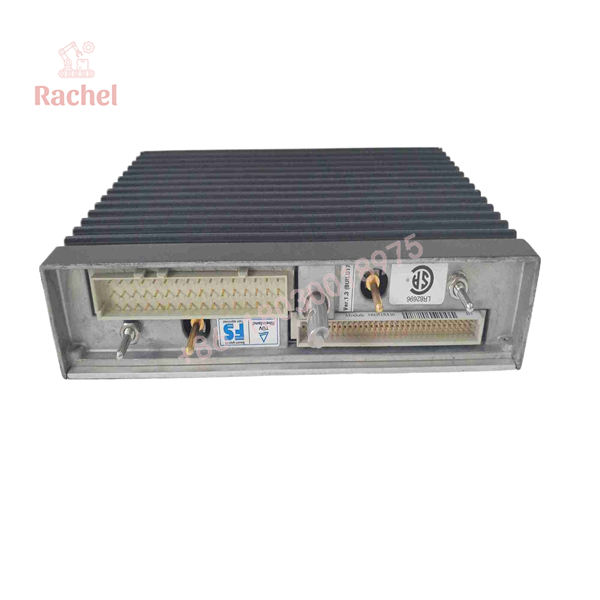
3201
Field Application & “Trench” Experience
A typical legacy installation may have a Trident controller communicating with a DCS through one serial port while a second port serves a Modbus device and the Ethernet interfaces provide engineering or supervisory communications.
That architecture makes the 3201 particularly important during troubleshooting. A controller can continue executing its control application while losing external communications. Replacing the wrong module—or incorrectly configuring the replacement—can therefore leave the safety system operational while disrupting DCS visibility, SOE-related communications, engineering access, or peer-to-peer data exchange.
Niche Applications
Trident-to-DCS communications
The 3201 can provide Modbus-based serial communications to external control or supervisory systems.
Trident engineering networks
The Ethernet interfaces support TriStation and other Triconex network functions.
Redundant communication architectures
A Trident system can use two communication modules on the communication-module baseplate for redundant communication paths.
Transparency SOP: QA & Testing
For a replacement 3201, functional testing should extend beyond simply powering the module.
Recommended Incoming Inspection
- Verify model — Confirm the module is marked
3201/CM 3201. - Inspect front-panel indicators — Check PASS, FAULT, ACTIVE, serial TX/RX, and network status indicators.
- Inspect connectors — Check the baseplate connector and communications interfaces for damage.
- Verify supply requirements — Confirm the Trident baseplate supplies the specified 24 VDC operating range.
- Serial-port test — Test each required RS-232/485 port using the actual application protocol.
- Ethernet test — Verify network link, transmission, and reception on the applicable network ports.
- TriStation communication — Confirm engineering communication where required.
- Modbus test — If used, verify both master/slave functionality and configured baud/parity settings.
- Configuration verification — Compare the replacement configuration with the existing system documentation.
- System-level test — Confirm DCS, peer-to-peer, and supervisory communications after installation.
For New Surplus units, the nameplate and revision should be photographed before installation. A sealed box alone does not establish compatibility with a particular Trident configuration.
Veteran’s Tech Trap Guide
Trap 1 — Confusing 3201 with a digital input module
This is a significant cataloging problem.
The official Trident documentation identifies 3201 as the Communication Module, while 3301 is the 32-point, 24 VDC Digital Input Module.
PRO TIP: If a supplier describes “Triconex 3201” as a 32-channel digital input module, stop and verify the nameplate. That description conflicts with the Trident system documentation.
Trap 2 — Treating it as a generic Ethernet card
The 3201 is integrated into the Trident communication architecture. It provides three serial ports plus two network ports and supports Triconex-specific protocols in addition to Modbus and TCP/IP.
A standard Ethernet communications card is not an equivalent replacement.
Trap 3 — Ignoring the communication configuration
Replacing the physical module does not necessarily reproduce the original communication setup.
Check:
- Serial port assignment
- RS-232 versus RS-485
- Baud rate
- Modbus master/slave configuration
- Network addressing
- TriStation configuration
- Peer-to-peer configuration
- Redundant communication arrangement
PRO TIP: Preserve the existing configuration before removing the failed module whenever the system condition permits it.
Dynamic FAQ
What is Triconex 3201?
The 3201 is the CM Communication Module for the Triconex Trident safety controller. It interfaces the Trident system with external computers, DCS platforms, networks, other Trident systems, and Tricon systems.
How many serial ports does the 3201 have?
It provides three optically isolated RS-232/RS-485 serial ports. The ports are configurable through TriStation.
Does the 3201 have Ethernet?
Yes. The Trident CM 3201 provides two Ethernet network ports. The documented architecture supports 10/100Base-TX and media-interface options.
What voltage does the Triconex 3201 require?
The nominal supply is 24 VDC, with a specified operating range of 19.2–30 VDC including the documented ripple allowance. The absolute maximum input voltage is 33 VDC.
Is Triconex 3201 a TMR I/O module?
No. It is a communication module. The Trident architecture uses separate modules for processing and I/O; the 3201 provides the communications interface.
What should be verified when purchasing New Surplus 3201?
Verify the exact 3201 / CM 3201 designation, module revision, physical condition, connector condition, communication interfaces, configuration compatibility, and functional-test evidence. For a safety-system spare, also establish the seller’s warranty and New Surplus authenticity separately from the manufacturer’s original warranty status.

 Start Chat


