





Description
Product Introduction
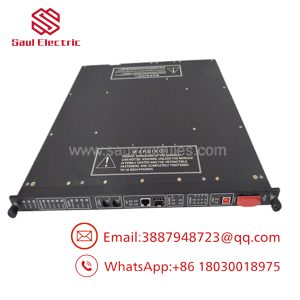
The Triconex 4211 is a Remote Single-Mode Remote Extender Module (SRXM) used in the Tricon Safety Instrumented System to connect remote expansion chassis to the main controller over long-distance fiber-optic links. The module enables safety I/O cabinets to be installed several kilometers away from the Main Chassis while preserving the Triple Modular Redundant (TMR) architecture and deterministic communication. The 4211 is supplied as part of the 4211-3 remote SRXM set, which works with the 4210-3 primary SRXM set.
Unlike conventional Ethernet media converters, the 4211 extends the proprietary Tricon I/O bus rather than general-purpose network traffic. In field installations, this allows remote process units, compressor stations, tank farms, or offshore platforms to place safety I/O close to the equipment while keeping the main controller in a central control room. Verify fiber type, module pairing, and chassis configuration before installation.
Key Technical Specifications
| Parameter | Value |
|---|---|
| Manufacturer | Triconex (Schneider Electric) |
| Model | 4211 |
| Product Type | Remote Single-Mode Remote Extender Module (SRXM) |
| System | Tricon Safety Instrumented System |
| Communication Medium | Single-Mode Fiber Optic |
| Fiber Connectors | ST Connectors |
| Maximum Communication Distance | Up to 12 km (7.5 miles) |
| Communication Architecture | Triple Fiber Channels (A, B, C) |
| Installation | Remote Expansion Chassis |
| Companion Module | 4210-3 Primary SRXM |
| Communication Speed | 375 kbps Tricon I/O Bus |
| Diagnostic LEDs | PASS, FAIL, ACTIVE, TX, RX1, RX2, RX3 |
| Operating Temperature | -20°C to +70°C |
| Safety Architecture | Triple Modular Redundant (TMR) |
Engineering Note: The 4211 is not an Ethernet communication module. It extends the proprietary Tricon I/O bus between the Main Chassis and Remote Expansion Chassis through redundant fiber-optic communication. Confirm that the installation uses single-mode fiber and the correct 4210/4211 SRXM pair before ordering.
Application Scenarios & The “Trench” Experience
Distance changes everything.
A pipeline compressor station needed safety I/O located several kilometers away from the control building. Copper communication cables suffered from lightning-induced noise and ground potential differences, causing repeated communication alarms.
Replacing the communication path with the 4210/4211 SRXM fiber-optic pair eliminated the electrical interference entirely. The safety logic never changed. The communication medium did.
That’s one of the biggest advantages of fiber in SIS applications.
Typical Applications
Oil & Gas — Pipeline Compressor Stations — Connects remote emergency shutdown I/O cabinets over long fiber runs.
Offshore Platforms — Remote Equipment Modules — Links safety I/O located on separate production decks.
Refineries — Tank Farm Safety Systems — Extends safety communications between central control buildings and remote storage areas.
Power Generation — Distributed Turbine Protection — Connects remote turbine protection panels to the main Tricon controller.
Chemical Plants — Large Process Units — Supports geographically separated SIS cabinets while maintaining TMR communication.
Field Replacement Example
A refinery experienced intermittent communication loss with a remote I/O chassis approximately 4 km from the main control room. Initial troubleshooting focused on the controller, but loopback testing revealed excessive optical attenuation caused by a damaged splice enclosure. After repairing the fiber and replacing the affected 4211, all communication channels synchronized successfully. Production resumed without modifying the application logic or replacing any I/O modules.
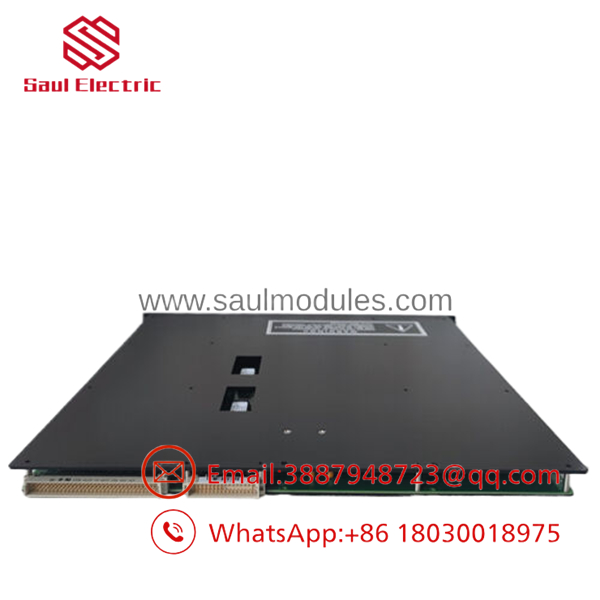
- 4211

- 4211
Transparency SOP: Quality Assurance & Testing
We don’t just ship boxes; we test them on actual Tricon hardware whenever compatible equipment is available.
1. Inbound Inspection
- Verify Schneider Electric identification labels
- Inspect optical connectors for scratches and contamination
- Examine PCB assemblies and fiber transceivers
- Record hardware revision and serial number
2. Live Rig Testing
- Install into a compatible Tricon remote chassis
- Verify communication with a matching primary SRXM
- Confirm TX/RX operation on all three redundant channels
- Verify PASS, ACTIVE, and FAIL indicators
3. Optical Performance Checks
- Fiber transmitter verification
- Optical receiver sensitivity test
- Redundant communication channel validation
- Connector inspection and cleaning
4. Hardware Verification
- Record hardware revision
- Verify compatibility with supported Tricon controller generations
- Confirm module identification
5. Final QC & Anti-static Packaging
- Complete functional inspection
- Anti-static moisture-barrier packaging
- Protective caps installed on optical connectors
- Industrial shock-resistant cushioning
- 12-month warranty documentation
The Veteran’s Tech Trap Guide
⚠️ Don’t Mix Single-Mode and Multi-Mode Fiber
The 4211 is designed for single-mode fiber. Installing it on a multi-mode fiber network may produce intermittent communication or complete link failure. Verify the optical cable before replacing hardware.
⚠️ Always Replace the Dust Caps
Dirty optical connectors are one of the most common causes of communication alarms. Clean every fiber connector with approved optical cleaning tools before installation.
❗Verify the Module Pair
The 4211 Remote SRXM operates with the 4210 Primary SRXM. Installing mismatched RXM/SRXM modules will prevent communication even though every LED appears normal.
⚠️ Don’t Ignore Fiber Bend Radius
We’ve seen communication failures caused by fiber cables tightly secured with cable ties. Excessive bend radius increases optical attenuation long before the cable actually breaks.
Frequently Asked Questions (FAQ)
Q1. What is the Triconex 4211 used for?
The 4211 is a Remote Single-Mode Remote Extender Module (SRXM) that extends the Tricon I/O bus over single-mode fiber, allowing remote expansion chassis to be installed as far as 12 km (7.5 miles) from the Main Chassis.
Q2. Is the 4211 an Ethernet communication module?
No. It is a proprietary Tricon remote expansion communication module, not a standard Ethernet switch or media converter. It transports the Tricon I/O bus over redundant fiber-optic links.
Q3. Which module works with the 4211?
The 4211-3 Remote SRXM is designed to operate with the 4210-3 Primary SRXM. Together they establish redundant fiber communication between the Main Chassis and the Remote Expansion Chassis.
Q4. How many fiber connections are used?
The module communicates through six fiber-optic connections, carrying independent transmit and receive paths for the three redundant Tricon communication channels (A, B, and C).
Q5. Why is surplus inventory less expensive than buying directly from the OEM?
Most available modules originate from strategic spare inventories, canceled capital projects, or plant modernization programs. Lower pricing reflects the supply chain rather than reduced operating capability.
Q6. Is every module tested before shipment?
Yes. Every 4211 undergoes visual inspection, optical interface testing, redundant communication verification, power-up diagnostics, connector inspection, and final quality control before anti-static packaging.
Q7. What should I verify before ordering?
Confirm the following:
- Part number (4211 or 4211-3)
- Tricon controller generation
- Matching 4210 Primary SRXM
- Single-mode fiber infrastructure
- Remote chassis configuration
- Fiber connector type (ST)
- Hardware revision
Veteran’s advice: When communication to a remote chassis disappears, don’t pull the module first. Measure the optical loss, inspect every splice, clean the fiber connectors, and verify that the transmit and receive fibers haven’t been crossed. In our field experience, fiber contamination and installation errors account for far more communication failures than defective 4211 modules.

 Start Chat


