





Description
Product Introduction
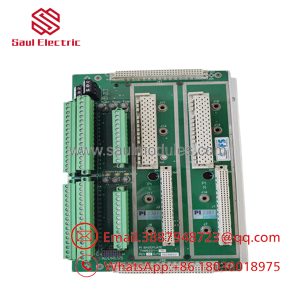
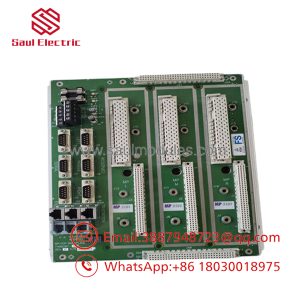
The Triconex 8310 is a 120 VAC/VDC, 175-watt Power Module designed for Tricon Safety Instrumented Systems (SIS). Installed in the lower-left position of a Tricon chassis, it converts incoming AC or DC line power into regulated internal DC power for processors, communication modules, and I/O modules. It is compatible with Main, Expansion, and RXM chassis used in Tricon v9 through v11 systems.
One thing to watch out for is that many engineers think a power module is “just a power supply.” It isn’t. In a Triple Modular Redundant (TMR) architecture, the power subsystem directly affects controller availability. The 8310 supports redundant power operation, allowing two power modules to operate simultaneously for continuous system availability during maintenance or a single module failure.
Key Technical Specifications
| Parameter | Specification |
|---|---|
| Manufacturer | Triconex |
| Model | 8310 |
| Product Type | 120 VAC/VDC Power Module |
| Compatible Systems | Tricon v9–v11 |
| Compatible Chassis | Main, Expansion, RXM |
| Rated Output Power | 175 Watts |
| Input Voltage (AC) | 85–140 VAC, 47–63 Hz |
| Input Voltage (DC) | 95–180 VDC |
| Output Voltage | 6.5 VDC ±1% |
| Maximum Output Current | 27 A |
| Isolation | >1000 VAC or 1500 VDC Input-to-Output |
| Fuse | 5 A Slow-Blow |
| Output Hold Time | Minimum 20 ms |
| Diagnostic LEDs | PASS, FAIL/FAULT, ALARM, TEMP, BATT LOW |
Application Scenarios & The “Trench” Experience
We’ve all seen this happen.
The controller suddenly reports a power alarm during a night shift. CPUs are healthy. I/O cards test fine. Communications look normal. After an hour of troubleshooting, someone finally checks the power module.
That single module brought an entire safety controller to the edge of shutdown.
The 8310 exists to prevent exactly that situation.
Typical Applications
- Oil & Gas – Emergency Shutdown (ESD) Systems – Supplies stable power for TMR safety controllers operating around the clock.
- Refineries – Burner Management Systems (BMS) – Maintains controller operation during voltage fluctuations.
- Chemical Plants – Safety Instrumented Functions (SIF) – Provides regulated power for processors and safety I/O modules.
- Power Generation – Turbine Protection Systems – Supports redundant controller power in critical protection applications.
- LNG Facilities – Compressor Safety Systems – Reduces the risk of process interruption caused by power module failure.
Field Case Study
A petrochemical plant experienced repeated TEMP alarms on one 8310 module during summer operation. The maintenance team initially suspected cabinet ventilation problems. Thermal imaging later showed elevated internal temperatures inside the aging power module itself.
Replacing the module during a scheduled maintenance window restored stable operation. The second redundant power module had kept the controller online throughout the event, preventing an unexpected plant shutdown. That’s exactly why Tricon systems are designed with dual power modules.
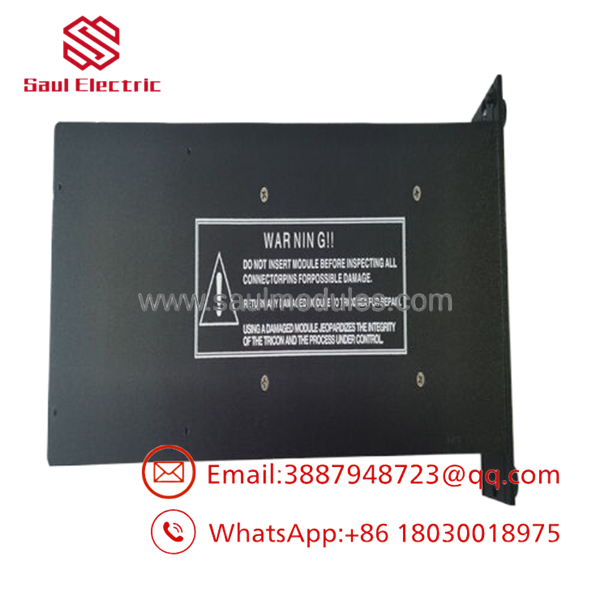
- 8310
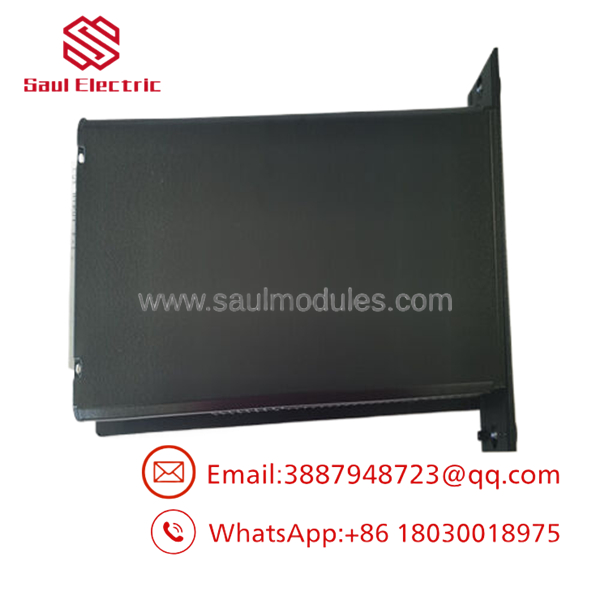
- 8310
Transparency SOP: Quality Assurance & Testing
We don’t just ship boxes; we test them on actual Tricon racks.
- Inbound Inspection
- Verify OEM labels and serial numbers.
- Inspect housings, connectors, and terminal strips.
- Screen for counterfeit markings and physical damage.
- Live Rig Testing
- Install the module in a Tricon chassis.
- Confirm PASS status.
- Verify alarm relay operation.
- Monitor startup and steady-state operation.
- Electrical Parameter Checks
- Measure output voltage.
- Verify output stability under load.
- Confirm isolation integrity.
- Check alarm contact functionality.
- Firmware & Hardware Verification
- Record hardware revision.
- Confirm compatibility with the customer’s Tricon generation.
- Verify LED diagnostics.
- Final QC & ESD Packaging
- Clean edge connectors.
- Apply anti-static protection.
- Record inspection results before shipment.
The Veteran’s Tech Trap Guide
⚠️ Never replace only one failed power module without checking the second one.
If one module has been running continuously for fifteen years, chances are the redundant unit has seen nearly the same service life.
❗ Don’t ignore a TEMP LED.
Many engineers reset alarms and move on. Heat is usually telling you something. Check cabinet airflow, intake filters, and module temperature before putting the system back into service.
⚠️ Verify the input voltage before installation.
The 8310 is designed for 120 VAC/VDC service.
Installing an 8312 (230 VAC version) or 8311 (24 VDC version) by mistake won’t end well. The three models look similar but are electrically different.
❗ Do not assume alarm wiring is identical between plants.
Take photos of terminal wiring before removing the module. Alarm contacts are frequently customized during commissioning.
Frequently Asked Questions (FAQ)
Q1. Can the Triconex 8310 be replaced while the controller is operating?
Yes. The power module is designed as a field-replaceable unit, and in a redundant configuration a single module can typically be replaced without disconnecting field wiring. Always follow your site’s maintenance procedures and verify controller status before removal.
Q2. What is the difference between the 8310, 8311, and 8312?
The primary difference is the input power:
- 8310: 120 VAC/VDC
- 8311: 24 VDC
- 8312: 230 VAC
All provide 175 W output but are intended for different incoming power sources.
Q3. Does the 8310 require firmware updates?
No. The 8310 is a power module and does not require firmware flashing like processor or communication modules.
Q4. Why do Tricon chassis use two power modules?
Either module can support the controller independently. Dual installation provides power redundancy so maintenance or a single module failure does not interrupt controller operation.
Q5. Is a surplus 8310 reliable?
It depends on how it is verified.
A properly tested surplus unit with documented electrical testing, load testing, and traceable sourcing can be a practical option for maintaining legacy Tricon installations. Ask the supplier for actual test records rather than relying only on cosmetic condition.
Q6. What warranty is typically available?
Many industrial automation suppliers provide a 12-month warranty for tested new surplus or professionally refurbished 8310 modules. Warranty terms vary by supplier.
Q7. What should I verify before installing an 8310?
Before energizing the chassis, verify:
- Input voltage matches the 8310 rating.
- Chassis compatibility (Main, Expansion, or RXM).
- Terminal wiring and grounding.
- Alarm contact configuration.
- Module condition and diagnostics after startup.
Finally, verify the exact wiring, grounding method, and installation procedure using the official Tricon Planning and Installation Guide before placing the controller back into service.

 Start Chat


