





Description
Product Introduction & Engineering Value
A failed Tricon power module is not a normal PLC power-supply replacement. The 8312 sits at the front end of the Tricon chassis power architecture, converting the plant’s 230 VAC supply into the regulated DC rail required by the controller and I/O hardware. Two power modules are used in the chassis so that one module can support the full rated load.
For maintenance teams, the important details are the 230 VAC input class, 6.5 VDC backplane output, redundant installation, diagnostic contacts, and thermal/overcurrent protection. A replacement should therefore be verified against the actual Tricon chassis and power-module configuration before installation.
Technical Specifications
| Parameter | Triconex 8312 |
|---|---|
| Manufacturer | Triconex / Invensys |
| Model | 8312 |
| Module Type | 230 VAC Power Module |
| Compatible Chassis | Tricon Main / Expansion / RXM |
| Nominal Input Voltage | 230 VAC |
| Extended Input Range | 185–285 VAC |
| Input Frequency | 47–63 Hz |
| Input Power Requirement | 240 W minimum per power source |
| Typical Steady-State Input Current | 0.4 A |
| Maximum Steady-State Input Current | 1.2 A |
| Maximum Inrush Current | 18 A at 230 VAC |
| Input Fuse | 2.5 A, time-delay |
| Output Voltage | 6.5 VDC ±1% |
| Output Current | Up to 27 A at 60 °C ambient |
| Output Power | 175 W at 60 °C ambient |
| Output Hold Time | 20 ms minimum; 80 ms typical |
| Isolation | 1,000 VAC or 1,500 VDC input-to-output |
| Overvoltage Protection | Approximately 125% |
| Overcurrent Limit | Approximately 140%, with automatic restart |
| Overtemperature Monitoring | Trip above approximately 83 °C internal temperature |
| Diagnostic Indicators | PASS, FAULT, ALARM, TEMP, BAT LOW |
These values come from Tricon system installation/product documentation. In particular, the 8312 is explicitly identified as the 230 VAC variant, while 8310 and 8311 are different input-voltage versions.
Redundant Power Architecture
The 8312 is designed to operate in the Tricon chassis power architecture with two power modules. The documented arrangement allows either module to carry the chassis at full load and rated temperature. This is important when troubleshooting because the failure of one module does not necessarily produce an immediate loss of controller operation; the remaining module can maintain the system while the failed unit is replaced.
Field Application & the “Trench” Experience
Consider a Tricon safety system running in a process unit where the redundant power modules have been operating continuously for years. During a maintenance round, the operator sees a power-module alarm while the controller itself continues operating normally.
The wrong response is to wait for the second module to fail.
The practical maintenance response is to identify which 8312 is reporting the fault, verify the incoming 230 VAC supply, inspect the diagnostic indicators and alarm contacts, and replace the affected module according to the site’s approved maintenance procedure. The Tricon documentation specifically provides diagnostic indicators and redundant power-module architecture for this purpose.
Specific application scenarios
- Emergency shutdown systems in process plants — Tricon chassis supplying safety I/O and processor hardware.
- Refinery and petrochemical SIS cabinets — 230 VAC plant power converted to the regulated Tricon backplane supply.
- Expansion/RXM chassis — 8312 power modules are documented for main, expansion, and RXM chassis applications.
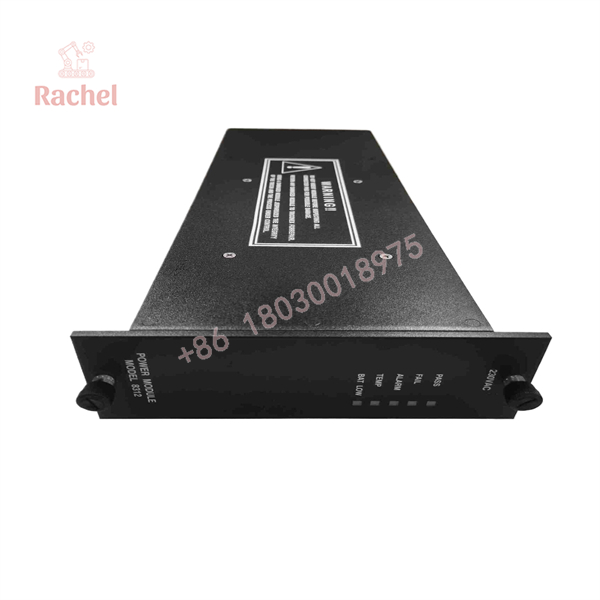
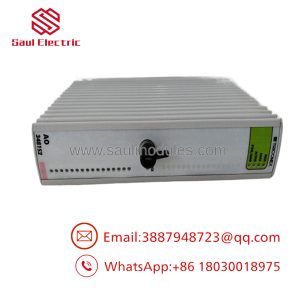
8312
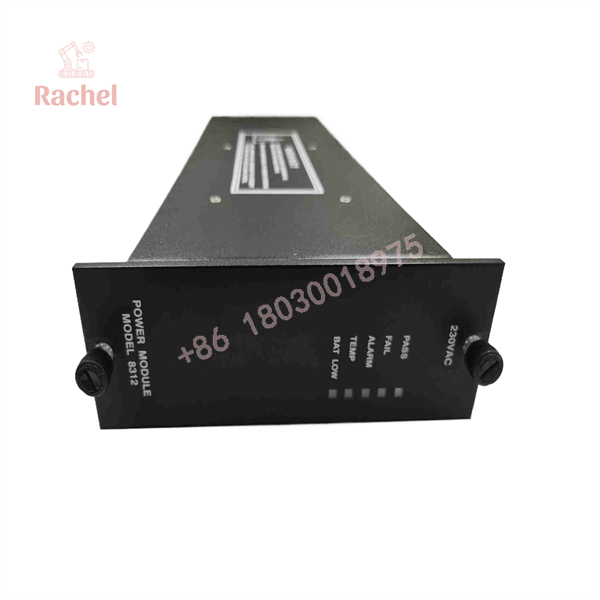
8312
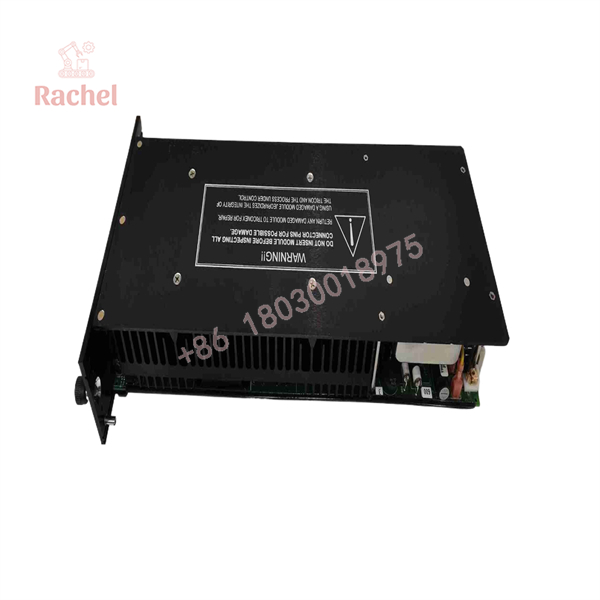
8312
Transparency SOP: QA & Testing
For New Surplus or refurbished 8312 inventory, I would verify the unit in this order:
1. Nameplate inspection
Confirm 8312, manufacturer identification, serial number, revision information, and any chassis/application marking.
2. Physical inspection
Check the enclosure, mounting hardware, connector/backplane interface, terminal area, safety cover, and ventilation surfaces. Look for corrosion, overheating marks, cracked insulation, or evidence of previous repair.
3. Input verification
The 8312 is the 230 VAC version. Confirm that the intended chassis uses the correct input-voltage power module. The Tricon family also contains 8310 and 8311 variants for different supply arrangements.
4. Output test
Under controlled test conditions, verify the regulated 6.5 VDC output and its behavior under appropriate load.
5. Protection and diagnostic test
Where the required test equipment is available, verify the module’s fault/temperature indication, output protection, and alarm-contact operation.
6. System-level check
After replacement, verify the Tricon chassis power status and confirm that the redundant power architecture is operating as intended.
The Veteran’s Tech Trap Guide
⚠️ Trap #1 — Confusing 8312 with 8310 or 8311
This is the first thing to check. Tricon documentation identifies:
- 8310: 120 VAC/VDC class
- 8311: 24 VDC
- 8312: 230 VAC
They are not interchangeable simply because they occupy the same general power-module position.
⚠️ Trap #2 — Misreading the output specification
The Tricon documentation specifies 6.5 VDC ±1% and up to 27 A at 60 °C, corresponding to 175 W at that ambient condition. Some third-party listings incorrectly report other output voltages for 8312. For procurement, the Tricon technical documentation should take precedence.
⚠️ Trap #3 — Ignoring the redundant pair
If one 8312 has failed, do not assume the chassis has immediately lost its power redundancy. Conversely, do not treat continued operation as proof that the failed module can be left indefinitely. Check the second module and the site’s maintenance procedure before removing or servicing the defective unit.
PRO TIP: Before ordering, photograph the installed module’s nameplate and front-panel LEDs, and record whether it is installed in a main, expansion, or RXM chassis. That information eliminates several common sourcing errors.
Dynamic FAQ
What is Triconex 8312?
The Triconex 8312 is a 230 VAC power module for Tricon main, expansion, and RXM chassis. It converts the incoming AC supply into regulated 6.5 VDC power for the Tricon backplane.
What is the input voltage of the 8312?
The nominal input is 230 VAC, with a documented extended operating range of 185–285 VAC at 47–63 Hz. The input uses a 2.5 A time-delay fuse.
What is the output voltage of Triconex 8312?
The specified output is 6.5 VDC ±1%, with up to 27 A at 60 °C ambient and 175 W output power at that temperature.
Can 8312 be used in an ATEX installation?
The Tricon v9–v10 installation documentation specifically warns not to use Model 8312 in Tricon systems located in hazardous locations that must meet ATEX requirements. It directs users with 230 V line power and ATEX requirements toward the 8311-based arrangement with an appropriate ATEX-certified 24 VDC supply.
Is Triconex 8312 redundant?
Yes. Tricon chassis use two power modules, and the documented architecture allows either power module to support the full chassis load at rated conditions. This provides power redundancy rather than requiring both modules to be simultaneously healthy for normal operation.
What should I verify when buying New Surplus 8312?
Request the exact 8312 nameplate photograph, serial number, hardware revision, physical-condition statement, test report, and warranty terms. Also confirm that the unit is the 230 VAC variant required by the existing Tricon chassis.
Procurement note: For a critical Tricon SIS application, specify Triconex 8312, 230 VAC Power Module, and verify the complete identification against the installed chassis. Do not substitute an 8310 or 8311 merely because the module appears mechanically similar.

 Start Chat


