





Description
Product Introduction
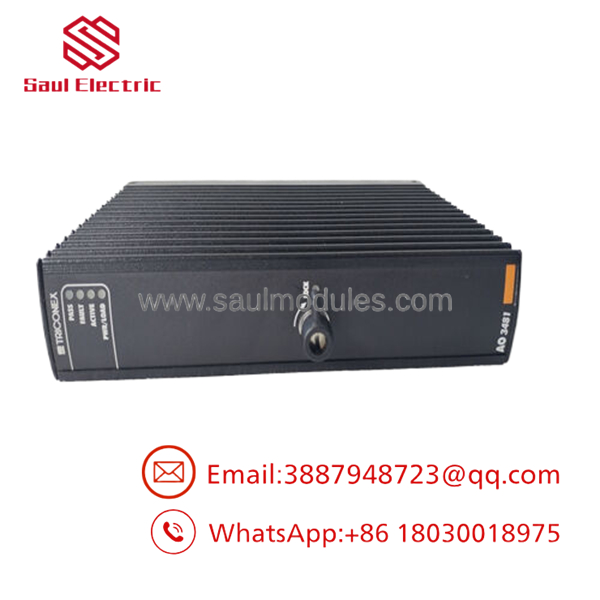
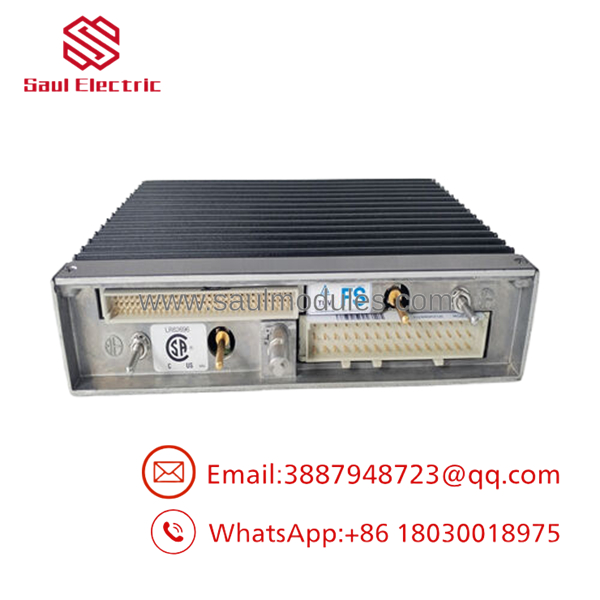
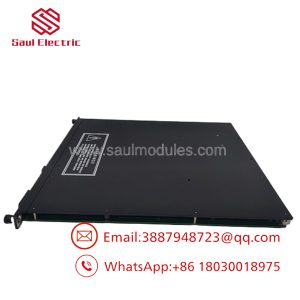
The Triconex AO3481 is an 8-channel analog output module developed for the Tricon Safety Instrumented System. It converts validated control commands from the Tricon main processors into isolated 4–20 mA field signals used to drive control valves, positioners, actuators, and other analog devices in safety-critical applications.
To be honest, analog output modules receive less attention than processors until something goes wrong. The AO3481 continuously compares data from the three Tricon processors and uses hardware voting to select the output channel. If a fault develops, diagnostics identify the affected channel while the remaining channels continue operating within the TMR architecture.
Key Technical Specifications
| Parameter | Specification |
|---|---|
| Manufacturer | Triconex |
| Model | AO3481 |
| Product Type | Analog Output Module |
| System Compatibility | Tricon Safety Instrumented System |
| Output Channels | 8 |
| Output Signal | 4–20 mA |
| Architecture | Triple Modular Redundant (TMR) |
| External Loop Supply | 24–42 VDC |
| Maximum Load Voltage | +42 VDC |
| Output Accuracy | ±0.5% Full Scale |
| Diagnostics | Continuous channel diagnostics |
| Status Indicators | PASS, FAULT, ACTIVE, LOAD, PWR1, PWR2 |
| Isolation | Functional isolation between field and logic circuits |
Application Scenarios & The “Trench” Experience
Here’s a situation many maintenance engineers recognize.
The control valve suddenly drives to an unexpected position. The PID loop looks healthy. The controller reports no processor faults. Hours are spent checking transmitters before someone finally discovers that one analog output channel has developed an intermittent fault.
The controller wasn’t the problem. The field instrument wasn’t either.
The analog output module was.
Typical Applications
- Oil & Gas – Emergency Shutdown Systems (ESD) – Drives shutdown valves requiring dependable 4–20 mA control signals.
- Petrochemical – Reactor Process Control – Interfaces with control valve positioners while maintaining TMR integrity.
- Power Generation – Turbine Control – Provides analog commands for governor and auxiliary control loops.
- Chemical Processing – Safety Instrumented Functions (SIF) – Controls final elements where reliable analog output is essential.
- Offshore Platforms – Compressor Anti-Surge Systems – Maintains stable analog signals despite demanding operating conditions.
Field Case Study
A refinery experienced intermittent oscillation on a fuel gas control valve. Initial troubleshooting focused on the valve positioner and transmitter. Both tested normally.
The issue was traced to one channel of an aging AO3481 module. After replacing the module and verifying loop calibration, the valve returned to stable operation without changes to the control strategy.
The lesson was straightforward: replacing field devices before checking the output module can waste valuable maintenance hours.
- AO3481
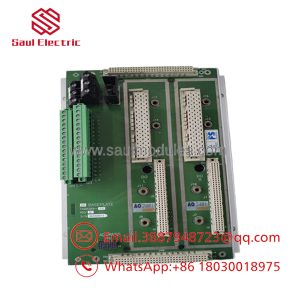
- AO3481
Transparency SOP: Quality Assurance & Testing
We don’t just ship boxes; we test them on actual Tricon racks.
- Inbound Inspection
- Verify OEM labels, serial numbers, and hardware revisions.
- Inspect connectors, PCB assemblies, and housing condition.
- Screen for counterfeit indicators.
- Live Rig Testing
- Install the module in a compatible Tricon chassis.
- Verify PASS and ACTIVE indicators.
- Exercise all eight analog output channels.
- Electrical Parameter Checks
- Measure output current accuracy.
- Verify loop operation under different load conditions.
- Confirm channel isolation and power inputs.
- Hardware Verification
- Record hardware revision.
- Verify compatibility with the customer’s Tricon system generation.
- Document diagnostic status.
- Final QC & Anti-static Packaging
- Clean connectors.
- Package in ESD-safe materials.
- Archive inspection records before shipment.
The Veteran’s Tech Trap Guide
⚠️ Don’t assume every analog output problem starts with the valve.
Verify the output current using a loop calibrator before replacing expensive field devices.
❗ External loop power matters.
The requires an external DC supply for the output loops. Missing or unstable loop power often looks like a failed module during troubleshooting.
⚠️ Check the LOAD indicator before replacing hardware.
An open field circuit or disconnected load can trigger diagnostics even when the module itself is functioning correctly.
❗ Verify the termination assembly.
A damaged cable or termination panel can produce symptoms nearly identical to a module failure. Always inspect the complete signal path before ordering replacement parts.
Frequently Asked Questions (FAQ)
Q1. How many analog outputs does the provide?
The provides eight independent 4–20 mA analog output channels for controlling field devices.
Q2. Does the support Triple Modular Redundancy?
Yes. It is designed for the Tricon TMR architecture, using hardware voting and continuous diagnostics to maintain reliable analog output operation.
Q3. Can I replace the while the system is online?
Replacement procedures depend on the Tricon chassis configuration and your site’s maintenance policy. Review the official Tricon maintenance documentation before attempting online replacement of any safety-related I/O module.
Q4. Does the require an external power supply?
Yes. The analog output loops require an external 24–42 VDC loop power supply appropriate for the connected field devices.
Q5. Why is a surplus less expensive than purchasing through OEM channels?
Many surplus modules originate from plant expansions, modernization projects, or unused maintenance inventory. Price alone does not determine quality. Request documented testing, inspection records, and traceable sourcing before purchase.
Q6. What warranty is typically available?
Most qualified industrial automation suppliers offer a 12-month warranty on tested new surplus or professionally refurbished modules. Warranty terms vary by supplier.
Q7. What should I verify before installing an ?
Before placing the module into service, verify:
- Tricon chassis compatibility.
- External loop power voltage.
- Field wiring and termination integrity.
- Analog loop calibration.
- Output scaling and channel assignment.
Finally, verify the exact wiring, loop power requirements, and compatibility using the official Tricon documentation before commissioning the module in a safety system.

 Start Chat


