





Description
Product Introduction
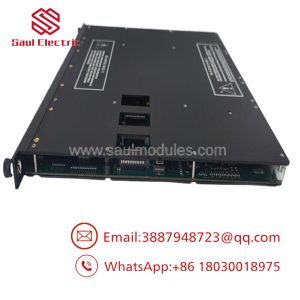
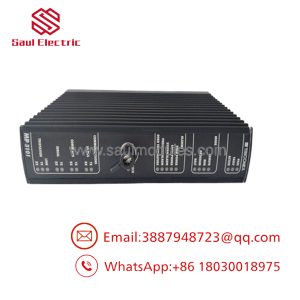
The Triconex CM3201 is an industrial communication module associated with the Trident TMR safety control platform. It provides a communication interface between the controller and supported external systems, including host computers and distributed control system (DCS) infrastructure. The module is relevant to legacy safety instrumented systems where maintaining the existing hardware configuration is often preferable to undertaking a wider control-system migration.
Its primary value is compatibility with an established Trident architecture. For replacement work, the key considerations are the installed processor type, communication configuration, firmware compatibility, and external interface requirements. Do not assume that every Triconex communication module supports the same chassis, software revision, or protocol configuration.
Key Technical Specifications
| Parameter | Specification |
|---|---|
| Model Number | CM3201 |
| Manufacturer | Triconex / Invensys |
| Product Category | Industrial communication module |
| System Family | Trident TMR safety control system |
| Associated Processor | MP3101, subject to configuration verification |
| Serial Interfaces | RS-232/RS-485 reported in supplier documentation |
| Ethernet Connectivity | Reported by several suppliers; verify the exact hardware revision |
| Communication Protocols | Modbus and TSAA are reported in related Trident documentation; verify the specific implementation |
| Engineering Environment | TriStation |
| Redundancy Architecture | Trident TMR system architecture; module-level redundancy depends on system configuration |
| Operating Temperature | Confirm against the applicable OEM documentation |
| Firmware Compatibility | Verify installed controller revision and communication driver requirements |
Specification note: These entries are a preliminary identification reference, not a substitute for the OEM datasheet. Published reseller listings contain conflicting specifications for the CM3201, including port counts, temperature limits, dimensions, and supported platforms. Obtain the module nameplate, hardware revision, and applicable technical manual before finalizing a purchase or installation.
Application Scenarios & The “Trench” Experience
A communication module failure rarely looks like a simple hardware problem at first. The controller may continue executing its application while the operator loses visibility of external data, a host connection drops, or a supervisory system stops receiving updates. During a shutdown window, identifying the correct replacement can take longer than the physical installation.
The CM3201 is a candidate for investigation in the following applications, provided the installed system documentation confirms compatibility.
- Oil and Gas — Safety System Data Exchange — Interfaces supported external systems with a Trident safety controller. Confirm the required communication path and configured protocol before substitution.
- Petrochemical Processing — DCS Integration — Supports communication between a compatible safety controller and plant supervisory systems where the existing configuration uses this module.
- Power Generation — Legacy Control System Maintenance — May serve as a replacement for a failed communication module in an established Trident installation.
- Industrial Process Plants — Host Computer Connectivity — Supports external host communication where the installed hardware and software configuration explicitly specify the CM3201.
- Safety Instrumented Systems — Spare Parts Planning — Provides a potential like-for-like replacement option for plants maintaining older Trident hardware.
Field case study: A hypothetical replacement scenario
Consider a refinery approaching a scheduled maintenance window. An aging communication module begins reporting intermittent faults, and the DCS loses reliable access to selected controller data. The safety controller’s actual operating state must be assessed independently; a communication alarm alone does not establish that the safety function has failed.
The maintenance team records the installed module’s part number, hardware revision, processor type, firmware information, and connector arrangement. Procurement then sources a candidate replacement, but the team does not install it until engineering confirms compatibility and approves the change.
The replacement is checked against the approved configuration, and communications are tested before the affected interfaces are returned to service. The practical lesson is straightforward: a matching model number is the starting point, not proof of interchangeability.
This is a hypothetical example, not a documented CM3201 field deployment.
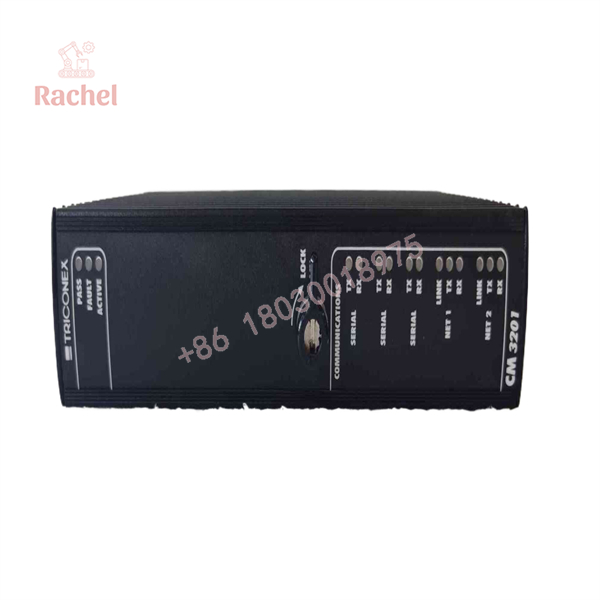
CM3201
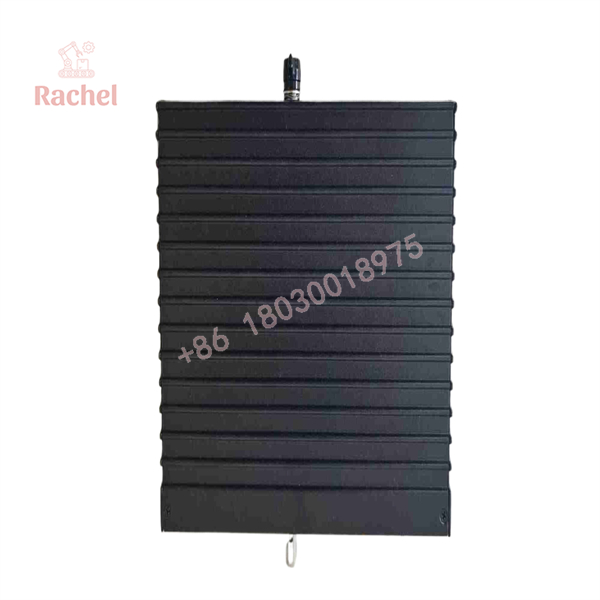
CM3201
Transparency SOP: Quality Assurance & Testing
For safety-system hardware, a credible inspection process must distinguish visual condition, basic electrical health, communication functionality, and verified application compatibility. A seller’s statement that a module is tested does not establish that it has passed every relevant test.
A suitable receiving and dispatch procedure includes the following steps.
1. Inbound Inspection
- Record the manufacturer, complete part number, serial number, and available hardware revision.
- Inspect the enclosure, connector contacts, PCB condition where accessible, and evidence of corrosion or physical damage.
- Check OEM labels and seals where applicable. Packaging and labels alone cannot establish authenticity.
2. Live Rig Testing
- Where an approved compatible test rack is available, perform controlled power-up and review the module’s diagnostic indicators.
- Check communication handshakes and supported interfaces against the test configuration.
- Record failures and intermittent faults rather than relying solely on a successful initial startup.
3. Electrical Parameter Checks
- Inspect power-related connections and check relevant electrical parameters using approved procedures.
- Do not apply insulation-resistance or Megger testing directly to electronic assemblies unless the OEM explicitly authorizes the procedure. Test voltages can damage sensitive circuitry.
4. Firmware Verification
- Record the hardware revision and any firmware information that can be read through supported diagnostic tools.
- Check compatibility with the intended controller and engineering software configuration.
- Do not flash firmware merely to make two otherwise incompatible components appear compatible.
5. Final Quality Control and Packaging
- Record the test date, test-rack configuration, results, and inspector.
- Use appropriate electrostatic-discharge (ESD) protection and protective packaging.
- Identify the actual stock condition accurately as new surplus, factory sealed, used, or refurbished.
Procurement requirement: Ask the supplier for the serial number, actual stock photographs, a test report where available, warranty terms, and the return policy. Do not accept a claim of live-rack testing unless the seller can explain what was tested and provide supporting records.
The Veteran’s Tech Trap Guide
Warning 1: Don’t confuse Trident with Tricon.
Similar branding does not mean identical hardware. Confirm the actual chassis family and processor configuration. The CM3201 is associated with Trident documentation, including configurations using the MP3101 processor. Do not substitute a module based only on a generic Triconex product description.
Warning 2: Check the connectors and port assignments.
Supplier listings disagree on the number and type of serial and Ethernet interfaces. Photograph the existing module, label every connected cable, and compare the connector layout with the replacement. A cable that physically fits is not proof of matching pin assignments.
Warning 3: Firmware and software compatibility matter.
Confirm the controller revision, TriStation environment, and applicable communication driver. A module can power up normally and still fail to communicate because the system configuration or supported software revisions differ.
Warning 4: Don’t assume online replacement is permitted.
Before removing a module, check the OEM maintenance procedure, the system’s approved configuration, and the consequences for communication availability and safety-system operation. Never pull a live module simply because another supplier claims it is hot-swappable. Use the site’s approved maintenance and management-of-change procedures.
Frequently Asked Questions (FAQ for Conversion)
Q1. Is the Triconex CM3201 hot-swappable?
Do not assume that it is. Online replacement permissions depend on the exact Trident hardware configuration and OEM procedure. Verify the supported maintenance method and assess the consequences of losing the affected communication path before removing the module.
Q2. Can I use a CM3201 replacement with a different firmware revision?
Possibly, but compatibility must be established for the actual controller, hardware revision, and communication configuration. Request the candidate unit’s revision details and compare them with the installed module. Do not treat a successful power-up as proof of compatibility.
Q3. Is the CM3201 compatible with every Triconex controller?
No such universal compatibility should be assumed. Available technical references associate the CM3201 with the Trident platform and MP3101 configurations. Confirm the exact processor and chassis family before ordering.
Q4. Is the CM3201 a communication module or an analog I/O module?
Available product references identify it as a communication module. It should not be specified as an analog input or output module without documentation establishing that function for the exact part number.
Q5. Does a 12-month warranty mean the module is new?
No. Warranty duration and product condition are separate matters. New-surplus, used, and refurbished modules may be offered with different warranty terms. Obtain written confirmation of the supplied condition, warranty coverage, exclusions, and return rights before paying.
Q6. Why might a surplus CM3201 cost less than a direct OEM purchase?
Surplus suppliers may source inventory from plant decommissioning, maintenance stock, excess inventory, or equipment resellers rather than through current OEM distribution. That can reduce acquisition cost, but it can also mean limited traceability, inconsistent packaging, or less manufacturer support. Compare the complete commercial offer, including testing evidence, warranty, delivery time, and return conditions—not just the unit price.
Q7. How can I tell whether a CM3201 is genuine or refurbished?
Start with the nameplate, serial number, hardware revision, connector layout, and available provenance records. Ask for actual photographs and a test report tied to the supplied unit. Factory packaging is useful evidence, but it does not independently establish authenticity or internal condition. If the supplier cannot document the unit’s history, treat its condition and provenance as unverified.

 Start Chat


