





Description
Product Introduction & Engineering Value
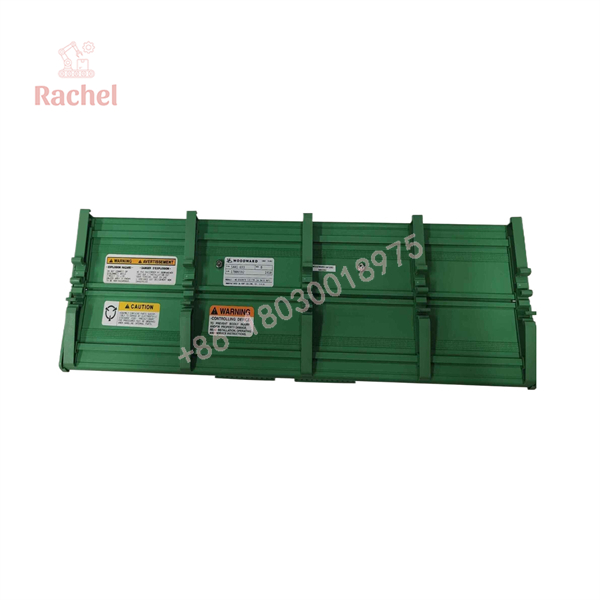
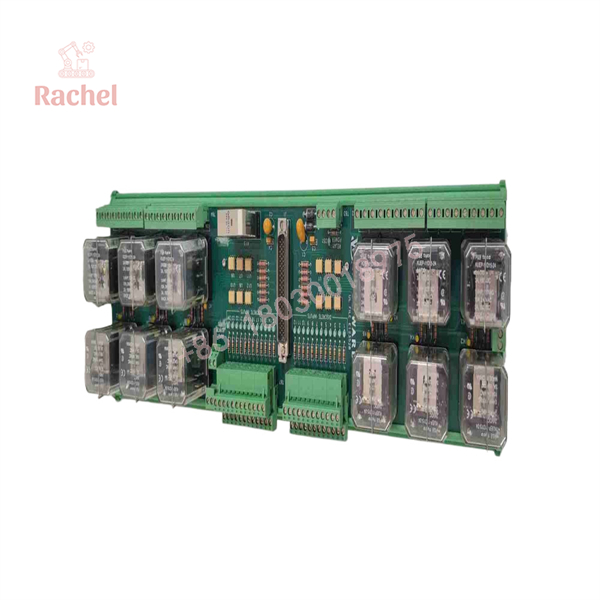
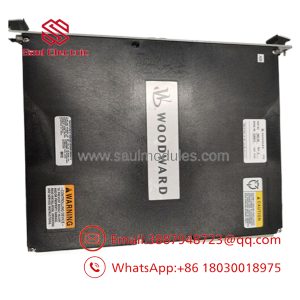
The Woodward 5441-693 is built for applications where a turbine control system needs a dense interface between field discrete signals and relay-driven equipment. It provides 24 optically isolated discrete input connections and relay output circuitry, making it useful for status monitoring, permissives, interlocks, and hardwired control functions.
For replacement work, the important issue is not simply matching the part number. The FTM must correspond to the installed discrete I/O architecture, cabling, and associated MicroNet hardware. Woodward documentation lists 5441-693/5441-694 as FTM relay-driver options for specific 48-input/24-output configurations.
Technical Specifications
| Specification | 5441-693 Details |
|---|---|
| Manufacturer | Woodward |
| Part Number | 5441-693 |
| Module Type | HD Discrete I/O Field Termination Module |
| Input Channels | 24 discrete inputs |
| Input Isolation | Optically isolated |
| Output Type | Relay outputs |
| Relay Configuration | SPDT / Form C type reported for the module |
| Output Channels | 12 nominal relay outputs; some documentation describes 13 relay circuits |
| Input Contact Supply | Isolated 24 VDC |
| Maximum Contact Supply | 400 mA |
| Input Update Time | 5 ms |
| Event Timestamp Resolution | 1 ms |
| Connection | High-density analog/discrete cable and removable field connections |
| Mounting | Field termination / DIN-rail arrangement depending on system configuration |
The 24-input specification, 5 ms update time, 1 ms timestamp resolution, and 400 mA isolated 24 VDC contact supply are consistently reported across available technical listings.
Important specification note: published descriptions vary between 12 relay outputs and 13 relay circuits. For a replacement order, the safest practice is to verify the physical nameplate, terminal arrangement, system drawing, and Woodward documentation rather than treating the channel count alone as sufficient identification.
Field Application & The “Trench” Experience
A realistic replacement scenario is a turbine control cabinet where one discrete termination assembly begins producing intermittent field-status faults. The control CPU may still be healthy, while individual permissive signals, valve feedbacks, or shutdown contacts appear unstable. Replacing the 5441-693 without checking the field wiring can turn a five-minute module swap into several hours of troubleshooting.
A technician would typically photograph the existing terminal arrangement, document every conductor, isolate the relevant power sources, replace the FTM, then verify each discrete point against the control-system I/O list before returning the turbine to service.
Niche applications include:
- Steam turbine emergency shutdown permissive monitoring — hardwired trip and permissive contacts can be terminated through the discrete I/O architecture.
- Gas turbine auxiliary-system interlocks — valve-position feedback, pump status, and equipment permissives can be brought into the turbine controller.
- Generator protection and turbine sequencing interfaces — discrete status and relay-controlled signals can be exchanged between turbine controls and associated plant equipment.
5441-693
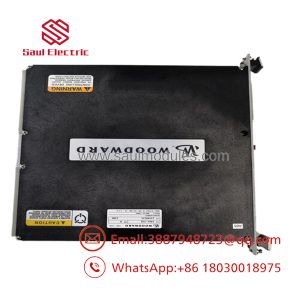
5441-693
Transparency SOP: QA & Testing
For New Surplus or refurbished 5441-693 inventory, a meaningful QA process should go beyond checking whether the module powers up.
- Identity verification — confirm the Woodward manufacturer marking and exact 5441-693 part number.
- Physical inspection — inspect connectors, terminal interfaces, relay areas, board surfaces, and mounting hardware for damage or corrosion.
- I/O verification — test representative discrete input channels and relay output circuits where the available test platform permits.
- Electrical inspection — verify isolation behavior and contact-supply characteristics against the applicable documentation.
- Final record — record serial/part information, test results, condition, and packaging status before shipment.
Condition should be stated precisely. New Surplus, Unused, and Refurbished/Rebuilt are not interchangeable terms.
The Veteran’s Tech Trap Guide
⚠️ Trap #1 — Treating 5441-693 as a generic PLC relay card.
It is a Woodward-specific field termination component. Mechanical compatibility does not prove system compatibility. Check the associated MicroNet configuration and cable arrangement.
⚠️ Trap #2 — Assuming “12 outputs” and “13 relays” are contradictory enough to ignore.
Available documentation uses both descriptions. Do not build a replacement decision around a supplier’s abbreviated specification. Compare the actual terminal configuration and system drawings.
PRO TIP: Before pulling the old module, photograph every connector and terminal position. Label field conductors individually. A discrete I/O replacement is one of those jobs where a ten-minute documentation step can prevent hours of point-by-point commissioning.
⚠️ Trap #3 — Skipping the I/O checkout.
A module can look perfect and still have a failed relay contact or input channel. Test the affected points before declaring the replacement complete.
Dynamic FAQ
Is Woodward 5441-693 a CPU?
No. 5441-693 is an HD Discrete I/O Field Termination Module, not a turbine control CPU. Its job is field-level discrete signal termination and relay interfacing.
How many inputs does the 5441-693 provide?
The commonly documented configuration provides 24 discrete input connections, with optical isolation.
What type of outputs does it use?
The module uses relay outputs for switching discrete field circuits. Supplier documentation describes the arrangement as 12 outputs, while other records describe 13 relay circuits, so the installed system documentation should be checked before substitution.
What should I verify before ordering a replacement?
Verify the complete 5441-693 part number, existing MicroNet configuration, field-terminal arrangement, associated cable, and the required I/O channel configuration. Do not rely solely on the description “Woodward discrete I/O module.”
Can 5441-693 be supplied as New Surplus?
Yes, the part is commercially offered in unused/new-surplus and rebuilt/refurbished conditions. The condition should be explicitly confirmed with the supplier before purchase rather than inferred from a product listing.
What warranty should I expect?
Warranty terms depend on the supplier and condition of the specific unit. For example, some current suppliers advertise a one-year warranty, but that is the seller’s warranty rather than evidence of an original Woodward factory warranty.

 Start Chat


