





Description
Product Introduction & Engineering Value
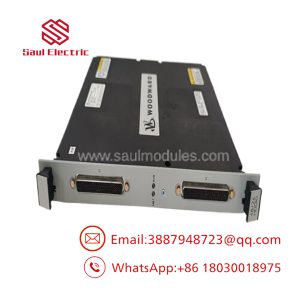
Few things stop a turbine commissioning dead in its tracks like intermittent contact chatter blowing out a digital input card. The Woodward 5466-348 mitigates this frustration by providing isolated, high-density discrete processing specifically designed to handle the harsh electrical environments of large-scale prime mover control. It drops directly into standard MicroNet chassis, ensuring precise timing synchronization with the main CPU without demanding excessive backplane overhead.
Engineering teams rely on this specific card because it removes the guesswork from field wiring interfaces. It eliminates the need for interposing relays in many standard 24V or 125V configurations, significantly reducing enclosure footprint and point-to-point wiring complexity. If you are managing a high-availability system, this module delivers the predictable signal isolation needed to keep structural interlocks stable.
Technical Specifications
- Input Voltage Range: 18–32 Vdc or 100–140 Vdc (configuration dependent)
- Channel Density: High-density discrete configuration with independent isolation groups
- Power Consumption: Typically less than 15W under full channel load
- Response Time: < 2ms input filter delay for rapid transient capture
- Isolation: 500 Vdc channel-to-frame and channel-to-control logic
- Diagnostics: Built-in self-test (BIST), loop current monitoring, and field side power detection
- Operating Temperature: -40°C to +70°C ambient within the chassis
- Shock/Vibration: Certified to standard marine and industrial turbine control specifications
Field Application & The “Trench” Experience
The Mid-Winter Tripped Turbine
During a scheduled cold-start at a peaking plant in the Midwest, a legacy MicroNet Simplex system kept throwing a generic “External Interlock Open” fault, dropping the turbine before fuel ignition. The field crew spent hours chasing wiring runs. It turned out that inductive kickback from an un-snubbed DC solenoid valve had slowly degraded the optocouplers on the old discrete input card over a decade of cycling. We swapped in a clean 5466-348 surplus module, verified the channel assignments via the application software, and the unit fired up on the next sequence.
Targeted Applications
- Gas Turbine Emergency Trip System (ETS) Interfacing: Mapping critical physical e-stop loops and fuel-skid limit switches directly to the core application logic.
- Steam Turbine Extraction Valve Sequencing: Controlling high-speed, high-reliability hydraulic pilot valves via isolated discrete outputs.
- Large Diesel Generator Auxiliary Control: Monitoring lube oil pressure switches, jacket water temperature contacts, and fuel rack positions in high-vibration environments.
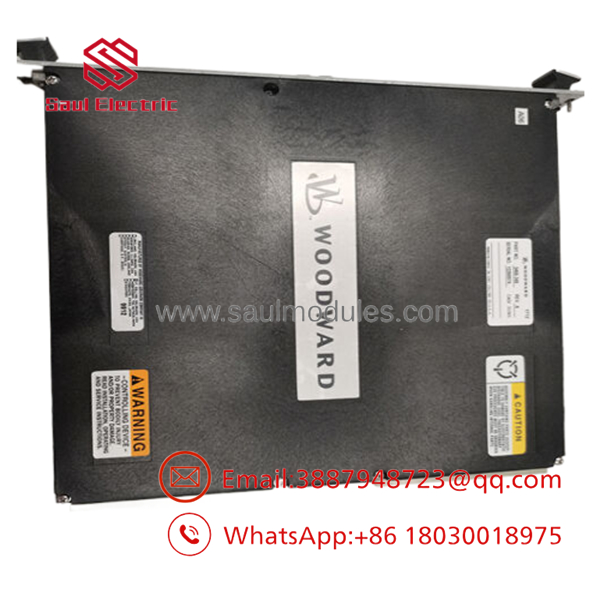
- 5466-348
Transparency SOP: QA & Testing
Every 5466-348 module passing through our facility undergoes a rigorous, multi-point verification protocol before packaging:
- Physical Inspection: We check for conformal coating degradation, pin alignment on the backplane connector, and signs of thermal stress on internal surface-mount components.
- Backplane Simulation: The card is populated into a live Woodward MicroNet test rack running a loopback architecture.
- Parametric Channel Testing: We cycle every single discrete input and output channel through its entire voltage envelope to ensure precise threshold switching.
- Thermal Stability Run: The module is monitored under load inside a burn-in chamber to capture any intermittent component failures caused by operational heat expansion.
The Veteran’s Tech Trap Guide (Crucial Value-Add)
⚠️ WATCH THE BIAS VOLTAGE JUMPERS: The 5466-348 architecture often shares common return paths across specific groups of channels. If your field wiring mixes external 125 Vdc wetting voltage with internal 24 Vdc logic power on the same isolated bank, you will fry the input conditioning circuitry instantly. Always meter your field terminals before sliding the new card into the rack.
PRO TIP: When replacing an older revision of this card, check your GAP (Graphical Application Programmer) or Coder software version. While the hardware is largely backward compatible, certain high-density block assignments require a minimum software block revision to recognize the diagnostic registers correctly.
Dynamic FAQ
Q: Are these 5466-348 modules factory new, or are they surplus?
A: We primarily stock these as high-quality New Surplus or fully certified Refurbished units, as Woodward has tightly controlled production for legacy MicroNet lines. Every unit ships with our comprehensive warranty to match or exceed original OEM terms.
Q: Do I need to reconfigure my GAP software block when replacing an identical part number?
A: No. If you are replacing an existing 5466-348 with the exact same part number and revision, it is a hardware drop-in. The main CPU will assign the existing application parameters to the new card immediately upon boot.
Q: Does this card support sequence of events (SOE) time-stamping?
A: Yes, when paired with an SOE-compatible MicroNet CPU and configured within the software application, this module can capture state changes at sub-millisecond intervals for post-trip analysis.
Q: How do you protect the onboard firmware parameters during storage?
A: The 5466-348 relies on non-volatile memory that does not require a continuous battery backup to retain its basic logic handling. Units are stored in static-shielding ESD bags in climate-controlled environments to prevent memory or component degradation.

 Start Chat


