





Description
Product Introduction & Engineering Value
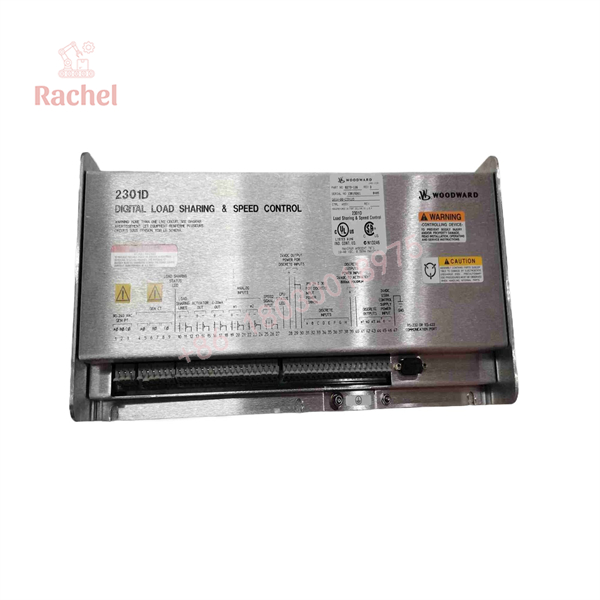
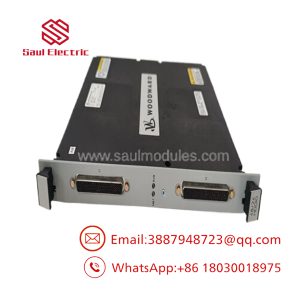
The Woodward 8273-126 is a 2301D-J digital governor designed for speed control and automatic load sharing on medium- and high-speed engine-generator sets. It replaces earlier 2301D-J part-number configurations and uses a microprocessor-based control architecture rather than the adjustment-heavy approach of older analog governors.
In a multi-generator installation, the controller can operate in isochronous or droop modes and supports load raise/lower, remote speed or load reference, baseload operation, and generator circuit-breaker-related logic. That makes the exact configuration and stored settings important when replacing an existing unit.
Technical Specifications
| Parameter | Specification |
|---|---|
| Manufacturer | Woodward |
| Part Number | 8273-126 |
| Controller Family | 2301D-J |
| Revision | Rev. D or later for the documented 8273-126 configuration |
| Controller Type | Microprocessor-based digital governor |
| Engine Speed Range | 400–3600 rpm |
| Power Supply | 20–32 VDC |
| Nominal Voltage | 24 VDC |
| Maximum Power Consumption | Approximately 10 W |
| Actuator Output | Configurable current output; documented ranges include 0–180 mA, 0–20 mA, 4–20 mA, and reverse-acting 180–0 mA |
| Analog Output | One configurable 4–20 mA output |
| Discrete Outputs | Four low-side driver outputs, with up to 200 mA sink current per load |
| Speed Sensing | Magnetic pickup (MPU) input |
| Control Modes | Isochronous and droop |
| Configuration Software | Woodward Watch Window |
| Typical Engine Type | Medium- and high-speed diesel or gas engines |
The Woodward manual specifies the 400–3600 rpm operating range and documents the actuator, analog-output, and discrete-output functions. It also states that Watch Window software is used to operate and tune the 2301D-J control.
Functional I/O
The controller can be configured for functions including:
Discrete inputs: RUN/STOP, idle/rated speed, MPU failure override, speed/load raise, speed/load lower, auto unloading, isochronous/droop selection, generator breaker auxiliary contact, remote speed/load-reference selection, and baseload operation.
Analog functions: Remote load or speed reference, actuator demand, engine speed, speed reference, generator kW, or generator kW reference can be assigned according to the configuration.
8273-126
Field Application & the “Trench” Experience
Consider a diesel generator plant operating several medium-speed gensets in parallel. One 2301D-J controller fails during a scheduled maintenance window. The replacement looks straightforward—until the commissioning engineer discovers that the original controller contains site-specific speed, gear-tooth, actuator, load-sharing, and dynamic-control settings.
That is the practical issue with 8273-126: replacing the hardware is only half the job. The replacement has to reproduce the required control configuration and work with the existing MPU, actuator, generator load signal, breaker logic, and load-sharing scheme. Woodward’s documentation provides configurable parameters for rated speed, idle speed, gear teeth, MPU/crankshaft ratio, speed-sensing failure percentage, gain maps, ramp functions, and actuator output type.
Specific application scenarios
- Parallel diesel generator sets — Isochronous/droop operation and load-sharing functions allow multiple generator sets to coordinate engine loading.
- Medium-speed standby generation — RUN/STOP, idle/rated speed, generator-breaker auxiliary contact, and automatic unloading functions can be integrated into the genset control sequence.
- Industrial gas-engine generation — The 2301D-J architecture can regulate engine speed while providing configurable load and actuator interfaces for generator applications. Woodward documentation identifies the controller for medium- and high-speed diesel and gas engines.
Transparency SOP: QA & Testing
For a New Surplus or refurbished 8273-126, I would treat the revision as a required inspection item rather than an optional detail.
1 — Nameplate verification
Confirm Woodward 8273-126, serial number, hardware revision, and any OEM identification. Woodward’s product-history service specifically recommends using the product label’s serial and part numbers when checking maintenance, service, and upgrade information.
2 — Hardware inspection
Inspect the terminal blocks, connectors, housing, circuit board condition where accessible, and signs of corrosion, contamination, impact, or unauthorized repair.
3 — Power-up test
Verify operation using an appropriate 24 VDC test supply within the documented 20–32 VDC range. Do not apply an assumed supply voltage simply because another 2301D variant looks similar.
4 — Configuration check
Review the programmed rated speed, idle speed, gear-tooth count, MPU ratio, actuator output type, dynamics, load reference, and operating-mode settings.
5 — Functional simulation
Where suitable test equipment is available, simulate the speed input and relevant discrete/analog signals and verify the controller’s response before installation on the prime mover.
The Veteran’s Tech Trap Guide
⚠️ Trap #1 — Confusing 8273-126 with another 2301D part number
Woodward documentation states that earlier 8273-125 and 8273-126 configurations were consolidated into 8273-126 when the revision changed to D. Therefore, the revision letter matters when identifying an older installed controller.
⚠️ Trap #2 — Assuming factory defaults are acceptable
They may not be. Parameters such as rated speed, idle speed, gear teeth, MPU/crank ratio, actuator-output type, gain settings, and ramp functions can directly affect how the prime mover responds. The existing controller’s configuration should be documented before removal.
⚠️ Trap #3 — Ignoring the actuator interface
The actuator output is configurable, including different current ranges and reverse-acting operation. Installing a controller without confirming the actuator’s required signal range can turn a hardware replacement into a commissioning problem.
PRO TIP: Photograph the old controller’s nameplate and record its complete revision before ordering. For a critical generator set, also preserve the existing Watch Window configuration and parameter list if the controller remains accessible.
Dynamic FAQ
What is Woodward 8273-126?
8273-126 is a Woodward 2301D-J digital load-sharing and speed-control unit for medium- and high-speed diesel and gas engine generator sets. Its documented engine speed range is 400–3600 rpm.
Is 8273-126 a turbine controller?
The model is primarily documented as a 2301D-J controller for medium- and high-speed engine-generator applications. Some aftermarket listings describe 8273-126 more broadly as a turbine governor, but the Woodward documentation used for this identification specifies diesel and gas engines and generator-set control.
What software is used with 8273-126?
Woodward documentation specifies Watch Window software for operating and tuning the 2301D-J control.
Can 8273-126 provide load sharing?
Yes. The 2301D-J supports automatic load-sharing functions and can operate using isochronous or droop control. It also supports baseload operation and load raise/lower functions.
What should I verify before ordering a New Surplus 8273-126?
Verify the complete part number, revision, serial number, actuator-output requirements, MPU arrangement, and existing software configuration. The revision is particularly important because Woodward’s documentation defines the 8273-126 configuration in relation to Rev. D and later.
Does New Surplus mean recently manufactured?
Not necessarily. “New Surplus” generally describes unused inventory that may have been stored outside the manufacturer’s current production channel. For a critical governor, ask the supplier for the actual nameplate photograph, serial number, revision, physical-condition statement, test report, and written warranty.
Procurement note: For an installed 2301D-J system, specify Woodward 8273-126 + revision + serial/configuration requirements rather than purchasing solely by the six-digit base part number. Woodward’s product-history lookup can be used with the product label information to investigate service and upgrade information.

 Start Chat


