





Description
Product Introduction
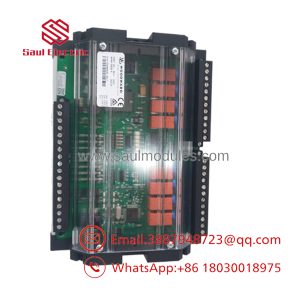
The Woodward 8444-1019F is a heavy-duty speed control and load sharing module engineered for prime movers, diesel engines, gas turbines, and steam turbines driving generator sets. Operating within Woodward’s trusted governor control families, this module regulates engine fuel delivery to maintain precise operating frequency and handle proportional load distribution among multiple paralleled generators.
To be honest, vintage Woodward speed controls like the 8444-1019 series are renowned for their rugged analog stability. By utilizing direct magnetic pickup (MPU) speed sensing and precise PID loops, the 8444-1019F provides immediate dynamic transient response to sudden load changes without the boot times or software glitch risks associated with fully digital systems.
Key Technical Specifications
| Parameter | Specification / Value |
| Manufacturer | Woodward |
| Part Number | 8444-1019F (Revision F) |
| Control Category | Speed Control / Load Sharing Module |
| Input Signal | Magnetic Pickup (MPU) Frequency Input |
| Control Modes | Isochronous (Constant Speed) & Droop Load Sharing |
| Operating Voltage Range | High Voltage DC/AC Input (Model Specific) |
| Actuator Output | Standard 0–200 mA or 0–50 mA Actuator Current Drive |
| Adjustability | Potentiometer Adjustments for Gain, Reset, Stability, & Droop |
| Operating Temperature | -40°C to +70°C (-40°F to +158°F) |
| Mounting Style | Internal Switchgear Chassis Mount / Backplate Mount |
Application Scenarios & The “Trench” Experience
Picture this: You’re managing a marine vessel propulsion or power system offshore, and Generator #1 starts hunting uncontrollably between 58 Hz and 62 Hz as soon as a heavy thruster load hits the main bus. The fuel actuator is jerking back and forth, and the engine is blowing black smoke. Upon opening the control cabinet, you find the legacy 8444-1019 control board running hot with drifted stability circuits. On an offshore rig or remote island installation, you can’t retrofit an entire digital control panel overnight—you need an exact-fit, bench-tested 8444-1019F module dropped in and calibrated to stabilize the engine instantly.
- Marine Main Auxiliary Generators – Multi-engine islanded grids – Provides fast dynamic speed governing and accurate active load distribution across shipboard gen-sets.
- Remote Diesel Power Plants – Standalone and paralleled operations – Regulates engine speed under extreme inductive load spikes (e.g., large motor starts).
- Industrial Turbine & Gas Engine Units – Co-generation facilities – Controls fuel valve actuators to keep system frequency steady during islanding events.
Transparency SOP: Quality Assurance & Testing
Every 8444-1019F module goes through comprehensive hardware diagnostic and signal injection procedures before shipment:
- Physical & Component Audit: Visual inspection of terminal blocks, potentiometer screws, solder joints, chassis ground contacts, and hardware revision labels.
- Power Supply & Bench Warm-Up: Applying nominal operating voltage to verify power supply rail stability, internal voltage reference regulation, and thermal baseline readings.
- MPU Frequency Simulation: Injecting variable Sine Wave frequency signals into the MPU inputs to test speed sensing response, overspeed trip circuits, and speed setting pots.
- Actuator Output & Load Test: Connecting simulated actuator loads to measure output current sweep (mA output) across full range from minimum fuel to maximum fuel demand.
- ESD Protection & Secure Packaging: Encapsulation in anti-static shielding bags with moisture absorbers, packed in custom-cut foam boxes for maximum transit protection.
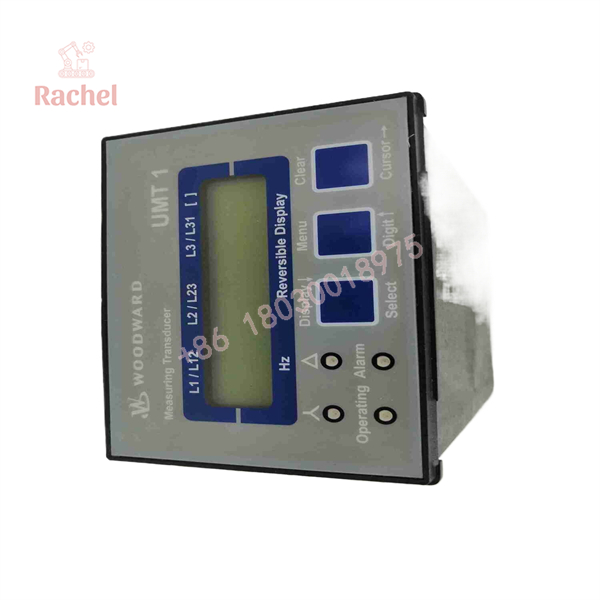
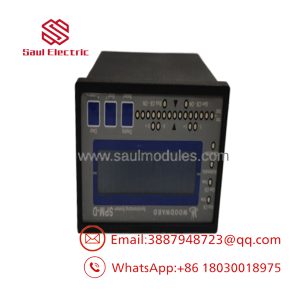
8444-1019F
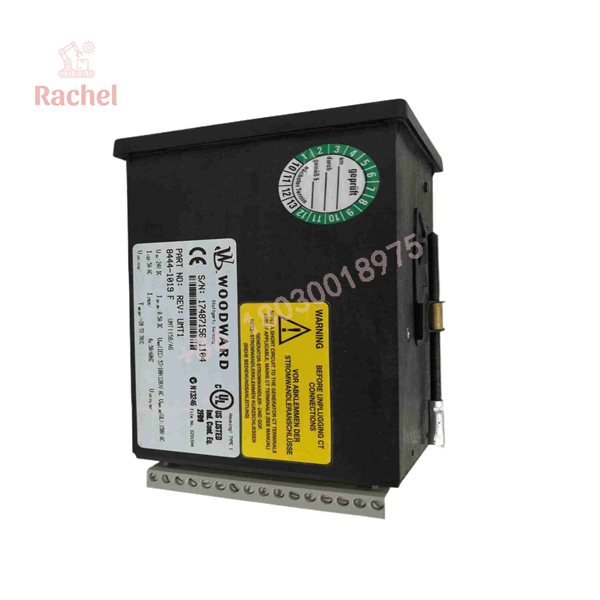
8444-1019F
The Veteran’s Tech Trap Guide (Crucial Value-Add)
- ⚠️ Document Potentiometer Positions Before Removal: Before pulling a failed 8444-1019 unit off the mounting panel, photograph or record the exact physical dial positions for Gain, Reset, Stability, and Droop. Transferring these initial baseline settings to the replacement 8444-1019F saves hours during dynamic engine tuning!
- ❗ Check Shielded Cable Grounding for MPU Signal: Ensure the Magnetic Pickup (MPU) wiring shield is grounded at one end only (at the control chassis side). Double-grounding or leaving shields floating causes electrical noise pickup, leading to engine speed hunting and instability.
- ⚠️ Verify Actuator Resistance & Polarity: Measure the resistance across the actuator coils before wiring the replacement board. A shorted actuator coil will instantly blow the output driver stage on the new 8444-1019F control board!
- ❗ Never Adjust Droop Under Zero Load: Always calibrate zero-load frequency setting first in Isochronous mode before attempting to dial in parallel Droop percentage under full load conditions.
Frequently Asked Questions (FAQ for Conversion)
Q: What is the main function of the Woodward 8444-1019F module?
A: It serves as a speed governing and load-sharing control board for prime movers, receiving speed signals from a magnetic pickup and sending precise current output commands to the fuel valve actuator.
Q: What does the “F” suffix represent in part number 8444-1019F?
A: The letter “F” designates the hardware revision level of the 8444-1019 series board. Revisions often incorporate component reliability updates or improved thermal ratings while retaining functional interchangeability with earlier revisions.
Q: Is the Woodward 8444-1019F still actively produced by Woodward?
A: No, this legacy series has been discontinued by Woodward. We stock fully bench-tested Refurbished and New Surplus units to keep legacy generator control panels fully operational without expensive panel upgrades.
Q: Why is my engine hunting or surging after installing the replacement control module?
A: Speed hunting usually stems from mismatched PID potentiometer settings (Gain and Stability) for your engine’s inertia, or electrical noise on the MPU signal line. Fine-tune the Gain/Reset/Stability pots slowly per the Woodward tuning procedure.
Q: What warranty coverage is provided with this module?
A: Every Woodward 8444-1019F module supplied includes a full 12-month functional replacement warranty. If any operational defect occurs under standard operating conditions within one year, we repair or replace the unit promptly.

 Start Chat


