





Description
Product Introduction
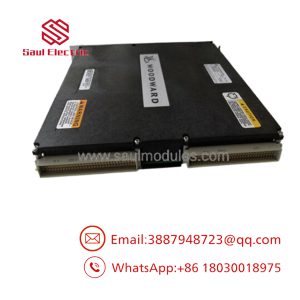
The Woodward 9907-018 is a member of the 2301A Digital Speed Control family designed for diesel, gas, and dual-fuel engines driving generators, compressors, pumps, and industrial equipment. Its primary role is to maintain precise engine speed by controlling an electrohydraulic or electric actuator while supporting stable generator frequency under changing load conditions.
Unlike generator management controllers such as the easYgen series, the 2301A is an engine governor, not a synchronizer. It regulates engine speed directly and supports isochronous or droop operation for single-generator or parallel-generator applications. In many installations, it works alongside synchronization equipment, PLCs, or DCS platforms rather than replacing them. Always verify actuator compatibility and governor configuration before commissioning.
Key Technical Specifications
| Parameter | Value |
|---|---|
| Manufacturer | Woodward |
| Model | 9907-018 |
| Product Series | 2301A |
| Product Type | Digital Speed Controller |
| Primary Function | Engine Speed Governing |
| Control Modes | Isochronous or Droop |
| Supply Voltage | 18–32 VDC (24 VDC Nominal) |
| Engine Types | Diesel, Gas, Dual-Fuel |
| Actuator Output | Proportional Governor Control |
| Speed Signal Input | Magnetic Pickup (MPU) |
| Parallel Operation | Supported with Load Sharing |
| Frequency Control | Yes |
| Typical Mounting | Control Panel |
| Operating Application | Generator, Compressor, Pump, Turbine Driver |
Engineering Note: Exact actuator current ratings, MPU signal specifications, and I/O configuration vary by 2301A model number. Verify the OEM manual for 9907-018 before replacement.
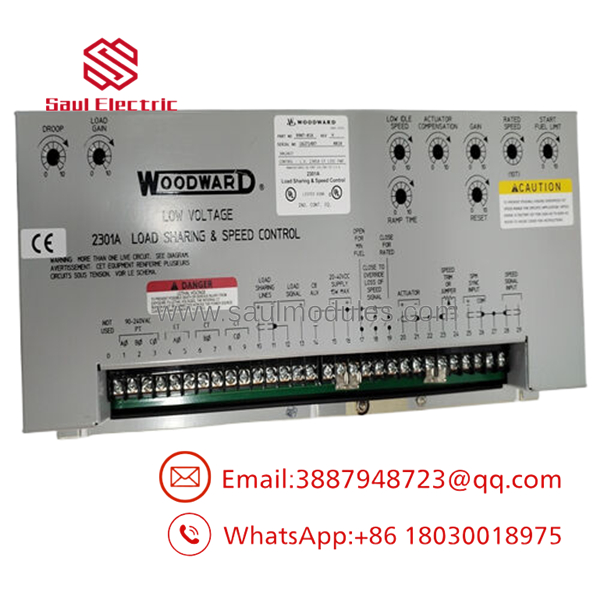
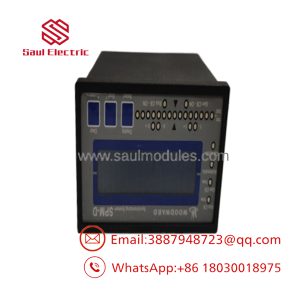
- 9907-018 2301A
- 9907-018 2301A
Application Scenarios & The “Trench” Experience
The generator starts normally.
Engine oil pressure looks good.
The AVR is regulating voltage correctly.
Then the frequency begins hunting.
Operators immediately suspect the alternator.
To be honest, many unstable frequency problems have nothing to do with the generator. The governor loop is often the real culprit. A worn actuator, incorrect gain settings, or a failed 2301A controller can make an otherwise healthy engine impossible to stabilize.
Typical Applications
Power Generation — Standby diesel generators — Maintains constant engine speed for stable 50/60 Hz generator output.
Oil & Gas — Gas engine compressors — Controls engine RPM under varying compressor loads while preventing speed instability.
Marine Power — Auxiliary generators — Supports isochronous operation for parallel onboard generators.
Industrial Manufacturing — Prime power plants — Maintains stable frequency while generators share electrical load.
Water & Wastewater — Emergency engine-driven pumps — Provides dependable speed regulation during utility outages.
Field Replacement Example
A mining operation experienced severe generator frequency oscillations after replacing a fuel actuator. Electrical testing showed the alternator and AVR were operating normally. Engineers connected a service tool and discovered that the replacement controller had been loaded with default governor gains rather than the original commissioning values. After restoring the archived parameters and recalibrating the actuator, engine speed stabilized within seconds, eliminating nuisance breaker trips and frequency alarms.
Transparency SOP: Quality Assurance & Testing
We don’t just ship boxes; we test every Woodward governor controller on compatible engine control hardware whenever practical.
- Inbound Inspection
- Verify Woodward part number and serial number.
- Inspect enclosure, connectors, and terminals.
- Check for corrosion, overheating, or unauthorized repairs.
- Live Rig Testing
- Verify power-up sequence.
- Simulate magnetic pickup (MPU) speed signals.
- Confirm actuator output response.
- Test alarm and shutdown logic.
- Electrical Parameter Checks
- Verify power supply current.
- Measure analog output stability.
- Test digital inputs and outputs.
- Confirm speed sensing accuracy.
- Firmware & Configuration Verification
- Record controller revision.
- Verify calibration values when available.
- Confirm parameter storage integrity.
- Final QC & Anti-static Packaging
- Complete functional inspection.
- Anti-static packaging.
- Shock-resistant shipping.
- Full product traceability.
The Veteran’s Tech Trap Guide
⚠️ Don’t tune the governor before checking the actuator.
A sticking hydraulic or electric actuator produces the same symptoms as an unstable controller. Verify actuator movement before changing PID parameters.
⚠️ Measure the MPU signal first.
Weak magnetic pickup signals often create speed fluctuations, overspeed trips, or failure to start. The controller may not be the problem.
❗ Save every parameter before replacing the unit.
Governor gain, droop percentage, idle speed, rated speed, acceleration limits, and shutdown settings are almost always customized during commissioning.
⚠️ Don’t confuse a governor with a synchronizer.
The 2301A controls engine speed. It does not synchronize generators to a live bus. Parallel generator systems typically require separate synchronization and breaker-management equipment.
Frequently Asked Questions (FAQ)
Q1. What is the Woodward 9907-018?
The 9907-018 is a Woodward 2301A Digital Speed Controller used to regulate engine speed on diesel and gas engines through an electric or electrohydraulic governor actuator.
Q2. Is the 2301A a generator synchronizer?
No. The 2301A is an engine governor controller. It maintains engine speed and generator frequency but does not perform automatic synchronization or breaker control. Those functions are handled by dedicated synchronizers such as Woodward easYgen or SPM controllers.
Q3. Does it support isochronous and droop control?
Yes. The 2301A supports both operating modes. Isochronous mode maintains constant speed for standalone operation, while droop mode is commonly used when multiple generators operate in parallel.
Q4. Can I replace another 2301A controller with the 9907-018?
Usually, but verify the complete part number. Different 2301A variants may have different actuator drivers, I/O configurations, speed ranges, or application firmware. Always compare the OEM documentation before installation.
Q5. Can the controller be replaced while the engine is running?
No. Removing a live governor controller will immediately interrupt engine speed regulation and may cause engine shutdown or overspeed protection events. Isolate the engine before replacement.
Q6. Why are New Surplus units still widely used?
Many power plants, marine vessels, compressor stations, and industrial facilities continue operating 2301A governor systems because they have demonstrated long service life and are well understood by maintenance personnel. Maintaining qualified spare controllers is often more economical than redesigning the entire governor system.
Q7. What should be verified before installation?
Confirm the 9907-018 part number, supply voltage, actuator compatibility, magnetic pickup signal quality, speed calibration, droop settings, governor gain values, shutdown logic, and engine operating parameters. Before returning the engine to service, perform idle-speed checks, rated-speed verification, load acceptance testing, and overspeed protection validation.

 Start Chat


