





Description
Product Introduction & Engineering Value
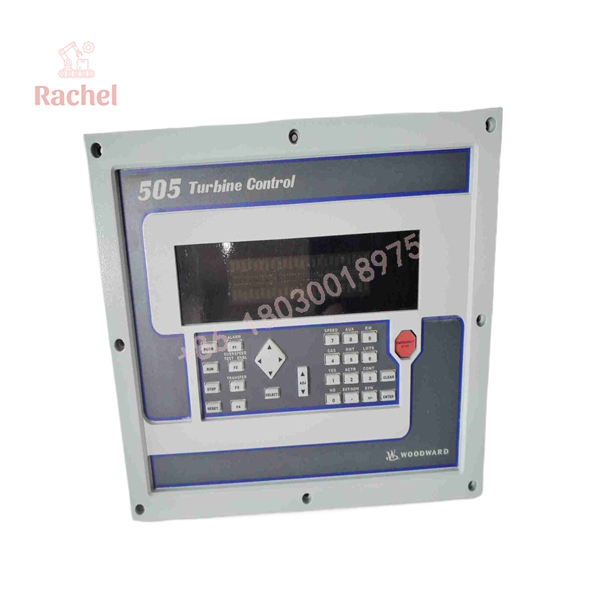
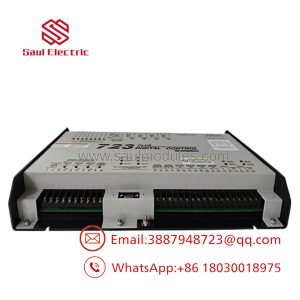
The 9907-1183 is a full digital turbine-control platform rather than an individual I/O card. It executes speed/load control, auxiliary and cascade functions, actuator control, synchronization/load sharing, alarms, and shutdown logic for compatible steam-turbine applications. Woodward specifies a Motorola 68332 microcontroller operating at 20 MHz and a nominal 10 ms execution rate for speed/load control.
Its most important replacement characteristic is the LVDC power architecture: 18–32 VDC. Woodward lists 9907-1181 as the 180–264 VAC version, 9907-1182 as the 88–132 VAC / 90–150 VDC version, and 9907-1183 as the LVDC version.
Technical Specifications
| Specification | 9907-1183 |
|---|---|
| Manufacturer | Woodward |
| Part Number | 9907-1183 |
| Control Family | 505 Enhanced Digital Control |
| Application | Steam turbine control |
| Actuator Configuration | Single or split-range |
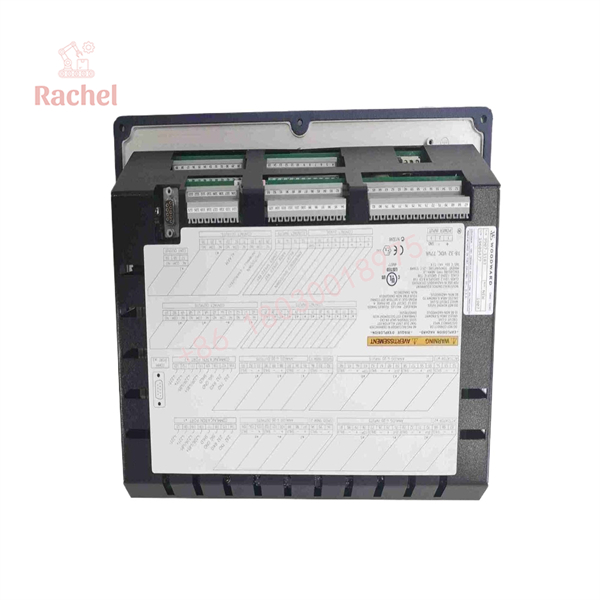
| Power Supply | 18–32 VDC |
| Power Input Fuse | 6.25 A slow-blow, per Woodward specification |
| Power Hold-Up Time | 14 ms |
| Processor | Motorola 68332, 20 MHz |
| Analog Inputs | 6 × 4–20 mA |
| Analog Input Resolution | 16-bit over 0–25 mA full scale |
| Analog Input Impedance | 200 Ω |
| Speed Inputs | 2 isolated channels |
| Speed Input Range | MPU: 100–15,000 Hz; proximity: 0.5–15,000 Hz |
| Actuator Outputs | 2 channels, 4–20 mA or 20–160 mA |
| Analog Outputs | 6 × configurable 4–20 mA |
| Discrete Inputs | 16 isolated |
| Relay Outputs | 8 configurable Form C |
| Modbus Ports | 2 isolated |
| Modbus Protocols | RTU / ASCII |
| Modbus Baud Rate | Up to 57,600 |
| PC Port | 1 isolated RS-232 |
| Display | 2 × 24-character LED |
| Keypad | 30-key multifunction |
| Package | Flush mount |
| Approx. Dimensions | 11 × 14 × 4 in. |
| Front Protection | NEMA 4X / IP56 |
| Operating Temperature | –25 to +65°C without optional enclosure |
| Storage Temperature | –40 to +85°C |
The electrical and environmental figures above are taken from Woodward’s 505 hardware specification.
Actuator interface
The two actuator drivers are particularly important when replacing an installed controller. Each channel can be configured for 4–20 mA or 20–160 mA, with current readback for detecting over- or under-current conditions. Woodward specifies maximum loads of 360 Ω for the 4–20 mA range and 45 Ω for the 20–160 mA range.
9907-1183
9907-1183
Control Architecture
A typical 9907-1183 application can be viewed as:
Speed sensors / process transmitters → 505 controller → actuator drivers → turbine valves
with additional interfaces to:
Generator / plant DCS / breaker controls → Modbus, analog I/O, discrete I/O
The 505 provides considerably more than basic speed regulation. Woodward’s software architecture includes:
- Speed control
- Load control
- Auxiliary control
- Cascade control
- Remote speed setpoint
- Remote auxiliary setpoint
- Remote cascade setpoint
- Synchronization/load sharing
- Shutdown logic
- Alarm processing
- Valve linearization
- Local/remote control
- Modbus command handling
The documented nominal execution rates are 10 ms for speed/load control, 20 ms for auxiliary and cascade control, 20 ms for synchronization/load sharing, 10 ms for shutdowns, and 20 ms for alarms.
Field Application & Practical Scenario
Steam turbine with split-range valve control
Consider a process steam turbine using two actuator channels to control separate portions of the turbine’s valve system.
During maintenance, the existing 9907-1183 is replaced after a controller fault. The critical commissioning task is not simply confirming that the display starts. The technician needs to verify:
- Correct 18–32 VDC supply.
- Speed-sensor #1 and #2 signals.
- Correct actuator-output mode.
- 4–20 mA process inputs.
- Analog output scaling.
- Discrete trip/reset circuits.
- Relay assignments.
- Modbus configuration.
- Existing turbine-control parameters.
- Valve response before normal operation.
Woodward provides Service Mode functions for monitoring speed inputs, analog inputs and outputs, actuator outputs, contact inputs, and relay states.
Other application scenarios
Industrial steam turbines
- Speed regulation
- Process-pressure control
- Valve positioning
- Load control
Turbogenerators
- Turbine speed/load regulation
- Generator synchronization
- Load sharing
Mechanical-drive turbines
- Compressor drives
- Pump drives
- Process equipment
Turboexpanders
- Speed control
- Process-variable control
- Actuator management
Woodward’s manual includes example applications covering pump/compressor discharge-pressure control, inlet-pressure control, generator power limiting, exhaust-pressure control, import/export control, and isochronous load sharing.
QA & Testing SOP for New Surplus / Refurbished Stock
For this controller, power-on testing alone is not sufficient.
A. Identification
Verify:
- Woodward manufacturer marking
- 9907-1183 part number
- Serial number
- Revision/label information
- LVDC configuration
- Connector and terminal condition
Woodward identifies 9907-1183 as one of the enhanced 505 units using the newer polyacrylate conformal coating. The 9907-1181/1182/1183 models were introduced with this coating and other product enhancements.
B. Power test
Confirm:
- 18–32 VDC input
- Correct fuse arrangement
- Normal processor startup
- Display initialization
- Keypad response
- Alarm/status indicators
C. I/O verification
A competent test bench should check:
Speed
- MPU input
- Proximity input
- Both channels where applicable
Analog
- Six 4–20 mA inputs
- Six 4–20 mA outputs
- Output scaling and readback
Actuator
- 4–20 mA mode
- 20–160 mA mode where applicable
- Current feedback
Digital
- 16 discrete inputs
- Eight relay outputs
Communications
- Modbus Port 1
- Modbus Port 2
- PC communication port
Woodward specifically states that the Service Mode can monitor and adjust analog inputs and outputs, monitor speed inputs and actuator outputs, monitor contact inputs, and monitor/force relay outputs.
Veteran’s Tech Trap Guide
⚠️ Trap 1 — Confusing 9907-1183 with 9907-1181
All three are part of the same enhanced 505 family, but their power supplies differ:
| Part Number | Power |
|---|---|
| 9907-1181 | 180–264 VAC |
| 9907-1182 | 88–132 VAC / 90–150 VDC |
| 9907-1183 | 18–32 VDC |
Woodward explicitly states these part numbers should not be used interchangeably.
PRO TIP: Confirm the plant’s actual supply voltage before approving a replacement.
⚠️ Trap 2 — Confusing 505 Enhanced with 505E
Some aftermarket catalogs describe 9907-1183 as a 505E. Woodward’s primary documentation identifies it as the 505 Enhanced Digital Control for Steam Turbines and gives the specific part-number family 9907-1181/1182/1183.
PRO TIP: For purchasing and engineering documentation, use the exact OEM part number rather than relying on an abbreviated reseller series name.
⚠️ Trap 3 — Assuming all six analog outputs are actuator outputs
The 9907-1183 has two dedicated actuator-driver channels plus six separate configurable 4–20 mA analog outputs. These are not the same interface.
This distinction matters when checking terminal wiring and configuration files.
⚠️ Trap 4 — Replacing the controller without preserving configuration
A replacement 505 does not automatically contain the turbine’s application parameters.
The controller can contain configuration for:
- Speed setpoints
- Acceleration/deceleration rates
- Valve limits
- Droop
- Auxiliary/cascade control
- Load sharing
- Synchronization
- Shutdowns
- Modbus behavior
- Relay functions
Woodward provides Control Assistant and Service Mode functions specifically for configuration and service work.
PRO TIP: Preserve the existing configuration before removing a functioning controller whenever the plant’s procedures allow it.
Dynamic FAQ
What is Woodward 9907-1183?
It is the 18–32 VDC version of Woodward’s 505 Enhanced Digital Control for steam turbines, intended for single- or split-range actuator applications.
Is 9907-1183 a PLC?
No. It is a dedicated digital turbine governor/control. It has programmable I/O and communications, but its software architecture is specifically designed around turbine speed, load, valve, auxiliary, synchronization, and shutdown functions.
What power supply does 9907-1183 use?
18–32 VDC. Woodward identifies this as the LVDC configuration.
How many 4–20 mA inputs does it have?
The documented hardware has six 4–20 mA analog inputs, with one isolated input and five non-isolated differential inputs. The inputs provide 16-bit resolution over a 0–25 mA full-scale range.
How many actuator channels are available?
There are two actuator-driver channels, each software-selectable for 4–20 mA or 20–160 mA operation.
Does it support Modbus?
Yes. It has two isolated Modbus communication ports, supporting RTU and ASCII protocols, with RS-232, RS-422, and RS-485 hardware options and baud rates up to 57,600.
Does it have a built-in operator interface?
Yes. Woodward specifies a two-line, 24-character-per-line LED display and a 30-key multifunction keypad, along with emergency-stop and overspeed-test buttons.
Is 9907-1183 the same as 9907-825/826/827?
No. Woodward states that 9907-825, 9907-826, and 9907-827 were replaced by 9907-1181, 9907-1182, and 9907-1183, respectively, with the newer units incorporating additional features and product enhancements.
What does New Surplus mean for 9907-1183?
New Surplus generally means unused existing inventory rather than current factory production. For this controller, procurement documentation should include the actual nameplate, serial number, revision, physical condition, power-up test, I/O test results, and warranty terms.
What warranty should be offered?
Warranty depends on the supplier and stock condition. The quotation should clearly state whether the unit is New Surplus, unused original packaging, refurbished, or repaired, and specify the warranty period. A seller’s warranty should not be represented as an OEM Woodward warranty unless Woodward itself provides it.
Engineering Takeaway
The Woodward 9907-1183 is a 505 Enhanced Digital Control for steam turbines, LVDC version, with an 18–32 VDC supply and a substantial integrated I/O set: six 4–20 mA inputs, two configurable actuator drivers, six 4–20 mA analog outputs, 16 isolated discrete inputs, eight configurable relay outputs, and two isolated Modbus ports.
For replacement procurement, the critical checks are exact part number, LVDC power configuration, actuator type/range, stored turbine configuration, I/O wiring, Modbus settings, and controller revision. Woodward’s own documentation should be treated as the controlling technical reference where secondary-market specifications conflict.

 Start Chat


