





Description
Product Introduction
The Woodward 9907-1200 CPC-II is a current-to-pressure converter used to position steam and fuel valves and associated servo systems. It accepts a 4-20 mA command and produces proportional hydraulic control pressure, with the 9907-1200 rated for 10 bar supply and control pressure.
Its important distinction is the closed-loop pressure-control architecture. Internal pressure feedback, actuator-position monitoring, diagnostics, and a three-way rotary hydraulic valve work together rather than simply converting current into a fixed pressure.
Key Technical Specifications
| Parameter | Specification |
|---|---|
| Manufacturer | Woodward |
| Model | 9907-1200 |
| Product Family | CPC-II |
| Product Type | Current-to-Pressure Converter |
| Supply Voltage | 18-32 VDC; 24 VDC nominal |
| Steady-State Power | 25 W |
| Transient Power | 90 W maximum for 2 seconds |
| Setpoint Input | 4-20 mA into 200 Ω |
| Analog Output | 4-20 mA; 500 Ω maximum external load |
| Accuracy | Less than ±0.2% of full range |
| Pressure Stability | Less than ±2% of setpoint |
| Supply Pressure | 10 bar / 145 psi |
| Control Pressure | 0-10 bar(g) / 0-145 psig |
| Recommended Oil Viscosity | 20-100 cSt |
| Recommended Fluid Cleanliness | ISO 20/16 or better |
| External Filter | 24-40 µm nominal, β75 |
| Ambient Temperature | -40 to +85°C |
| Oil Temperature | 15 to 70°C |
| Enclosure | IP66 per IEC EN 60529 |
| Mounting | Four M10 × 1.5 threaded holes |
| Approx. Dimensions | 270 × 270 × 290 mm |
| Approx. Weight | 25 kg without oil |
| Cable Entries | Two 3/4″-14 NPT threaded ports |
These values come from Woodward Product Manual 26615. One detail matters during procurement: 9907-1200 is the 10 bar version; the 25 bar CPC-II models use different part numbers. Woodward also specifies that the control-pressure setting should remain below 70% of supply pressure for optimum dynamic performance.
Application Scenarios & The “Trench” Experience
The ugly failure mode is familiar: the turbine controller is still commanding correctly, but the valve stops following demand because the electro-hydraulic conversion stage is no longer maintaining control pressure. The plant operator sees a load-control problem. The root cause is sitting downstream in the CPC.
The 9907-1200 is intended for applications such as:
- Steam Turbine Generation — Governor Valve Positioning — Converts the controller’s 4-20 mA demand into hydraulic pressure for the turbine valve servo system.
- Industrial Steam Turbines — Speed and Load Control — Provides closed-loop hydraulic pressure regulation where stable valve positioning is required.
- Fuel Valve Control — Servo System Actuation — Converts an electrical demand signal into hydraulic control pressure for compatible valve/servo arrangements.
- Turbine Retrofit Projects — CPC Replacement — Provides a CPC-II architecture for systems replacing older current-to-pressure converters, subject to hydraulic and electrical compatibility.
- Critical Turbine Control Systems — Diagnostic Pressure Control — Internal pressure and position monitoring can identify faults and initiate configured alarm or shutdown actions.
Field case — a plausible replacement scenario:
A turbine is sitting in a planned outage, and the maintenance team discovers that the existing current-to-pressure converter has unstable output during calibration. Nobody wants to discover this after the unit is back online. The replacement must match the hydraulic pressure class, electrical interface, mounting arrangement, and hazardous-area requirements. A correctly identified 9907-1200 can reduce that particular procurement problem to a controlled component replacement rather than an open-ended controls investigation.
Do not assume the part number alone makes it a drop-in replacement. Check the hydraulic adapter, supply pressure, drain pressure, wiring, configured parameters, and hazardous-location certification before installation.
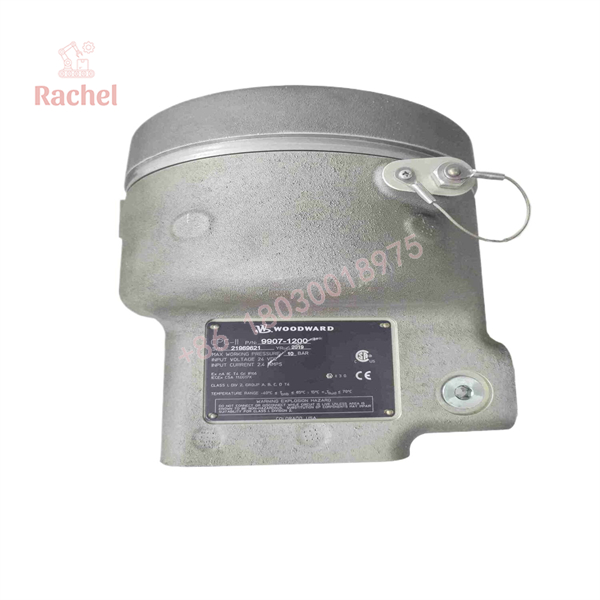
9907-1200
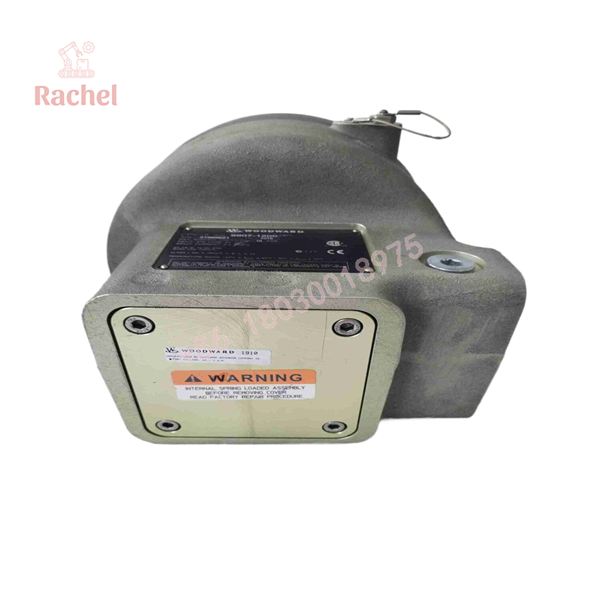
9907-1200
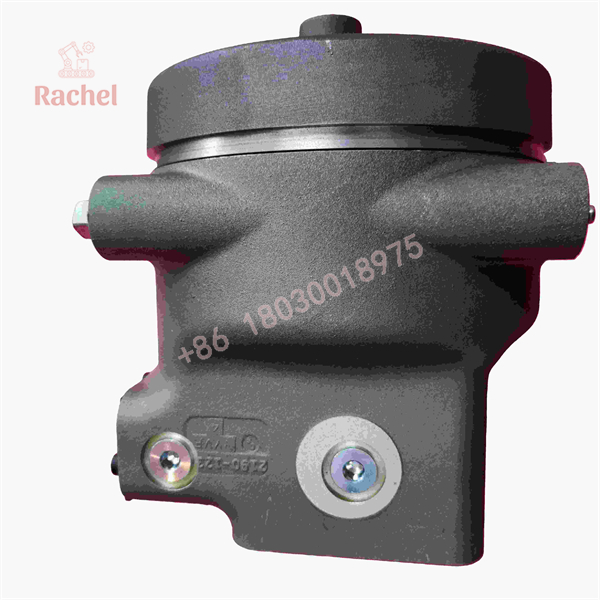
9907-1200
Transparency SOP: Quality Assurance & Testing
For New Surplus 9907-1200 inventory, a serious inspection process should include:
- Inbound Inspection
- Verify the Woodward nameplate and complete 9907-1200 part number.
- Inspect housing, cover, mounting interface, connectors, seals, and packaging.
- Check OEM labels and serial/traceability information for consistency.
- Confirm that the unit is the 10 bar CPC-II variant, not a visually similar CPC-II model.
- Electrical Inspection
- Verify supply-voltage requirements against the Woodward specification.
- Check terminal condition and wiring interface.
- Confirm the 4-20 mA input circuit and analog output configuration where test equipment permits.
- Live Functional Testing
- Power the unit using a controlled 24 VDC supply.
- Verify startup behavior and diagnostic indications.
- Test command and feedback behavior with appropriate instrumentation.
- Where the test setup supports it, verify hydraulic pressure response rather than relying solely on an electrical continuity check.
- Configuration / Firmware Verification
- Record the installed software/firmware information where accessible through the CPC-II Service Tool.
- Record configurable parameters before shipment when a service-tool test is performed.
- Preserve the test record with the unit’s serial information.
- Final QC
- Inspect hydraulic ports and mounting surfaces.
- Protect the hydraulic interface from contamination.
- Use appropriate ESD protection for electronic service work.
- Package the unit against shock, moisture, and electrostatic discharge.
Woodward’s own manual specifies a PC-based service tool for configuration, diagnostics, dynamic adjustment, calibration, and performance assessment. It also explicitly requires ESD precautions when handling the electronics.
The Veteran’s Tech Trap Guide
⚠️ Don’t confuse 9907-1200 with 9907-1198.
Both are CPC-II units, but 9907-1200 is the 10 bar model, while 9907-1198 belongs to the 25 bar class. Verify the hydraulic pressure rating against the turbine’s actual circuit before ordering.
❗ Don’t treat the CPC as a simple 4-20 mA converter.
The unit has closed-loop pressure control, internal pressure feedback, actuator control, diagnostics, and configurable PI settings. Replacing it without checking the configured parameters can leave you with a unit that powers up but does not behave correctly in the servo loop.
⚠️ Oil cleanliness matters. A lot.
Woodward calls for an external 24-40 µm nominal β75 filter and recommends ISO 20/16 or better fluid cleanliness. Dirty turbine oil can turn a perfectly good replacement into another maintenance problem.
❗ Do not disconnect it live in a hazardous area.
Woodward specifically warns against connecting or disconnecting the CPC-II while energized unless the area is known to be non-hazardous. For classified installations, verify the exact certification and wiring method for the specific unit.
⚠️ Photograph the old installation before removing anything.
Record hydraulic port orientation, wiring, cable entries, grounding, mounting arrangement, and configuration data. It takes five minutes. Reconstructing it during a turbine outage can take hours.
Frequently Asked Questions (FAQ for Conversion)
Q1: Is Woodward 9907-1200 a PLC or turbine controller?
No. It is a CPC-II current-to-pressure converter. Its job is to convert a 4-20 mA demand into controlled hydraulic pressure for compatible valve and servo applications. It is not a replacement for a Woodward turbine controller.
Q2: Can I substitute a 9907-1198 for a 9907-1200?
Not automatically. The 9907-1200 is the 10 bar supply/control-pressure model, while 9907-1198 is a 25 bar model. The hydraulic circuit and system pressure requirements must be checked before considering a substitution.
Q3: Is the 9907-1200 hot-swappable?
Do not treat it as a hot-swappable PLC I/O card. This is a field-mounted electro-hydraulic device with electrical and hydraulic connections. In hazardous areas, Woodward explicitly prohibits connecting or disconnecting it while energized unless the area is known to be non-hazardous. Follow the plant isolation procedure and the applicable Woodward installation instructions.
Q4: Does it require a specific firmware version?
The CPC-II uses configurable software parameters and a PC-based Service Tool. For a replacement, record the existing configuration and verify the installed software/firmware information rather than assuming every CPC-II has identical settings. Woodward’s manual specifically provides procedures for configuration, diagnostics, calibration, and loading settings.
Q5: What should I verify before ordering a replacement?
At minimum: 9907-1200 part number, 10 bar pressure class, supply voltage, 4-20 mA interface, hydraulic mounting interface, supply/control/drain arrangement, oil cleanliness, hazardous-area certification, and the existing CPC configuration. A photograph of the nameplate and hydraulic manifold is useful for a final cross-check.
Q6: Is a surplus 9907-1200 necessarily refurbished?
No. “Surplus” describes the supply channel, not automatically the condition. A unit can be factory-sealed surplus, unused excess inventory, or previously installed equipment. Ask for the actual condition, nameplate photographs, serial information, test report, and warranty terms. Do not accept “new” as a substitute for evidence.
Q7: Why can surplus pricing be lower than direct OEM pricing?
The economics are different. Surplus inventory can come from plant closures, excess project stock, distributor liquidation, or equipment removed from discontinued projects. That does not prove equivalence to current OEM factory supply. For a turbine-control component, compare condition, traceability, testing, certification, documentation, and warranty—not just the unit price.

 Start Chat


