





Description
Product Introduction
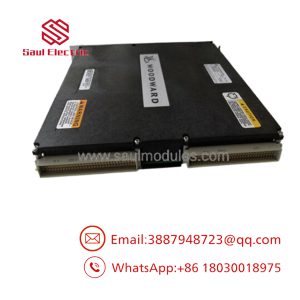
The Woodward 9907-838 is a dedicated Load Sharing Module (LSM) used in generator applications where the engine governor accepts a PWM (pulse-width modulation) speed reference. Rather than controlling fuel directly, the module exchanges load information between generator sets and adjusts the governor speed reference so that active power is distributed evenly.
Unlike a 2301A governor, which performs engine speed regulation, or an SPM synchronizer, which manages breaker synchronization, the 9907-838 performs one specific job: load sharing. It is frequently installed in retrofit generator systems where the existing engine ECU cannot communicate directly with Woodward load-sharing accessories. One thing to watch out for is governor compatibility. Verify that the governor accepts a PWM speed-bias input before ordering.
Key Technical Specifications
| Parameter | Value |
|---|---|
| Manufacturer | Woodward |
| Model | 9907-838 |
| Product Type | Load Sharing Module |
| Primary Function | Generator Active Load Sharing |
| Governor Interface | PWM Speed Reference |
| Supply Voltage | 24 VDC |
| Output Type | PWM |
| Generator Modes | Isochronous & Droop |
| Compatible Systems | Woodward & Non-Woodward Governors with PWM Input |
| Typical Accessories | SPM-A, SPM-D, APTL, AGLC |
| Application | Generator Sets Operating in Parallel |
| Installation | Panel Mount |
Application Scenarios & The “Trench” Experience
Two generators synchronize perfectly.
Both breakers close.
Then one generator carries 85% of the load while the other barely contributes.
Operators immediately suspect the AVR.
The governor gets adjusted.
Nothing changes.
In our field experience, unequal load sharing often traces back to the load-sharing circuit itself. If the Load Sharing Module loses its reference signal or the governor interface is configured incorrectly, every generator will still run—but they won’t cooperate.
Typical Applications
Industrial Power Plants — Parallel diesel generators — Shares active power evenly across multiple engine-generator sets.
Data Centers — Emergency standby systems — Prevents one generator from becoming overloaded after synchronization.
Oil & Gas Facilities — Gas engine power stations — Interfaces PWM-based engine controls with Woodward power-management equipment.
Marine Power Systems — Auxiliary generators — Coordinates load distribution between multiple shipboard generators.
Commercial Buildings — Peak-shaving generator systems — Allows retrofit generators with PWM governors to participate in common load-sharing networks.
Field Replacement Example
A hospital operated three standby generators in parallel. Synchronization completed successfully, but one unit consistently carried nearly twice the electrical load of the others. Current transformers, governors, and engine tuning all checked out. Engineers eventually isolated the fault to a failed 9907-838 Load Sharing Module that had stopped transmitting a valid PWM speed-bias signal. After replacing the module and verifying load-sharing calibration, all three generators stabilized within acceptable kW-sharing tolerance during full-load testing.
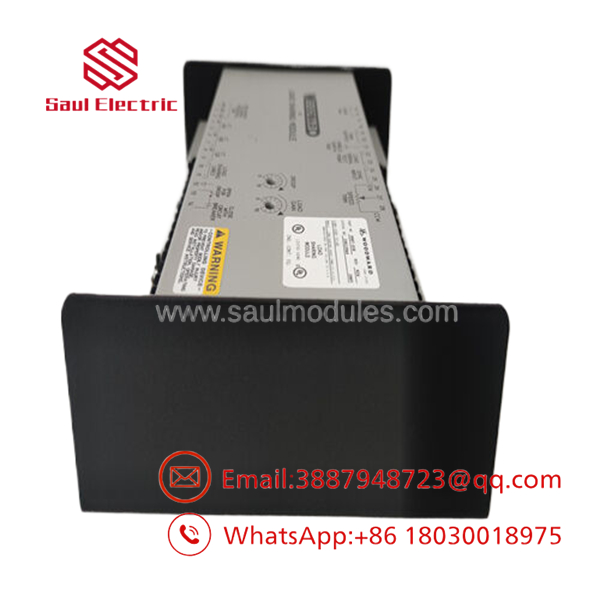
- 9907-838
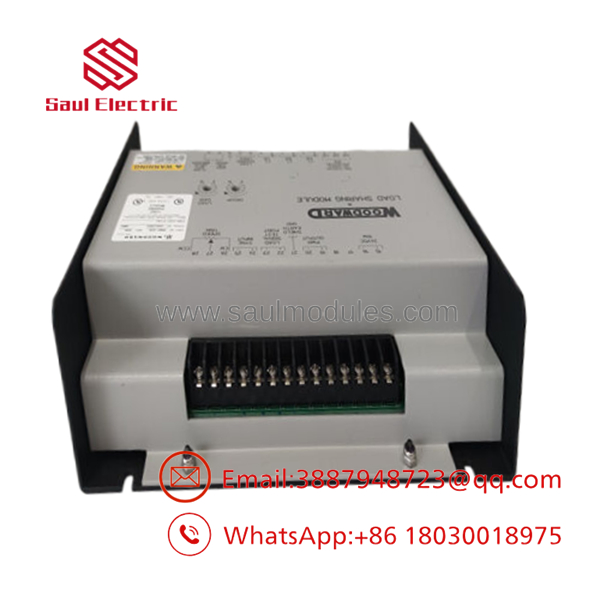
- 9907-838
Transparency SOP: Quality Assurance & Testing
We don’t just ship boxes; we test them on actual Woodward power-management hardware whenever practical.
- Inbound Inspection
- Verify Woodward part number and serial number.
- Inspect terminals, enclosure, and PCB condition.
- Check for corrosion, overheating, and unauthorized repairs.
- Live Rig Testing
- Verify startup operation.
- Simulate PWM governor input.
- Confirm load-sharing response.
- Verify speed-bias output.
- Test alarm indications where applicable.
- Electrical Parameter Checks
- Verify 24 VDC input.
- Measure PWM output waveform.
- Confirm terminal continuity.
- Verify input isolation.
- Functional Verification
- Confirm communication with compatible Woodward accessories.
- Verify stable load-sharing operation during simulated generator loading.
- Final QC & Anti-static Packaging
- Functional inspection.
- ESD-safe packaging.
- Shock-resistant shipping.
- Complete serial-number traceability.
The Veteran’s Tech Trap Guide
⚠️ Don’t confuse this module with a governor.
The 9907-838 does not regulate engine speed by itself. It modifies the governor reference so generators share load correctly.
⚠️ Verify the governor input type first.
This module is designed for governors that accept a PWM speed input. Analog-input governors require a different Load Sharing Module variant.
❗ Check CT polarity before replacing electronics.
Incorrect current transformer polarity frequently produces unstable or incorrect load sharing even when every controller is functioning properly.
⚠️ Calibrate the complete system after replacement.
Replacing the module without verifying governor gain, CT ratios, and load-sharing adjustments often leads to unequal generator loading under high demand.
Frequently Asked Questions (FAQ)
Q1. What is the Woodward 9907-838?
The 9907-838 is a 24 VDC PWM Load Sharing Module that enables generators equipped with PWM governor controls to participate in Woodward load-sharing systems.
Q2. Does it control engine speed directly?
No. The module does not replace a governor. It provides a PWM speed-bias signal that allows compatible governors to share electrical load correctly.
Q3. Which governor types are supported?
The 9907-838 is intended for engines using PWM speed-control inputs. Woodward also offers Load Sharing Modules for ±3 VDC and 0.5–4.5 VDC governor interfaces.
Q4. Can it work with non-Woodward governors?
Yes. It was specifically developed to allow compatible non-Woodward engine controls to integrate with Woodward power-generation accessories, provided the governor accepts a PWM input.
Q5. Does it perform generator synchronization?
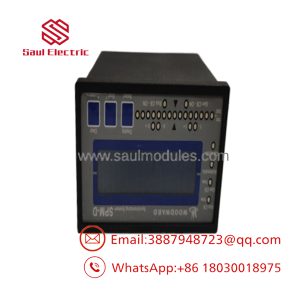
No. Synchronization is handled by devices such as the SPM-A or SPM-D synchronizers. The 9907-838 is responsible only for load sharing after generators are operating together.
Q6. Why are surplus units still widely purchased?
Many industrial facilities continue operating mature Woodward power-management systems. Replacing a failed Load Sharing Module is typically much less expensive than redesigning an entire generator control system around new hardware.
Q7. What should be verified before installation?
Confirm the 9907-838 part number, 24 VDC supply, governor PWM compatibility, CT wiring and polarity, load-sharing calibration, synchronization equipment compatibility, and overall generator control logic. Before returning the system to service, perform parallel-load testing, verify kW sharing under multiple load levels, and confirm stable operation during generator loading and unloading.

 Start Chat


