





Description
Product Introduction
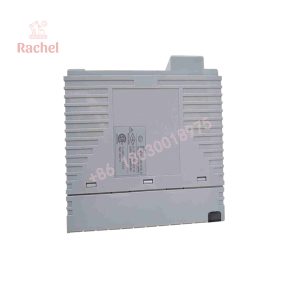
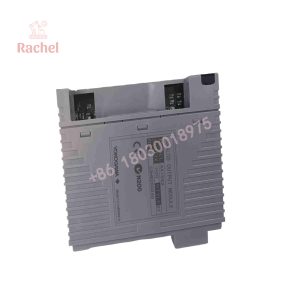
The Yokogawa CP451-51 is the processor module at the core of a Field Control Unit in the CENTUM VP DCS. It handles the station’s entire workload: regulatory control, sequence logic, alarm processing, and communication to both the Vnet/IP control network and the ESB bus I/O nests below it. This is the module you’ll find running units in refineries, chemical plants, LNG trains, and power stations built on CENTUM VP releases from R3.05 through the R6 generation.
The CP451-51 is the successor to the CP451-11, and that’s the practical headline. Same FCU slot, same Vnet/IP and ESB bus structure, same I/O nests — better processing headroom and current firmware support. If you’re maintaining an aging station or planning a like-for-like capacity refresh, the -51 is the part Yokogawa’s own documentation steers you toward. In our field experience, plants that stocked CP451-11 spares a decade ago are standardizing on the -51 today precisely because it keeps a legacy bus architecture alive without a migration project.
Key Technical Specifications
| Parameter | Value |
|---|---|
| Module Type | Processor Module, Field Control Unit (FCU) |
| System | CENTUM VP DCS (typical FCU: AFV30x / AFV40x series) |
| Replaces | CP451-11 (functional successor, backward compatible) |
| Control Network | Vnet/IP — redundant configuration supported |
| I/O Bus | ESB bus (incl. optical ESB) at 128 Mbps; ER bus at 10 Mbps for remote I/O |
| Redundancy | Duplexed hot-standby pair; transmission path redundancy supported |
| Power | Rack-supplied via PW481/PW482/PW484 power modules (dual-redundant PSU supported) |
| Operating Temperature | 0 °C to 50 °C (configuration-dependent) |
| Storage Temperature | ‘-20 °C to 60 °C, no direct sunlight |
| Relative Humidity | 5–95% RH, non-condensing |
| Country of Origin | Japan |
Verify exact mounting, slot assignment, and bus repeater requirements against the Yokogawa GS document for your specific FCU model before installation.
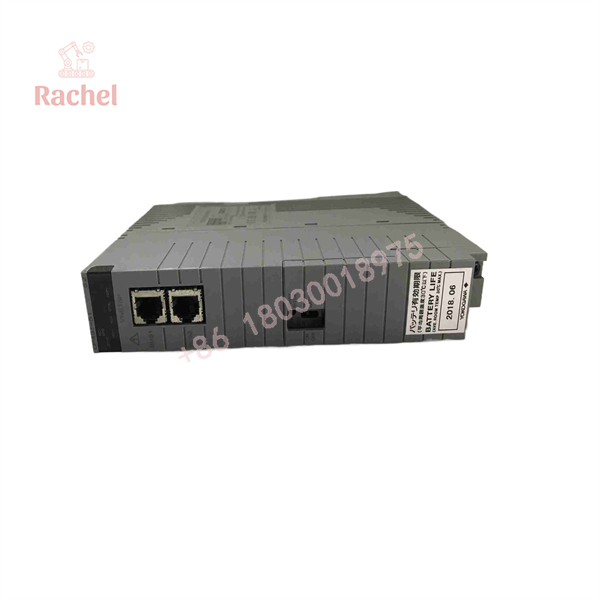
CP451-51
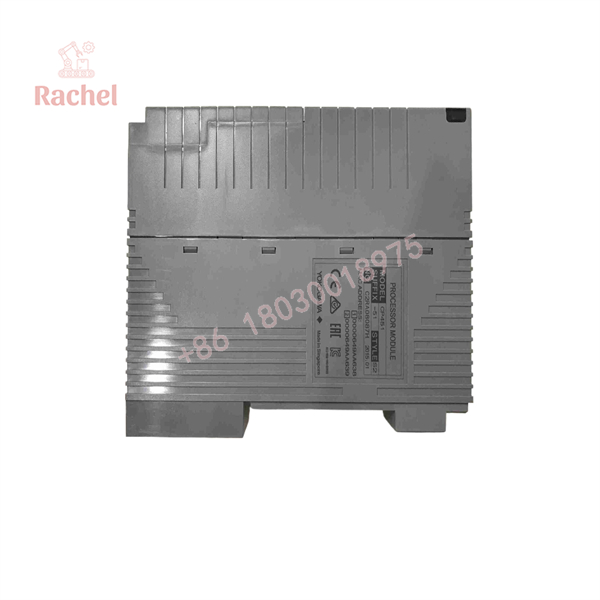
CP451-51
Application Scenarios & The “Trench” Experience
Here’s a story that repeats itself across every refinery district. A plant runs CENTUM VP R5. One CP451-11 in a duplexed pair starts throwing checksum faults — the card is 14 years old and tired. Maintenance pulls the dusty spare from the crib, installs it, and the station refuses to come up in duplex. Wrong firmware generation. Now they’re on a single processor, the OEM quote for a matched -11 is painful with a long lead time, and someone finally asks the right question: “Can we go to the -51?” Yes. You can. And that call happens more often than you’d think.
- Oil & Gas Refining — Crude and vacuum unit FCS control — CP451-51 pairs execute the fractionator and heater logic; duplex hot-standby means an online card swap never bumps the process.
- Petrochemical / LNG — Refrigeration compressor trains — Anti-surge and load-sharing sequences need deterministic execution with ESB bus I/O scan rates the -51 delivers at scale.
- Power Generation — Balance-of-plant and auxiliary control — Stations with large remote I/O counts rely on the -51’s ER bus support at 10 Mbps across physically separated nests.
- Chemical / Specialty — Batch and reactor control — Flexible batch recipes push heavier sequence loads than the old -11 could comfortably carry; the -51 gives headroom for expanded recipes without an FCU swap.
Field case (fictionalized, plausible): An Midwest specialty chemical site lost its standby CP451-11 during a summer brownout. The plant risk policy allowed 72 hours of single-processor operation on that train before a forced shutdown — estimated at $250K per day in lost batch production. A factory-sealed CP451-51 shipped the same afternoon, arrived next morning, and the technician installed it during a batch gap. The station re-synchronized to duplex within the hour. Final bill: roughly 2% of what one day of downtime would have cost. This is why we keep genuine Yokogawa processors on the shelf — the math never lies.
Transparency SOP: Quality Assurance & Testing
We don’t just ship boxes; we test them on actual Yokogawa FCU hardware.
- Inbound Inspection — Serial and lot codes cross-checked against Yokogawa records, OEM labels and casing verified, anti-counterfeit screening including board photo comparison against known-genuine units.
- Live Rig Testing — Full power-on self-test in a real FCU rack, then a live Vnet/IP network join and ESB bus handshake to confirm the module comes up healthy and reports correct status.
- Redundancy Verification — Every unit is tested as one side of a duplexed pair to prove standby synchronization and failover actually execute — not just a power-up check.
- Electrical Parameter Checks — Supply current draw logged under load; backplane connector pinout and contact resistance verified before energizing.
- Firmware Verification — Exact system software revision recorded and included in the shipment documentation, so your reliability engineer can match it against your station’s target build.
- Final QC & Packaging — Full ESD-safe handling, contacts inspected, then sealed in anti-static packaging with foam protection for transit.
The Veteran’s Tech Trap Guide
- ⚠️ Confirm your CENTUM VP release before ordering. The CP451-51 works across R3.05-later VP systems, but your station’s system software must support the -51 hardware profile. An R3.02-era station may need a documented software update first. Check your build sheet, or send us your FCU model and we’ll verify compatibility with you.
- ❗ Don’t mix -11 and -51 in one duplex pair. Mixing hardware generations inside a running pair is asking for synchronization faults or an unplanned failover. Replace both sides, or follow Yokogawa’s staged replacement procedure exactly. Take a photo of the current configuration before you pull anything. Trust me.
- ⚠️ ESB bus cables are more fragile than they look. Half of the “failed processor” calls in the field are actually a half-seated ESB or Vnet cable from a previous tech’s work. Re-seat them deliberately, check the fiber-optic ESB connectors for contamination if you have the optical variant, and follow the specified bend radius.
- ❗ ESD discipline, no exceptions. A static hit on this module may not show up on the bench — it shows up as an intermittent fault three weeks later at 2 AM, on the night you’re not there. Grounded wrist strap, grounded mat, handle the card by the edges only.
Frequently Asked Questions (FAQ for Conversion)
Q1: Is the CP451-51 hot-swappable in a duplexed station?
Yes, with a healthy primary running, the standby module can be pulled and replaced online; the pair re-synchronizes automatically. Do not attempt this in a simplex station — pulling the only live processor drops the station and everything it controls until the replacement boots.
Q2: Can I use the CP451-51 to replace a failed CP451-11?
That’s exactly its design intent — it’s the documented functional successor with backward compatibility to the existing Vnet/IP and ESB bus structure. But check your system software version supports the -51 profile, and don’t mix an -11 and -51 inside a single duplex pair. Replace both sides or follow the staged procedure.
Q3: Does firmware need to match the other card in the pair?
It must be compatible, and in practice your safest move is matching the healthy side’s revision or applying Yokogawa’s documented redundancy upgrade path. We log the exact firmware revision of every unit we ship, in writing, before it leaves our dock — so your engineers can validate it against the station build rather than guess.
Q4: What’s the difference between the CP451-51 and the SCP451-51?
The SCP451 is the safety variant used in ProSafe-RS SIL-rated safety instrumented systems. It is not interchangeable with the standard CP451-51 for basic process control, and vice versa. If your part number starts with “SCP,” that’s a different animal — tell us which one you need and we’ll confirm before shipping.
Q5: Why is your price lower than the OEM channel?
We source globally — factory-sealed surplus from cancelled projects, OEM overstock, and decommissioned plant inventories. Nothing is grey-market counterfeit; every unit passes our six-step test process on a real FCU rack. You get genuine Yokogawa hardware at a fraction of a fresh OEM quote.
Q6: Is this new or refurbished?
This listing is new surplus, factory sealed. If a tested pull from a decommissioned system is your budget path, ask us — we sell those too, clearly labeled, with full test documentation. We don’t blur the condition line, because your maintenance records depend on it.
Q7: What’s the warranty?
12 months from delivery covering functional failure under normal operating conditions. Given these modules are engineered for 20-year plant lifecycles, a fully tested unit with 12 months of coverage is about as low-risk as an industrial electronics purchase gets.

 Start Chat


